Seeing eight countries in two weeks was equal parts thrilling, grueling, exhausting, memorable, frustrating, educational, culturally enriching, and accompaned by a gutting sensory overload. Overall, I enjoyed the trip, but will never do one like this again.
Last year I visited Thailand with a quick pitstop over in the Philippines for what was mostly a fun excursion with some enjoyable attractions (i.e. Lion Land). I cover that in this article here in Part I. But unlike then, when going abroad was somewhat of a spur of the moment decision, this time I planned out my trip farther in advance by several months.
It’d been goal of mine for a while to travel in Europe during the Christmas season, mainly to experience what the holiday was like in another part of the world, and to see the famous Christmas markets set-up throughout the different cities. Before this trip, I’d never even been to Europe, except for a brief stop in the Frankfurt airport back in 2001 en route to Israel. So, this trip felt like a necessary experience I had to do to “catch up” so to speak. I hate using the term “bucket list” because it sounds so dire and corny, but I felt left behind having not seen things like the Colosseum or the Cologne Cathedral live in person.
As I’ve mentioned previously, traveling combines everything I hate into one nasty package–being forced into confined places with strangers, having to stay in hotels, having to eat out, spending money, having to stand in long lines, dealing with government officials, and being in unfamiliar places where I don’t have control over where I am and where I’m going and 100% access to a bathroom at all times. Then there’s the people. I’m an introverted marvel, so being forced to interact with people constantly drains me severely. Traveling overseas only magnifies my discomfort exponentially. But I made myself do it anyway as a way to force myself out of my comfort zone.
As an aside, everyone is doing “therapy” today. But I feel that sitting down and rambling to some stranger (and paying $125 an hour for the “privilege”) is a colossal waste of time and money. True personal development and growth comes from TAKING ACTION–doing things, not navel gazing about your problems. You don’t have to travel thousands of miles, of course. You can learn a new skill, read a book, take up a new hobby, hit the gym (that’s a big one), or just go for a walk. Really, diet and exercise factor a lot into mental health, but these days it’s far easier (and profitable for certain companies) to pop a pill. I call this the “Ozempification Culture,” which is downstream from the much rampant “Enshittification of Everything” that everyone talks about.
It’s like that line Hank Hill says from King of the Hill —
“Why would anyone do drugs when they could just mow the lawn?”
Why would anyone waste time with “therapy” (aka hiring a rent-a-friend for an hour) when they could just go to the library or the gym? I could go on about this, but it’s a topic for another article.
I’m not saying traveling in a bus crammed with foreigners speaking different languages will fix all your problems, or that standing in front of the Pantheon will somehow make you a better person. But at least it will expose you to a lot of historically significant sites and help you appreciate the genius that went into making such magnificent architecture. It’s good to “expand your horizons,” as they say, as it gives you a good sense of perspective.
As an American, it’s also good to see how other parts of the world live as well. I know many people travel to Europe and come back raving about how wonderful the continent is and how much “better” it is than the U.S. Usually this is something people say who already had anti-American sentiments to begin with. For me, it’s quite the opposite. I love America. When I travel, I miss my country from the moment I leave until I return, and no matter how impressive some aspects of Europe are, they’ll never top the nation of my birth.
Americans tend not to travel overseas, as it is cost prohibitive. However, many Americans do travel a lot within the country, just as many Europeans freely move across country borders. My half-brother, for instance, just completed a fall road trip to all the lower 48 states in a rented Tesla. Which is quite a feat.
Anyway, this year, I again went through the tried and true vacation listing site TourRadar.com, as I did last time for my trip to SEA. Tour Radar provides a massive source of different vacation packages put together by different touring companies. I went with an outfit called Europamundo, which, aside from sounding like the title to a Pixar film about anthropomorphic furry creatures galavanting through the Middle Ages and getting into madcap adventures (not a bad movie idea, actually) does guided bus tours throughout Europe. Because I hadn’t been to Europe before, I decided on a package that would take me through seven countries to see as much as I could while I was over there. Trying to get the most bang for my buck. My work schedule is quite generous with time off, so I was able to secure nearly three and a half weeks away from the grind. I used the beginning and end of that time off to see family in the U.S., but that left me a nice two-week chunk in the middle to get my Euro groove on. Two whole weeks to see as much as I could. How awesome is that? Hey, I wasn’t about to travel all the way overseas in stuffy economy seats “just” to see one measly country like Italy or Germany or something.
This turned out to be a big mistake, actually, and one of the reasons while I’ll never take a trip like this ever again. I want you to really think about how hard it is to see SEVEN countries in only two weeks. Because it’s not just hard, it’s virtually impossible. That’s barely averaging two days per country. You can’t experience Italy in 48 hours. You need at least a week. Same with big countries like Germany or lively hot spots like Amsterdam. This is especially true during the Christmas season.
But much like Neo that first time in the Matrix training program, I sat back, slid that steel rod up my brain stem, and said “More.” Unlike Neo, though, I did not get a lightning fast primer on Judo or Tae-Kwon-Do, nor did I get to spar with a big friendly black mentor guy. I got instead a blurry halucinogenic haze as I whizzed from one end of Europe to the other.
I’m not going into the minutiae of every place or attraction I went to, nor am I going to relay some amateur selfie-laden slideshow wherein I extol my experiences whilst being all wide-eyed and gaga. There are plenty of Instagrammers and travel vloggers/bloggers who can shoot those vicarious wanderlust vibes up your veins if that’s your bag. I think most of them were in Europe with me matter of fact. I couldn’t go any-fucking-where without tourists preening for selfies and groups shots or glamour shots for their Instagram reels. It was like being on the worst gameshow ever trying to duck out of shots and freeze before getting into the frame of some smooching honyemooners.
Actually, I didn’t even take many photos or videos as I find it mentally exhausting. I mean, am I traveling for myself or for a bunch of randos on the Gram? I try to make the effort to stay in the moment when I travel places and let things truly soak in. Hard to do that when you’re whipping a big glass rectangle and snapping photos like a junior paparazzi. Doubly so for when I visited religious sites, of which there were many. I don’t like taking interior pics of holy sites, as it feels sacrosanct. There were enough gawking iPhone-wielding goobers doing that, all while coagulating in the pathway everywhere. But if you want, you can check out my short videos on YouTube for a sampling of what I saw.
My itinerary took me across Italy, Austria, Hungary, the Czech Republic, Slovakia, Germany, and finally the Netherlands. Due to a missed flight in Dublin that forced me to stay the night, I wound up getting a “bonus” eighth country in Ireland, though I didn’t have a chance to see much or get out so I’m only counting it on a technicality.
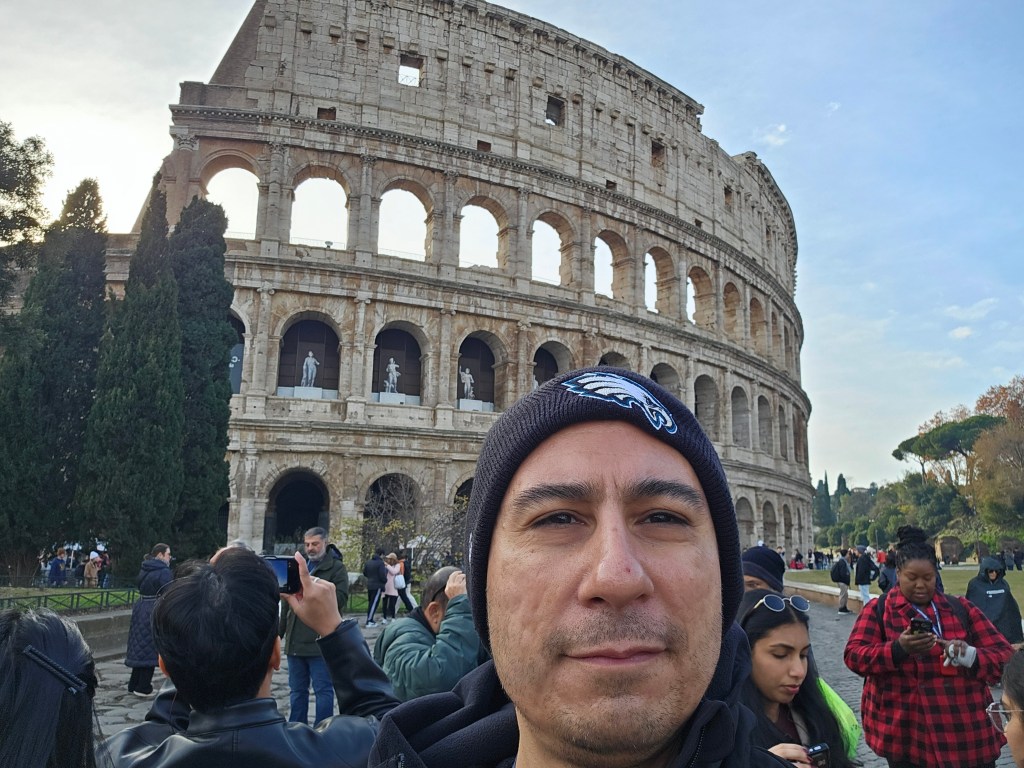
Look, Rome is a hell of a city. What is there to say that hasn’t been said already about its magnificence? I did not have the chance to really see much anyway. Due to the rapid-fire nature of this tour, I only had about maybe two hours to walk around on my own after getting a brief overview of the Colosseum and the donwtown area. Because the Sistine Chapel is in such demand, they only had room for eight people from our group, and I missed the cut-off. Rome is definitely not a city you want to just skirt through, as opposed to, say, Camden, NJ. But of course I managed to get the requisite Colosseum selfie shot for my personal records.
Following Rome, we went to Florence, which is another city you really want to immerse yourself into for a day or two at least. Florence is world renowned not just for its architectural beauty and history, but its leather. Italy makes some of the finest leather you’ll find in the world. There was a market there that I strolled around on a tactile investigation, and all the leather products felt as soft as silk. I no longer wish for a Comfort Sleep bed and a down feather quilt. I wish for a hammock made of Italian belts.
After Florence we were off to Venice, and before you ask it, no, I did not do a gondola ride, as it was raining, and sitting in one as a singling felt kinda weird to do. If/when I ever go back with a fiance or wife, I’ll probably do it then.
The majority of the members of the tour seemed to be married couples, with a few families. I’m pretty sure I was the only American, actually, which was something that only intensified my homesickness. The demographic breakdown was primarily Indian and Chinese, and some Spanish citizens. There was one Australian mother with her teenaged daughter traveling together.
By the way, out of everything I saw, by far the strangest was a t-shirt worn by a little kid belonging to a family of four who I think were British or something. They were White, but had European accents I couldn’t quite place. Anyway, their son, a six-year-old, took off his jacket at a table and he was wearing–I kid you not–an Ice Cube Straight Outta Compton t-shirt. This was not some “urban” White family, mind you. This was your well-to-do everyday suburban fam you see in NFL commercials advertising bowtied luxury vehicles. I had no idea Ice Cube was still so relevant in Europe, much less to a family with young kids who probably only know the gangster rapper as an actor in mostly bad comedies. Just odd.
I did learn that all gondolas have to be painted black due to some conformity law in the city. Venice is also sinking a few centimeters every year into the sea. Like in Rome, our tour got about two hours to walk around on our own, but I had to use most of that time to eat lunch.
Which brings me to a recurring annoyance in Europe–you have to pay to use almost all public bathrooms. The fees are usually seventy cents to one Euro, which comes out to almost $1-$1.25. Cheap enough for once in a while, sure. But when you’re out walking around everywhere day after day, that can really start to add up. Bathrooms have a turnstile and coin machine like you see in subways, and will take either coins or card. One time I didn’t have change so I had to use my debit card. I had to swipe my card to use a urinal! Maddening, and somewhat of a culture shock if you’ve never seen it before. Of course, restaurants and cafes and other places would have bathrooms, but you had to buy something to use them. And no, you can’t just sneak in. Often there were attendants posted outside bathrooms standing guard.
I harp on the bathroom thing not just because it’s a curious idiosyncracy but because it reinforces the pressing sense of REGULATION that weighs on you around Europe. Everything feels very tightly controlled, apportioned, and restricted. It’s like walking through a giant open-air museum. Supermarkets and highway convenience stores have a designated entrance with turnstiles and one designated exit with sliding security doors. Our bus driver had very strict break times he was mandated to use during our trip. During these break times, we had to disembark so only he was inside. Tipping is included in the food bill under gratuity, so there’s no need to tip a server at a restaurant. Then there are the portion sizes. Everything is SMALL in Europe relative to America. At my hotel breakfasts, I’d get coffee out of self-serve kiosks in these tiny mugs, so I had to keep going back and forth getting three and four refills to get a “normal”-sized amount coffee that I typically drink every morning. This became even more frustrating buying coffee in cafes because even a large is like a small, but you still pay for the “large” price as you do in America. This is true for food portions, too. I probably ate out like twenty times, and in almost every instance the serving sizes were meager but full-priced, of course. So, if you’ve got an American appetite, you’ll never feel like you’ve eaten enough, and you will feel ripped off.
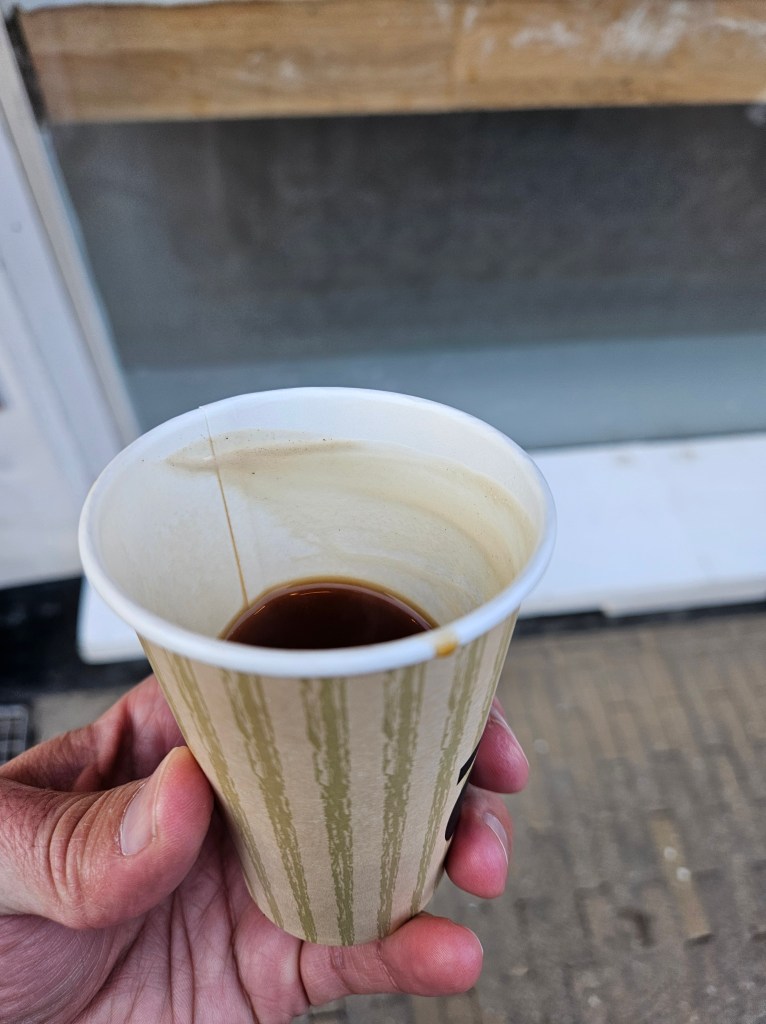
In Europe, everything is small and expensive and feels very controlled, and there is a gasping sense of confinement that can make you feel claustrophobic. This is understandable, as there are priceless attractions that are thousands of years old everywhere you go, and tiny cobblestone roads that were not built for gigantic automobiles. You feel the weight of history and the significance of surrounding buildings press down on you. There are cafes in Italy that are older than America and still owned by the same family. As an American, this does require a big adjustment. We are used to having tons of space, huge portion sizes, massive big box stores on every block, and mostly free bathrooms.
Because this trip took place over two weeks to see seven countries, we were constantly on the move. And sometimes this involved long road trips of hundreds of miles (okay, kilometers). After Italy, we headed north through Austria. Now, if there was ever a place you really want a nice, slow road trip, it’s there, because you get to drive through the stunningly majestic Alps. We had stops in Innsbruck and Salzburg on our way. Salzburg is the birthlplace of Mozart, and in fact his childhood home is still there on the main road. Salzburg also features the Fortress Hohensalzburg, which requires a lift up the side of the mountain to access. Definitely worth seeing for the views alone, but also for the interactive museum gift shop.
The next leg of the journey took me from Vienna through Budapest, Hungary, and then back westward into Slovakia and finally into the Czech Republic. During this time, I encountered a recurring theme in the many history lessons we received on our tours–the lasting effects of the Roman Empire. It goes without saying that the Romans defined Europe and made it what it is today, as they conquered it for almost 1,500 years. But it’s one thing to read about it or see it in documentaries, and another to physically witness the extent of the empire’s reach. For instance, the Danube river separating Budapest into two cities (“Buda” and “Pest”) served as the border. Later on, we took a cruise on the Danube and passed by the breathtaking Parliament Building.
We only made a brief stop in Bratislava, Slovakia to see one small Christmas market, but it was enough for me to make a peculiar observation–nearly every woman I saw looked like a supermodel. And I don’t just mean the girls staffing the shops in the market (who, of course, are likely hired for more than their congenial personalities), I mean just about all the ones I saw walking around. Granted, it’s a small sample size, but it was enough to make me wonder what’s in the water. There must be some evolutionary reason for how that particular territory tended to favor smaller, angular faces, slimmer bone structures, diminutive noses, and clearer, porcelain complexions–features that are generally associated with attractiveness. Perhaps it’s the colder temperatures, or something to do with the migratory patterns of the Slavs, and how that may have influenced selective breeding. It could also just be purely subjective.
I have some history with Slovakia. While traveling back from Israel in 2001, my layover was again in Frankfurt, and it was there I happened to get into a conversation with a Slovakian woman who sat across from me. This was so long ago that I can’t even remember her name, or what she looked like (probably attractive, given the apparently advantaged gene pool), only that she was quite friendly and conversant. I don’t even remember what we talked about. It was odd how she seemed to pick me in particular, though it was probably because I looked blatantly like an American, and even odder how comfortable I felt opening up to an absolute stranger like I did (which I don’t think I’ve ever done since) for an hour before my flight took off. I think about that interaction once in a while. I hope whoever that woman was, she’s okay where ever she is.
Anyway, I’ll need to investigate further into the Curious Case of the Enduring Hotness of the Slavic Female. If any universities or governments are funding grants for research projects on this topic, I’d be very interested in signing up for a lengthy study.
Prague. Wow. Just wow. Without a doubt the most beautiful city I’ve ever visited, made even more so during the illuminated Christmas season. This is another city you want to spend a week exploring, not a mere 48 hours, as I did. The downtown area alone is worth an entire day. There is something truly ethereal seeing Prague Castle lit up at night during the holidays. You also have the famous Astronomical Clock, and the many bridges, including the famous Charles Bridge.
I also have some history with Prague that made the experience somewhat bittersweet. An ex-girlfriend of mine was obsessed with the city, having been there as a child for some time, and wanting to return and spend a year there. Though she invited me to join her on this journey, I had to decline due to needing to return to work. This was after my return to school to finish my degree. So, we wound up splitting up. To be honest, the relationship had been heading south anyway, but then again it’s hard to compete with a city like Prague. I can certainly see the allure. I’d like to visit again and spend more time there, and only when it’s warmer.
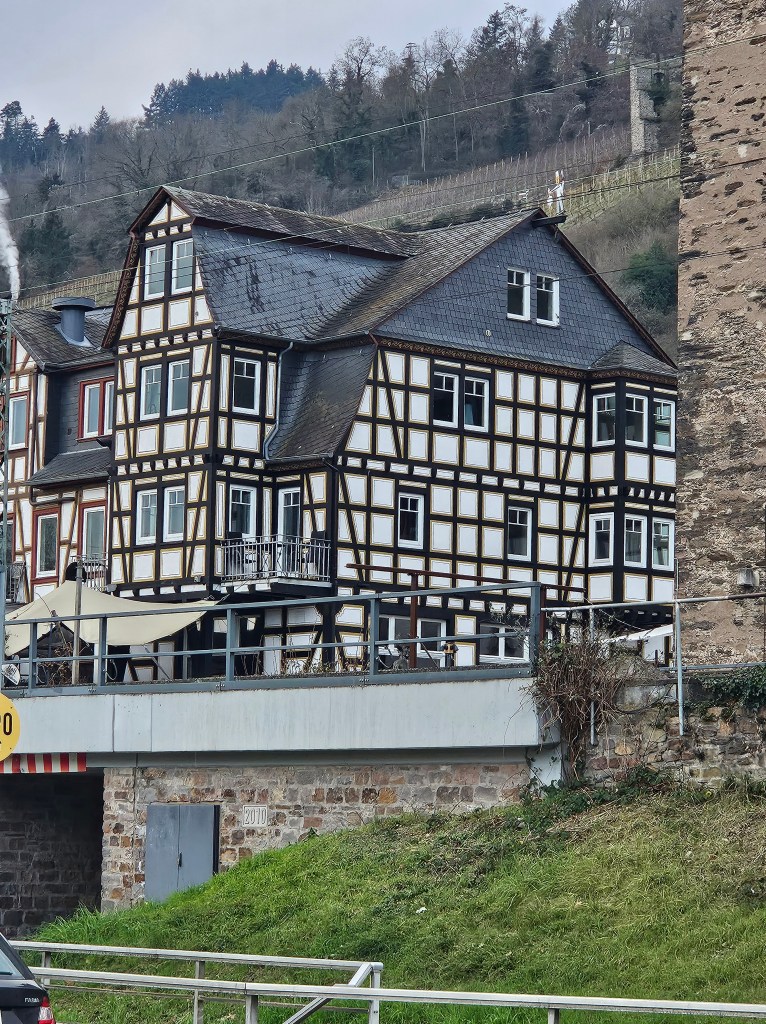
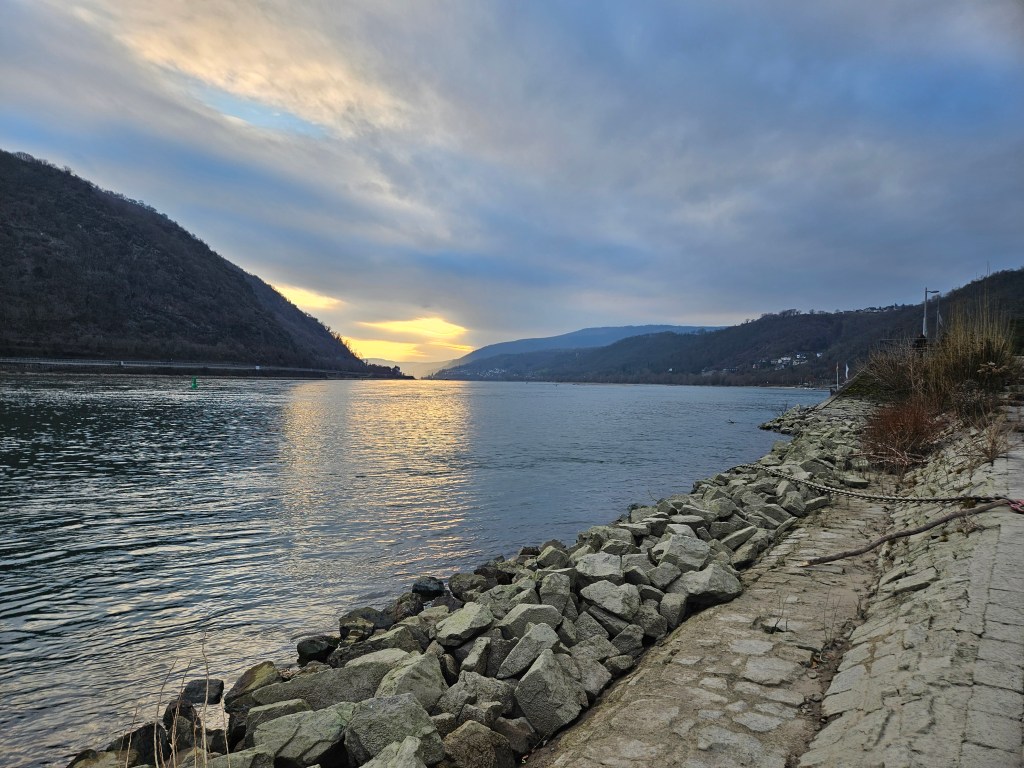
After Prague we went through Germany, including Frankfurt and Cologne, went on yet another cruise on the Rhine (I can’t even remember how many boat rides I was on but there were many), before finally arriving at my last stop–the “Venice of the North,” Amsterdam.
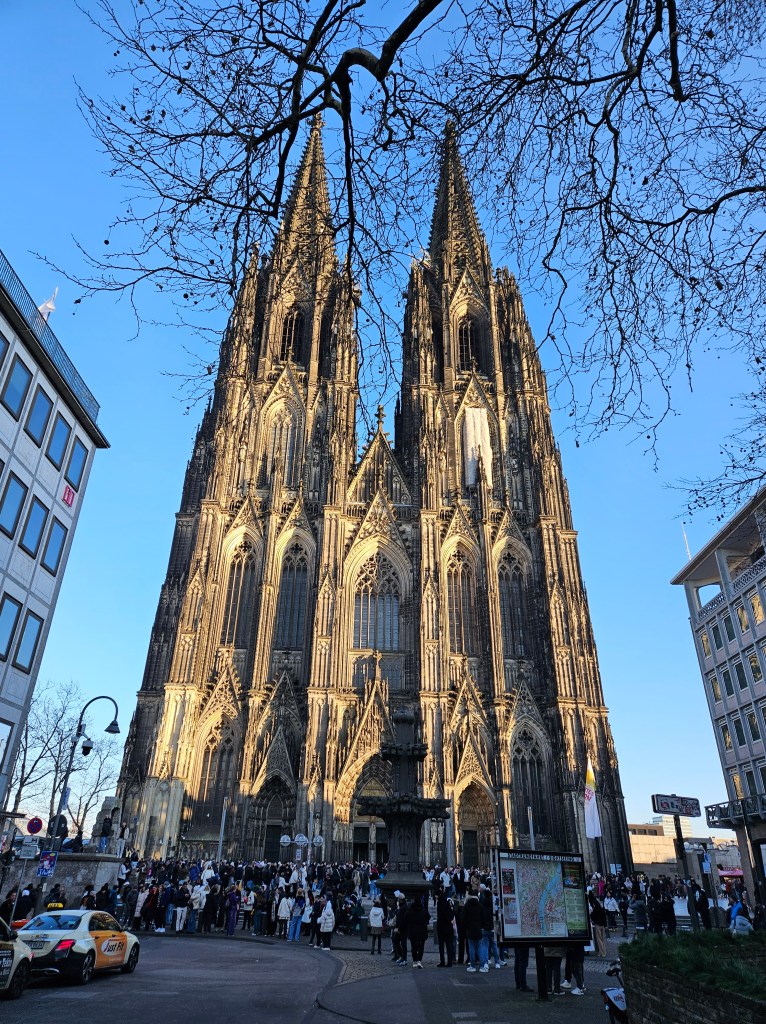
Let me back up a moment to devote some much-needed text on what is the most magnificent building I’ve ever seen, and what I consider possibly the greatest structure in the world–the Cologne Cathedral. “Awe-inspiring” doesn’t even begin to describe this building that took over 500 years to build. And that’s just the exterior surface. For years, I thought the stones were naturally black, but that’s actually due to the smoke from the bombing during World War II that seeped into the microscopic pores. As our guide Jose explained, the Allies used the Cathderal as a reference point in their bombing, which is why the cathedral was thankfully not harmed during the war, but it didn’t escape the soot and smoke from the many explosions. The inside is even more amazing, containing massive stained glass windows, flawlessly arched ceilings, the Shrine of the Three Kings, and various gilded and silver-line tombs. The Cologne Cathedral is worth a day on its own–it’s the most visited site in all of Germany–so, definitely make plans to visit it while you’re there.
Back to Amsterdam. Now there’s a city that’s worth spending a week exploring. Amsterdam is famous for its canals, in which some people have parked boat houses where they actually live full-time. Amsterdam is city that demands to be seen during the springtime, as it’s also famous for its tulip season, as well as bike riding. There are more bikes in the city than cars. In fact, cars are another thing that are heavily taxed and regulated throughout Europe to the point that unless you have money it’s probably impractical to own one. But unlike in America, which is, of course, car-centric, Amsterdam is built for bicycles. Or just walking around.

And, yes, Amsterdam is also famous for its red light district. I did walk through there, but to my surprise, there weren’t scantily clad women waiting luringly in crimson-lit windows beckoning you forth. It was mostly restaurants lined up in there. What viewing rooms there were were all empty. This might be a seasonal thing. You obviously can’t have a bunch of dickhead tourists gawking at the women in the windows, and taking photos, of course. I guess if a gentleman wants time with one of the ladies, it’s arranged online beforehand. I have no idea how any of that works, but my point is the red light district can satisfy more than just one type of appetite.
That brings me to the end. I whizzed through so many places and attractions, and I know I’m giving them all short thrift in this brief chronicle. But it felt like I was on a zipline the whole time. Like I mentioned, I will never do a trip like this again. I will only see one or two countries so I can take the proper amount of time to enjoy them. I don’t even know how comfortable I’d be getting on a tour bus again. I chose the Christmas season thinking it would be less packed, but that proved faulty reasoning as the busses I traveled on were maxed to capacity.
I was honestly so overwhelmed by everything I saw that it took me almost a week when I returned to feel back to my normal self. It was absolute sensory overload, and by the end I couldn’t wait to get home. I’ve never been so thankful to sip a (full-sized) cup of Dunkin Donuts coffee. I “enjoyed” it, yes. I would certainly travel to Europe again. But due to the breakneck speed of the trip, I felt disoriented the whole time.
Finally, here are some factoids/highlights/tips/pointers and other observations I’d like to put out there for anyone thinking of traveling to Europe:
— You can avoid extra charges for checking luggage if you get a carry-on bag that fits under the seat and a small suitcase for the overhead compartment that is no bigger than 22x14x9 in size. Because I had stops in Houston and Philadelphia before and after my Euro trip, I had eight flights in total, so avoiding extra fees where necessary was mandatory for me. At about $75 a bag per leg of the trip, this would have been at least an extra $300. A 22x14x9 suitcase, granted, is not that big, but you’d be surprised how much you can fit if you are judicious about what you pack. I had enough space leftover for souvenirs and gifts for family members.
— Be prepared to have to relearn common activites like doing laundry. Almost none of the hotels I stayed at had laundry machines, or if they had a laundry service it would have taken too long before I had to leave. So, I had to find a local laundromat on two occasions. But unlike in many American laundromats where the machines are often coin operated, the ones in Europe will use a central machine or kiosk that controls all the machines. This can be a little frustrating and confusing at first. At one laundromat, I had to use a card, and it even prompted me to enter my email address.
— Restaurant service in Europe is…lax, let’s say. If there’s a downside to waitstaff receiving a “living wage” as they supposedly do, it’s that the service is generally subpar. They don’t have to worry about not receiving tips since gratuity is already baked into the menu prices. They also aren’t in a hurry to give you a bill. I had to hunt down my waiter on several occasions so I could check out and get going. Wait staff also tends to disappear, or you end up with someone else altogether by the end. Then there’s this little oddity I noticed in Hungary and the Czech Republic–when they bring you your drink, they only fill your glass halfway and then leave the bottle.
— Try to get a layout of the airports you’ll be traveling through, and the official procedures you’ll have to undergo. For instance, I assumed that I would have to go through customs when I arrived in Rome, where my trip began. In actuality, I had to get stamped in my layover stop in Amsterdam in order to get to my next departure gate. This can be problematic if you have a connecting flight and are short on time. This bit me in Dublin during my return. My flight leaving Amsterdam was delayed for over two hours due to fog, so by the time I arrived in Dublin I only had about 45 minutes to get to my next gate. No problem, I thought at first, thinking it would be a quick jaunt across the airport. Except, because I was bound for the U.S. I had to go through U.S. Precheck, and that involves standing in THREE LINES. There’s an initial line on the first floor where they scan your boarding pass. You have to wait in that one until they let a bunch of people go down the escalator. But that only leads to the MAIN LINE, where you have to present your passport and go through TSA. Then afterward there’s a third line. It was the third line where I caught a break. For non-Americans, it’s another long line. But there is a narrow lane for Americans where there were few if any people. Unfortunately, on my first attempt I only got to my gate right after it closed and the plane had just departed. But fortunately, Aer Lingus, an Irish airline I’d booked with, was very gracious about setting me up in a nice hotel right by the airport and booking me a seat on a flight the next day. They even gave me a meal voucher for the restaurant in the hotel. So, good on Aer Lingus.
— Europe loves its croissants. I, however, am not a fan. I find them flaky, tasteless, and unfilling. Give me a normal bagel anyday. I actually found most of the breakfasts disappointing. The eggs and bacon–two pillar breakfast staples–consistently tasted rubbery and off, and so I was often left with yogurt and granola, toast, or pastries and other things for a makeshift breakfast. As a 180 pound six-foot-tall man, this was not ideal. I’m not even a big eater and I found myself constantly underfed during my trip. I’m very particular about what I eat, and the inadequate food options I ran into became a recurring irritation. I know, you’re thinking because it’s Europe food shouldn’t be a problem. Except at many of my hotels there were limited restaurants nearby. In the case of one in Italy, there weren’t any accessible, so I had to instead go to a nearby supermarket and buy a sandwich from the deli section and whatever else I could. Plus, because of severe time constraints, I didn’t exactly have the luxury of finding the “right” restaurants nearby. I had to grab whatever I could. Or, because it was the holidays, and many places closed early, I had to eat what I could from vendors. Christmas Eve in Frankfurt, I wound up having to eat at a McDonald’s, just for sustenance. Do you have any idea what kind of a nightmare that is for me as a certified McDonald’s-hater for life? A big one, that’s what.
— Again, be sure to carry several Euros in change for the pay bathrooms, so you don’t find yourself in any uncomfortable or messy situations. If you’re a man, you likely won’t find too many lines to the toilets. If you’re a woman, God help you, especially around the big touristy spots. I’d find lines wrapped around the block going to the ladies room. Europamundo was pretty good about bathroom breaks, and telling tourists where to find them, but you always want to be proactive. And of course, if you’re given the chance to go before getting back on the bus, ALWAYS GO, because you could be on the road for hours for all you know.
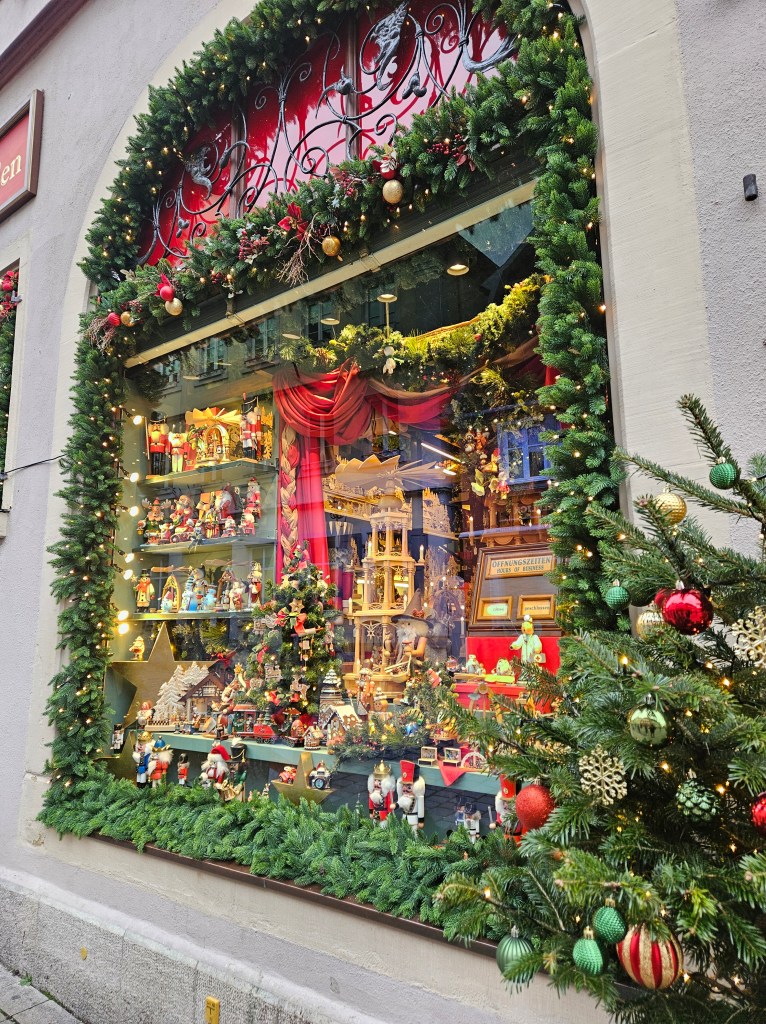
If you’ve made it this far, thanks so much for reading. Here’s one final pic of my favorite Christmas tree. There were a lot of great candidates, but this one in Amsterdam with the red and gold color scheme and the crown really won it for me.

 Dean Brooks