There’s Never Been A Nice Time In Politics

The Mighty Mean Meme Machine Strikes Again

Made with Grok

Whenever I’m feeling masochistic, I like to visit r/Presidents on Reddit. That sub has a rule that won’t allow posting or references to current or very recent U.S. presidents. You can only mention up to Obama. The reason for this is to prevent fighting over modern day politics.

However, a side effect of that rule is that many posters have built the sub into a hazy idealized nostalgia feels zone. I’ll often encounter comments referring to the “dignity” and “respectability” of past presidents compared to the divisiness and nastiness of today (meaning Trump, basically). Particularly when it comes to old presidential debates.

Except how many people remember anything of substance from old debates? We really only recall the gaffes or the attacks. I remember “binders full of women” by Romney. “Please proceed, Governor,” by Obama. “Well actually, he forgot Poland!” said by George W. Bush to Kerry when the Massachusettes Senator happened to forget one of our allies in the global War on Terror. There was George H.W. Bush checking his watch in the 1992 three-way debate with Perot and Clinton. In the 1988 Vice Presidential debate Lloyd Bentsen delivered perhaps the G.O.A.T. comeback ever with his “You’re no Jack Kennedy,” to potato-mispeller Dan Quayle. Reagan had his humorous “youth and inexperience” line against a knew-he-was-going-to-lose Mondale. Then there was the famous Nixon vs. Kennedy debate, where the youthful JFK came across as dominant and likable on a newfangled invention called the TV, while those who listened by radio thought Nixon had won. Or so the legend goes.

Aside from all that, I can’t think of too many other presidential debate moments prior to Trump’s clomping and stomping foray into the modern day political arena.

The recent Trump vs. Harris debate did produce a couple of bangers. All by Trump. Most notably, in response to reports of Haitian migrants chowing down on family pets in Springfield, Ohio, “They’re eating the dogs, they’re eating the cats.” After the moderator informed the GOP candidate that a city official had not confirmed that, Trump followed up with, “Well, I saw it on TV.”

Hilarious. Hate him or love him, the man truly is a meme come true. The humorously visceral comment has caught on like a pop song ear worm. “They’re not sending their best,” and “Because you’d be in jail,” saw similar mileage.

Scott Adams puts it succinctly here:

Contrary to what Reddit intellectuals may think, there was never a golden age of agreeableness in American politics. Or politics in general. It’s comforting to paint the past in pleasing verdant green, when it’s mainly been a flame-red hellscape. The era of George W. Bush is even hailed as some better bygone age. How quickly people forget. I remember how viciously Bush was hated, in no small part due to his disastrous war of choice against Iraq. The man’s poor speaking skills were also routinely ridiculed. Reagan was called an “amiable dunce.” Lyndon Johnson hated Robert F. Kennedy. Andrew Jackson thought the people were a “beast” and hated the central bank with a passion. Nixon hated most and distrusted just about everyone.

Trump’s comments have gone viral on TikTok. AI photos of pets armed and wearing camo gear, ready to defend themselves against attackers have trended on X. In twenty years, cats and dogs and the threat of them being eaten will more than likely be the only thing remembered from that singular Trump/Harris debate. Is it “good” or “right” that a 90-minute discussion between two people who hold the keys to the nation’s future be ignored in favor of a silly soundbite? Maybe not. But that’s how it’s been down through history.
A Pathological Obsession With Diversity

Virtue signaling or genuine longing to display the human rainbow?

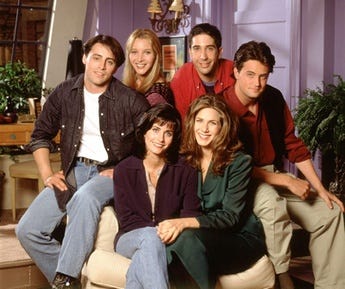
By An article in The Baltimore Sun, Fair use, https://en.wikipedia.org/w/index.php?curid=20960240

The title of this piece is in reference in part to some recent comments made by Adam Goldberg, who played a bit part on the show Friends back in the day. In an interview with Independent, when asked about modern criticism toward the show due its lack of diversity, he said:

And in terms of diversity, looking back, it seems insane. I’ve heard Black people speak about this and it’s like, you never expected to see yourself, so when you didn’t, it was not a surprise, and you ended up identifying to characters, irrespective of their race.

The ’90s was a weird time in TV history when it came to racial integration. Back then, TV shows were largely segregated, with little integration unless an episode was racially-themed. You had White shows like Full House and Married with Children. Then you had Black shows like Family Matters and The Fresh Prince of Bel-Air. There were no mainstream Latin or Asian shows to my knoweldge. Certainly no Native American ones. It was vanilla and chocolate, with hardly any mixing.

Friends was not unsual in its milk-colored casting choices. I never watched the show, nor did I ever care for it or find it funny. What little I’ve seen of it I find cringe and annoying. I’m a Seinfeld guy. But I do recall that Friends had a wide and ironically diverse audience despite its “insane” lack thereof.

In 2004 in college I was friends with a young African woman who loved the show and raved all week about seeing the anticipated series finale. In one of the lounges, people gathered around watching the last episode. To be clear, it most likely had a largely White audience, but the show’s humor (or what passed for it) seemed to catch on with all kinds.

Goldberg’s comments are rather innocuous. The show’s co-creator, Marta Kauffman, however, was more passionate in her response. Saying to the Los Angeles Times:

“I’ve learned a lot in the last 20 years,” Kauffman said in a Zoom interview. “Admitting and accepting guilt is not easy. It’s painful looking at yourself in the mirror. I’m embarrassed that I didn’t know better 25 years ago.”

She adds:

The series’ failure to be more inclusive, Kauffman says, was a symptom of her internalization of the systemic racism that plagues our society, which she came to see more clearly in the aftermath of the 2020 murder of George Floyd by Minneapolis police and the worldwide protest movement that erupted around it.

Kauffman felt so bad about her supposed “failures” that she donated $4 million to her alma mater, Brandeis University, to establish a professorship in the school’s African and African American Studies Department. A nice gesture on her part, I suppose. Perhaps the largest sum anyone’s ever paid to soothe their conscience for the crime of creating an insufficiently diverse hit TV show.

Though I would call it pathological. How sad and tragic that someone’s greatest accomplishment in life should be sullied by such pointless feelings of guilt over an imaginary transgression. This is the kind of remorse appropriate if you killed someone drunk driving. But casting six White people with good chemistry in a dumb sitcom? Please. It all seems performative and just a cynical attempt to pay off an angry mob.

It’s not the job of a TV show or movie to perfectly represent some fictious ideal image of a multicultual society. Or to live up to some hypothetical future standard. Sitcoms are notoriously tricky to cast for and rarely succeed. Many are canceled right out of the gate. The best ones all have a rare casting synergy, and for the most part have been homogenous. Comedy in general is largely a birds of a feather affair, save for some exceptional pairings like Gene Wilder and Richard Pryor. Or Lucille Ball and Desi Arnaz.

Even when a show injects some ethnic mixing, it often comes off as unconvincing, forced, or awkward. I always felt that the Indian character Raj in The Big Bang Theory was marginized and especially virginal compared to the better developed White characters. In the first season he hardly even speaks. But I suppose he represents “diversity,” or at least serves as an avatar of it.

I find myself agreeing somewhat with Lisa Kudrow, who said in the New York Post (emphasis mine):

“I feel like it was a show created by two people who went to Brandeis and wrote about their lives after college,” Kudrow said.

“And for shows especially, when it’s going to be a comedy that’s character-driven, you write what you know. They have no business writing stories about the experiences of being a person of color,” she added.

I think Kudrow’s comments make a very good point, and illustrate how we should not assume that a lack of diversity is due to malice or internalized racism, but an inability to be as authentic as the art requires. If you had primarily White friends in college and directly after, and then you proceed to make a hit show based on that life of yours, and that show goes on to get made with an all-White cast and becomes a cultural touchstone (however undeserving or absurd that is), then I say good for you. You have nothing to feel bad about.

I mean, at the end of the day, are we really going to take some overrated crap show like Friends and call that a mirror or summation of ’90s culture? No show could possibly encapsulate the ’90s. I lived in and remember that entire decade. Does that show reflect our society or just one woman’s experiences as a young person living in New York City with her stupid friends? Are people so desperate to see themselves in things that they’ll attack a show that’s been off the air for two decades over its lack of diverse casting? Especially now in the social media age we live in, where anyone can put themselves out there on a dozen platforms and find an audience no matter what race or ethnicity they are?

Attack Friends all you want for being unfunny and cringe as hell. But don’t waste your time bashing it for its lack of diversity. That’s actually insane.

Desperate Middle-Aged Corporate Slave Bets His Family’s Life Savings On A Crypto Token And Then This Happens

The insane story of Dan Conway.

Source: Midjourney

You know those crazy videos where someone goes skydiving or performs parkour stunts on the edge of a skyscraper? The ones that give you sweaty palms just watching them?

That’s what it feels like reading about a middle-aged guy with a family who sank his entire fortune into a brand spanking new digital currency that just popped into existence.

But that’s exactly what Dan Conway, a former middle manager slaving away in corporate America did back in 2016. He put his family’s life savings into a new crypto called Ethereum.

Now, in retrospect, this may not seem like the absolute worst, most insane idea anyone’s every had to make a fortune. Since its inception at around $2 in 2015, Ethereum has climbed to as high as almost $4700 back in November, 2021. It currently sits at just over $2300.

But we’re talking almost ten years ago. When Bitcoin and the entire crypto market were still in its toddler years. It was the wild west.

Conway’s idea was partly inspired by Bitcoin’s shocking success in 2013, when it ran from under $100 to over $1000 in a matter of months. Could Ethereum perhaps replicate the same sort of mindboggling returns? That was the big question.

At the time, Conway was 45, “quietly desperate,” and slaving away as a corporate middle manger in San Francisco, making $150,000 a year. He was married with three kids, had about $100,000 in savings, and some built-up equity in his home. While not destitute by any means, Conway was like a lot of people willing to do anything to escape the 9–5 grind. Making matters worse (or better, depending on your POV), Conway had a somewhat addictive personality. He’d struggled with alcohol and drugs. He was even in a 12-step program.

But he was able to channel his “mania” into a new obsession — this strange new cryptocurrency. As he learned more, he became more confident that ETH could potentially replicate Bitcoin’s success from years earlier. His belief was partly due to his experience working for Macromedia in the ’90s, the company behind Flash. He was familiar with how a new tech product with the right developers can suddenly catch on and rapidly soak up market share.

Still, ETH was so new that even his friends in the San Francisco tech world didn’t believe in it.

“Most of my friends in tech — folks working at places like Google, Apple, and Uber — were dismissive of blockchain. Few of them had heard of Ethereum. When I told a buddy of mine that I was considering investing in cryptocurrency, he broke out in laughter, as if I’d admitted I was hedging my future on Smurfberries or Scooby Snacks.” (Source)

Nonetheless, in mid-2016, Conway went to his bank Wells Fargo and transferred his family’s entire life savings to the new crypto exchange Gemini (founded by the Winklevoss twins) for nearly $7,000 ETH tokens, at a price of about $14.

Then something catastrophic happened.

All of a month later an Ethereum project got hacked and Conway’s $100,000 investment sank to less than $40K. It was a harsh welcome to the world of crypto. While most people might have capitulated, the sudden reversal only cemented Conway’s belief in ETH’s potential. He doubled down. Big time. By sinking over $200,000 of home equity into the dip. Now he was all in at $300K but at an average price of about $11 a token.

As it turns out, the frightening flash crash was the pivot point. Over the course of the next year crypto saw a return of the bull market. Ethereum climbed from its bargain basement price of $8 to over $1,300.

By the time Conway cashed out in late 2017 into early 2018, his risky bet had turned into $10 million.

However, there was a huge personal toll to pay on the path to decamillionare status. Conway admits to a lot of emotional volatility, obsessively tracking ETH’s price, and late soul-searching nights worrying about his crypto account getting hacked. He was fired from his job. He even wound up in the emergency room with a “panic event.”

I find Dan Conway’s story equally thrilling and inspiring. Even somewhat relatable. I had some success with Ethereum, Bitcoin, and other cryptos myself back in 2020. It was reading stories like his that motivated me to finally step outside the comfort zone of my more conservative investing style, and take a little risk on this new asset class. I started with Bitcoin when it was under $10,000, and then Ethereum when it was sub-$500. While my returns aren’t nearly as high as Conway’s, I’ve still done okay. Time will tell whether the crypto market will undergo another face-melting run like before.

Conway is a unique personality. Very few people would be willing to go all in on something so unproven as a new crypto token like he did. Especially at 45, with three kids, a wife, and a mortgage, living in one of the most expensive areas of the country. There’s something very admirable about that. Reminscent of the Old West gold rush prospectors, or the family’s that traveled West on the Oregon trail.

However, Conway is very aware of his good luck:

“I banked everything I had on a relatively unproven technology and got out at the right time. For every story like mine, there are hundreds of others about people who lost it all. I know that could’ve easily been me.

At the same time, I’m no blackjack player. My investment wasn’t purely a blind gamble that came up aces. I was, and am, a true believer in crypto — and I had the right mix of courageousness and craziness to take a big risk.” (Source)

Since striking it rich in crypto, Conway has retired to a more normal life. He’s written a book called Confessions of a Crypto Millionaire. If you want to read more, you can also check out his first-person account of all the action in The Hustle.

Would you be willing to go all in on an investment you believe in? Was Conway crazy or ahead of the curve?

Beta Signalers or Legit Feminism Regretters? Examining Another Female Meltdown

Sorry, I’m not buying it.

Source: Fox News

Every once in a while I’ll encounter these weepy profile pieces on middle-aged women who have allegedly “seen the light” about how feminism tricked them/destroyed their life/whatever, and how they now just want a nice, “traditional” life with a husband and family.

Recently, this article from the New York Post has been making the rounds in certain communities on X about a 38-year-old woman named Melissa Persling who feels “betrayed” by feminism. In an article she wrote in Business Insider, she confessed:

“I’m 38 and single, and I recently realized I want a child. I’m terrified I’ve missed my opportunity.”

Shortly after publishing, Ms. Persling suddenly had an epiphany about some guy she had friendzoned a year earlier. Now this guy is magically “the one” and in fact someone “God has been preparing” for her. Now the two are together, thinking about the future. She can’t wait to have a traditional life, even if that means not putting on “heels” and going to “fancy dinners.”

I’m happy the lady has seemingly found happines. But I’m not buying her bullshit. In fact, there are so many red flags here it’s hard to know where to begin.

For starters, Ms. Persling was married at 22 for eight years to a nice, small town Christian guy, before getting divorced at 30. But back then she was firm about not wanting children, and by her own admission, treated the guy with disdain. After her divorce:

“I told my friends and family I’d never get married again. I needed independence, a fulfilling career, and space to chart my own course, and I didn’t think marriage fit into that vision. I was content to look toward a future without a husband, children, or the trappings of a ‘traditional’ life,’” she wrote.

But as age 40 approached real terror set in, and Ms. Persling became afraid that she’d end up alone forever. Now she’s a born-again traditionalist.

Sorry, I have no sympathy for people who were basically gifted everything, and then decided to throw it all away because it somehow wasn’t good enough. All while treating the people who gifted her stuff like shit.

Ms. Persling goes on to say how she had a lot of self-discovery to work through, including “previous trauma” about her parent’s divorce.

“I grew up in a fairly traditional family, but my parents were divorced. And I would say that probably had some effect on my feelings about having a family coming from a broken home certainly has its hardships,”

And yet, this alleged “trauma” didn’t prevent her from marrying a guy for 8 years. However, I blame the guy for wasting all that time with her. If you’re a man who wants children and a family, don’t waste your life on someone who’s firmly against all that. Far too many men these days are far too indulgent and nice toward women who are selfish assholes. I mean, pussy is good and all, but at a certain point you’ve got to put your foot down and commit to your values.

Ms. Persling adds:

“I feel unbelievably betrayed by feminism, and I don’t want to put it on the movement [entirely] because I believe you make your own choices… But I was constantly fed this idea that women can do everything. We don’t really need men… I kind of want to go back to some of those teachers and coaches and say, ‘What did you mean by that? Because we can’t do it all.’”

The hysterical emotionally charged phrasing of “unbelievably betrayed” makes me suspicious right away. It’s too melodramatic. It’s too performative and “damsel in distress.” This isn’t about declaring some genuine internal change. This is attention-seeking behavior rubbing against the grain of feminism because that’s what will generate clicks and engagement. Anti-feminists are all the rage on YouTube and X now. Melonie Mac, for instance. They’re weird types. Often tattooed, masculine, swearing like truckers all while professing Christianity and traditionalism.

Ms. Persling is exactly the kind of toxic personality men should avoid. These 30-something born again Jesus-loving ephiphany-havers are sadly a common type. I used to see them all the time on dating apps. It’s practically a cliche, and almost always indicative of a troubled past and severe baggage that some nice sucker will soon be expected to handle. There was one profile I saw of a 33-year-old who declared in her profile that, “You would be expected to help me walk in the faith.” Madam, I don’t even know you and you’re telling me I’m partly responsible for your eternal soul?

It’s not that I don’t believe people can really change. It’s that I think a lot of women like this have just found a way to repackage their troubled, sloppy selves to make them more enticing to suckers. Rebaiting their hooks, so to speak.

I do applaud Ms. Persling on her personal development. I wish her all the best. Seriously. But she’s a good reminder for why a lot of good men decide to just stay single.

What’s The Deal With Jerry Seinfeld? He’s A Billionaire Now, For One

The comedian has some life and financial advice.

Jerry Seinfeld’s a billionaire now. Which is no surprise given he produced one of the most successful and iconic TV shows in history. If you’ve ever met someone who couldn’t quote at least one line from the sitcom, you met a real live unicorn.

I always pay attention to what Seinfeld has to say, just because he usually has a unique take on things. The best comedians are also philosophers. Even his “show aboout nothing” was a hilarious commentary about social interactions and the endless quirks of humanity. It’s part of the reason why Seinfeld still feels fresh nearly 30 years after it ended.

Yahoo article recounts some of Seinfeld’s financial advice:

“I told a bunch of kids around the table last night,” he said, “If your work is unfulfilling, the money will be too.”

Good advice, but given enough pay, just about anything could become “fulfilling,” I suppose. You pay me a million dollars a year to paint telephone poles light gray, and I’ll be one deeply fulfilled guy, I assure you. I tend to agree with Mike Rowe of Dirty Jobs, who has a more practical, utilitarian outlook on life.

Work is not always meant to be “fun” or “fulfilling.” It’s called “work” for a reason, not “fun.” Sometimes even boring or unfufilling jobs can help ground you, and inspire you to focus your creativity into something as a counterbalance. Not everyone needs to become a Hollywood director, bestselling novelist, or secret agent. Even people who have achieved their dream jobs sometimes find the minutiae involved maddening. Fulfillment can come from all sorts of places, and looking to work to provide you with meaning can sometimes prove pointless. A paycheck is sometimes an end in itself.

What if fulfillment is making enough money from a boring, “unfulfilling” job that one day you’re able to be financial independent?

Jerry goes on to say:

“In the seventies, it was all about how cool your job was,” he said. “If your job was cooler than mine, you won.”

The article mentions that the attitude toward jobs changed in the ’80s, where the preoccupation became busting Benjamins over “coolness.”

I was not alive in the ’70s, so I can’t speak to that. But certainly work culture in the ’80s and onward became more coldly corporate and money-driven. Probably that’s due to automation, digitization, outsourcing, industrial consolidation, inflation, and the decline in the value of the dollar. No one’s got time for “coolness” anymore.

However, these days I’ve noticed that activism and social responsibility are bigger concerns with Millennials and perhaps Gen-Zers as well. Many young people I knew in college and other places expressed interest in working for non-profits, or for companies that seek to make the world a “better place.” Whatever that may mean (usually some left wing cause). For a while the company that represented this ideal was Tesla, but then Elon Musk started sticking his head out the Overton window and all, and has since fallen out of favor with many due to his thought crimes.

Maybe Notorious B.I.G. is the one who’s right here. “Get money, fuck bitches.”

The article goes on to mention:

A Harvard Study of Adult Development suggests that money can meet essential needs and provide security, but its ability to enhance happiness diminishes beyond a certain threshold. The study emphasizes that genuine happiness is more closely tied to relationships and meaningful work than financial success alone.

A Harvard study was needed to confirm that? That seems like common sense. Good to know an Ivy League institution is investing time and money into confirming things pretty much every blanket-knitting grandma on a porch will tell you.

Yeah, fulfillment is often a tricky, shifting goal line. Maybe you get it from clerking the midnight shift at 7/11. Or from a 24-hour Fortnite marathon. Or rewatching clips of Seinfeld. Or maybe nothing really fulfills you. Not that there’s anything wrong with that.

Get That Bag By Age 50 Or Get Screwed Hard By The Harsh Corporate World

After 50, ageism, competition, and health concerns become paramount. And that’s if you’re lucky.

By Movie Poster Shop, Fair use, https://en.wikipedia.org/w/index.php?curid=56498157

The other night I was rewatching Jackie Brown. Quentin Tarantino’s 1997 low-key urban crime classic based on the book Rum Punch by Elmore Leonard, stars Pam Grier, Samuel L. Jackson, Robert de Niro, and Robert Forster.

After the massive success of ’94s bombastic Pulp Fiction, audiences were left slightly jilted by the quiter, subtler Brown. Less discerning audiences, anyway. Brown is a great film with nuanced performances, a smart script, and a dark, twisty plot. If Pulp is a colorful cocktail, Brown is a whiskey neat.

The film, set in 1995, might have left some viewers sour because of its unsexy themes regarding the occupational and romantic desperations of middle-age. In the story, Jackie Brown (Grier) is a lowly 43-year-old flight attendant working for a “shitty” Mexican airline, making all of $16,000 a year, plus benefits. That’s only $33,000 in today’s money. On the side, she runs cash across the border for Ordell Robbie (Jackson) a smooth-talking low-level arms dealer thug who murders problematic subordinates the way one takes out the trash. When she’s caught by police with one of Robbie’s packages, and two baggies of cocaine, she’s forced into making a deal with the feds. But Jackie Brown concocts her own scheme to turn the tables on everyone. At stake is a half a million in cash.

About mid-way through the film, Jackie sums up her station in life and her motivations for risking everything by setting up her crime boss:

Well, I’ve flown seven million miles. And I’ve been waiting on people almost 20 years. The best job I could get after my bust was Cabo Air, which is the worst job you can get in this industry. I make about sixteen thousand, with retirement benefits that ain’t worth a damn. And now with this arrest hanging over my head, I’m scared. If I lose my job I gotta start all over again, but I got nothing to start over with. I’ll be stuck with whatever I can get. And that shit is scarier than Ordell. (Jackie Brown, 1997)

Goddamn, did that articulate a lot of fears and concerns that many middle-aged people have about work and life and just trying to survive. Jackie Brown might be classified under the crime genre, but it’s a horror story in some ways, too.

There are many people on YouTube 50+ talking about their struggles in the workplace, finding employment and meaning in life. Recently, I found a channel called TheFadingMan, which features a guy in his mid-50s talking about depression, getting laid off, and other older worker issues.

In other videos, TheFadingMan talks about getting the run-around in interviews, job scams, misrepresented job ads, trying to lose weight, getting ghosted by employers, and being broke. Recently, the guy finally got a job after almost a year of looking.

TheFadingMan is brave for putting himself out there and letting everyone know how bad things can get for gray hairs. Especially when you’re overweight, unhealthy, and don’t have particularly useful skills or an advanced degree or connections. People at all ages are struggling to find work these days. But for those over 50 it’s like gravity is three times harder on them.

TheFadingMan is not alone. There are tons of channels like his, run by both men and women, talking about the same things. They are a sobering reminder of a cold, hard truth. The modern corporate system is largely hostile and can be especially harsh toward older workers. While ageism is discriminatory and illegal, that doesn’t mean companies won’t find ways to sneakily work around it. Aging by itself is tough enough. Health problems begin to arise in your 50s, or earlier, depending on your genetics and overall fitness. Life often drags with family responsibilities, debt, expenses, and other things.

Which is why it’s important to try to make enough by 50 to secure the bag for retirement. What does it mean to “secure the bag.” Basically, it’s making enough to likely secure a comfortable retirement with the help of compound interest. Even if you’ve only saved up $100,000 in retirement accounts and investments by 50, if that compounds at 10% a year, that will grow to over $400,000 by the time you turn 65 without further contributions. Saving $200,000 by 50 means you’d have over $800,000 by 65. That combined with Social Security will likely keep your head above water.

Everyone means to keep contributing and investing, of course. But the reality is that after age 50 you might not have a choice. Your employment prospects might become shaky and unreliable. You might suddenly develop health problems. You might have to start over after a divorce. Or you simply might lose interest in a career and want to try something else. There are a number of disasters and disruptions that can occur as you get older.

Even though you may not have to finagle a bag filled with $500,000 like Jackie Brown does in the movie, you will have to come up with a scrappy masterplan to survive. You’ll have to outwit your own metaphorical Ordell Robbie.

Take advantage of your youth and your prime working years to set yourself up best not just for retirement, but when you’re older, and when employment and living itself might become a slog. Even if you’re one of the few who lands a dream job or obtains a high status gig, that doesn’t mean you can’t be knocked off your lofty perch with one stroke of a manager’s pen. It’s tough out there at any age. But old age, as Samuel L. Jackson might say, can be a real motherfucker.

Examining A Cynical Red Pill Dicktum: “Women Hang Out at the Finish Line and They Pick the Winner.”

Source: Midjourney

The other day I went to visit a Lamborghini dealership and found a bunch of hot supermodels hanging out by the front entrance.

“Hey, what are you fine ladies all doing here?” I asked, after stepping out of my 2006 Saturn Ion.

“We’re hanging out at the finish line and picking the winners,” said one, who was still wearing her Miss America Contest sash across her clingy low-hanging silver dress.

“Isn’t that just like gold digging?” I asked.

“No, we’re just trying to find a high value man who will support us so we don’t have to work. This is totally different.”

“Oh, okay. Thanks. Have a nice day,” I said, and went inside to see if I could use the restroom.


If you hang around the Red Pill communities on X or YouTube enough, you’ll certainly run into the “dicktum” in the title of this article. It’s an expansion on the concept of hypergamy, wherein women searching for a guy will always look to date one who’s at a minimum across and up from her in terms of hierarchy and status. It’s caustically cynical, and more misogynistic than meanginful. Another smarmy throwaway is the oft-repeated, “She’s not yours it’s just your turn.” But that one is for another time.

Like many red pills maxims, there’s some truth in the statement mixed in with a whole lot of carnival philosophy. I’d argue everyone is looking to date “up,” both men and women. No one wants to date a “loser.” But everyone has different weights and measures when it comes to determining a “champion” verus a “chump.”

It’s not all about money or even looks. I’ve stated before that personality and geographic proximity have a lot more to do with attraction than most other things. If someone is with you just because you’ve got money or you look like Brad Pitt or Sydney Sweeney, your relationship probably won’t last or be very worthwhile. If you’re a guy who can’t get a girlfriend, it’s probably not because you’re cursed or something. It’s likely because you’re not social enough and therefore your potential partners don’t even know who the hell you are.

I’ve come across all kinds of weird and “illogical” relationships in my life. Ones that didn’t seem to make sense on the outset. I had a friend once who had been a “lazy weed dealer” (his words) who was in a commited relationship with a beautiful, college-educated, and very capable woman. She cooked, she cleaned, she even managed the finances. And she was in love with him. They’re married now.

I had a coworker; an attractive woman in her late 20s. She was always complaining about her boyfriend, who was unemployed and kind of weird. Then one day I asked if he’s so terrible then why did she have three kids with him? She couldn’t answer. Many such cases.

Point is, social proof markers and attraction are often very subjective, unpredictable, and even chemical things. Relationships are sloppy and rarely make perfect sense. The prince doesn’t always marry the princess.

“Women hang out at the finish line and they pick the winner” is an attempt at systemetizing courtship. As if it were as easy as just be jacked and rich and you’ll be sure to “get da girlz.” Sure, the beefy, rich dude might have an easier time at the bar with the floozy who just wants to have a good time. But there are plenty of guys and girls in that superficial category who end up as lonely assholes in life.

The statement does a real disservice to the whole idea of love and romance. It’s demoralizing to men in particular. It makes them think that if they’re not some handsome billionaire then they’re not worthy of a relationship. It turns women from human beings into essentially animals driven entirely by survivalist instinct. Like the xenomorph from Alien, or something.

I mean, if it were really true, you’d see single women lined up outside Goldman Sachs or Corvette dealerships all the time, looking to snag a “high value” alpha male. The last time I walked down Wall Street I didn’t see any hot girls holding signs with “Pick me!” written on them, I just saw some homeless guy puking into a trash can.

Time to Forgive Michael Richards (Kramer From ‘Seinfeld’) For His Racist 2006 Meltdown?

Is it possible to regrow your head after such a severe cancellation guillotine?

Source: Columbia Pictures Television

One of my latest distractions is watching old clips of Seinfeld on the ol’ YouTube.

Apparently, Steven Spielberg used to watch the show a lot during the production of Schindler’s List as a way to decompress from being steeped in depressing drama all dayWhich is certainly understandabe, though that makes for a little meta joke in the episode where Jerry gets caught making out with a woman in the theater during a showing of the holocaust biopic.

Seineld will always be comfort food for me. I used to watch it in college a lot, too, as a way to destressify and as a distraction. There’s something wholesomely timeless about the show, in addition to its jampacked hilarity. It’s like a string of gut-busting parables from some comedy Bible. It’ll still be funny and quite watachable even in 50 years. One hundred, for that matter.

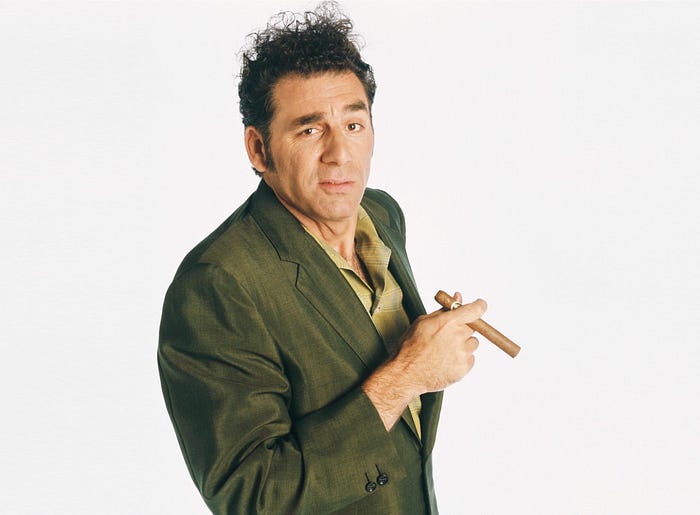
The character of Cosmo Kramer, played by Michael Richards, is one of the key ingredients to the show’s success. Kramer is like a classic slapstick goof from a Marx Brothers comedy, or The Three Stooges, offsetting Jerry’s barbed sarcasm, George’s interpersonal insecurities, and Elaine’s faux pas-laden hijinks with a distinct physical comedy. He’s like a human cartoon. Roger Rabbit made flesh.

Of course, Michael Richards is infamous for his 2006 meltdown at the Laugh Factory in Los Angeles. Respondng to a heckler, Richards started slinging racial slurs around like a malfunctioning tennis ball launcher. You can check it out for yourself:

I remember this happening like it was yesterday. On the one hand, what Richards says is obviously horrible, though I’ll admit when I first heard about the whole thing I thought it was just an attempt at making really edgy comedy. Bill Burr once roasted the whole city of Philadelphia in an epic rant the same year as Richards’ ferocious prejudicial diatribe. Other comedians like Sam Kinison and Bill Hicks have gotten into it with bad faith folks in the audience. Dave Chappelle has gotten into hot water over his jokes about transgender people, and he’s still chugging along just fine.

I wasn’t even offended by the leaked cell phone recording because I considered the comedy scene akin to a gladitorial arena. It’s the one place you can let loose and go nuts. It’s live theater, and sometimes shit goes nuclear. You don’t go to a Tarantino film and freak out when a character says “nigger,” do you? You don’t get your panties in a bunch when South Park makes fun of a mentally challenged character, or calls a celebrity a pile of crap, right?

The whole thing was kind of over blown, and I still think a lot of the “outrage” was performative and opportunistic. It’s not like Richards accosted some random guy in the street and started yelling all that obscene stuff. He was throwing it back in the heckler’s face in the worst possible way he could. Anyone who’s ever gotten into a verbal spat with someone on the schoolyard or anywhere knows things can get pretty heated and stuff is often said that is not really meant.

Of course, Richards crossed over the line big time. His racist tirade went super viral and essentially destroyed whatever was left of his career at that point. He hadn’t had much success in anything since his Seinfeld days. Since then, he’s done some bit parts here and there. But lately, he showed up on the red carpet for Jerry Seinfeld’s premier of his Pop Tarts biopic Unfrosted. He’s also released a memoir called Entrances and Exits.

Richards expresses deep sorrow and remorse for his outburst at the Laugh Factory. It still haunts him badly. In an interview with People magazine, he says:

“I was immediately sorry the moment I said it onstage,” Richards, 74, tells PEOPLE. But he knows he doesn’t expect the world to forgive and forget. “I’m not looking for a comeback.”

“My anger was all over the place and it came through hard and fast,” he continues. “Anger is quite a force. But it happened. Rather than run from it, I dove into the deep end and tried to learn from it. It hasn’t been easy.” He adds, “Crisis managers wanted me to do damage control. But as far as I was concerned, the damage was inside of me.”

He goes on to add:

“I’m not racist,” Richard said when discussing the racial slurs he used that night. “I have nothing against Black people. The man who told me I wasn’t funny had just said what I’d been saying to myself for a while. I felt put down. I wanted to put him down.”

Richards’ reflective words are similar to what he said on The Late Show with David Letterman shortly after the outburst as an attempt at damage control. Though his appearance with Seinfeld virtually by his side didn’t help matters, as many at the time considered it insincere, especially with his “I said some bad things to some Afro-Americans,” line. Ugh. Who says “Afro-Americans” who isn’t a racist 1970s newscaster talking about crime in the projects? Total Ron Burgundy moment there.

Richards turned 75 this year. If he was ever going to make a comeback, he’d have done it by now. It’s likely too late for him to make any kind of return to acting in any meaningful way. But I do think it’s time to let him out of time out. Let it all go. People do change over time. Very few have ever been so publicly lambasted like he was. He was the first major celebrity cancellation I can remember. They’re much more common now. Public shaming on such a scale is worse than prison.

In the West, we basically equivocate racists with pedophiles. Richards more than paid the price for a few bad words. It’s not like his Laugh Factory blowout ruined Seinfeld. I still love the show and his character. I say let the guy have peace in his golden years.

The Biggest Time Suck On TV Is Back

The NFL is not a sport. It’s a clock-chewing ad machine.

Source: Midjourney

A few years ago I tried to calculate the huge amount of time that’s wasted watching the NFL, mostly as a way of trying to get myself to stop watching so much.

Your typical week during the regular season has five gaming periods. Sunday afternoons, Sunday evenings, Sunday night, Monday night, and Thursday night. Each game lasts about three hours. That’s 15 hours of football just watching the games.

Then you’ve got all the pre-game discussion and post-game “analysis” on channels like ESPN and others.

What exactly is there to analyse about a football game, anyway? The other team scored more points so they wound up winning. OMG, really?

You’ve got all the prep that goes into watching a game. Barbecuing and cookouts. Inviting friends and family over. Boozing and whatnot. If you’re attending a game in person, it becomes practically a whole day between tailgating, the event itself, and fighting traffic afterward.

Then you’ve got all the extracurricular stuff. Fantasy football, which apparently involves a lot of agonizing over assembling a make-believe team of players or something. Online betting. Console gaming. Memorabilia collecting.

Then there’s the endless discussions about all the aforementioned. Have you ever been sucked into a conversation about someone’s fantasy football picks? It’s maddening. Ever gotten into an argument over football history or a team’s or player’s future prospects? You’d think you were stepping on someone’s religion the way some have reacted.

You add up all the time spent on the NFL and I bet it would come out to thirty or more hours PER WEEK during the season. That’s like having an unpaid second job. It’s like being an intern for the NFL. If you devoted 30 hours a week to virtually anything remotely productive or worthwhile, you’d master the habit in a few months. You could learn to code, edit videos, write scintillating Medium articles, write a novel, rebuild a motor, earn a black belt in karate, or even just get jacked at the gym.

You want to know how the Egyptians built the pyramids? They didn’t have the NFL around then to wastes everyone’s time. It was either stare at the desert all day or build the world’s largest Lego project.

Look, I enjoy a game here and there. I love my Philadelphia Eagles. I’ve been a fan since birth. But the NFL has become too much of a “culture” and a time suck for everyone.

You’re not even really watching football so much as you are watching commercials and ads. I really don’t need State Farm Insurance or Domino’s Pizza in my life that much.

It’s time to call timeout on football and get our lives back.

Minimalizing Your Way to Wealth: Can It Work?

It’s possible, but requires discipline and commitment.

Source: Midjourney

Striving for a high income vs. cutting your spending and investing the maximum possible. Which strategy comes out on top?

It’s not easy to withold buying stuff. Especially when anything you could ever want is just a click or finger tap away. Dave Ramsey is known for making the point that credit cards help numb the “pain” of spending, making it feel like it’s not real money. Until the bill comes due.

Combined with the ease of e-commerce, credit cards make for a potent combination that can lead to fiscal disaster. Making matters worse is the current subscription trend. Not just streaming companies like Netflix, either. Even razor blade companies want you to subscribe for a monthly fee. Wal-Mart just tried to get me to start a toothpaste subscription. It’s getting out of hand.

Diligently investing a part of every paycheck into retirement accounts and personal investments, particularly into S&P 500 index funds/ETFs is probably the best and most assured path to wealth for the average person. The problem is most people in the United States don’t make a high income. The median individual income is only $37,000, while the national average wage index is only around $64,000.

If you live in a major city or have a family, those incomes hardly go far. This is why side hustle culture has become so necessary and so big today. Everyone has some kind of side gig or second or even third job. Because without one, it’s almost impossible to get ahead.

It’s easy to blame things like out of control cost of living expenses, greedy companies, competition, industry fluctuations, economic crises, and inflation. Those things are at fault in many cases. But very often people set themselves up to fail.

It’s not an income problem, it’s a spending problem.

Years ago I worked for a market research company. When our director got promoted to the Vice President level overseeing our facility, she immediately went out and financed a downtown condo and a new Cadillac Escalade. All while declaring openly she had “no idea” how she was going to pay for any of it. Her new “big” salary was all of in the $70,000 area.

Another guy I knew at another place did something similar. When he got a promotion he ran out and financed a new Ford SUV, justifying it as a “need” because he went on camping trips a lot and needed something to pull his camper. Oh, and he also bought a high-end camper, too. Something he was somehow convinced would actually save him money in the long run on lodging costs for his family. All on a salary of around $100,000.

I worked with one lady who was studying for a Masters in Psychology so she could get higher pay in the mental health field. She was already $40k in the hole in student loans, with more to come. When I asked her how much she stood to gain once she had this prestigious degree, she just smiled and shrugged her shoulders.

I’ve screwed myself, too. Twelve years ago I was drowning in debt. I had about $20,000 in student loan debt, $6,500 in an auto loan, and two credit cards maxed out. What was really sinking me was the student loan, as my payments were being garnished out of my paycheck. Garnishment is not a fancy side dish, by the way. It’s a horrible thing that allows your employer to extract money from your paycheck for repayment to the government. It sucks. Before my wages became garnished, I was actually doing okay, even though I was only making about $35,000 a year. I had extra money every month. I was contributing what I could to my retirement accounts. But that garnishment took the maximum allowable of 15% out of my income. A huge chunk.

On top of that, I had constant car troubles. Eventually, I was forced to finance a newer car since my beaters kept breaking down. That left me with a monthly auto payment and a much higher insurance rate. Between those and gas and tolls I was paying almost $750 a month just to drive a car back and forth to work. Mere existence became a living nightmare.

Looking back, my wounds were largely self-inflicted. I made the wreckless decision to take out student loans for a private college that was way out of my economic station. For a worthless liberal arts degree, too. I chose to keep working in a bad industry (printing) that was undergoing consolidation, that offered little real prospects for growth and promotion. Basically, I wandered onto a minefield and eventually got blown up.

Had I not hamstrug myself, even with my low income, I still would have been able to squeak out a win. I was investing something like 15% of my money until the garnishment hit. That was about $5,000 a year into my retirement accounts, including the company match. A mere $5,000 a year over 30 years earning an annual 10% comes out to almost $900,000. Not bad for a low salary.

As you can see, becoming wealthy is not all about just having a high income. You can make good money and cripple yourself with debt and high ticket purchases that lose value. You can also make a low income and still become a millionaire.

Nowadays, I invest close to 60% of my income. I live pretty simply. I still drive a beater car. I have zero revolving debt. Most importantly, I weigh spending options much more carefully. Generally, it’s not so much a lack of income that will get you. It’s making a few big mistakes that can set you up badly for years to come. Student loan debt. Car debt. Or something catastrophic like a nasty divorce or relationship issues.

As I’ve learned over the years, financial succes or failure very often comes down to making good or bad personal choices. Especially when you’re young. It doesn’t mean it’s all on you. Medical problems or family issues can make things very hard, and those struggles are not always anyone’s fault. But you should try to control what you can.