Is Atheism/Religious Apathy Killing People?

“Deaths of despair” are rising among middle-aged whites, and may be due to a reduction in religion.
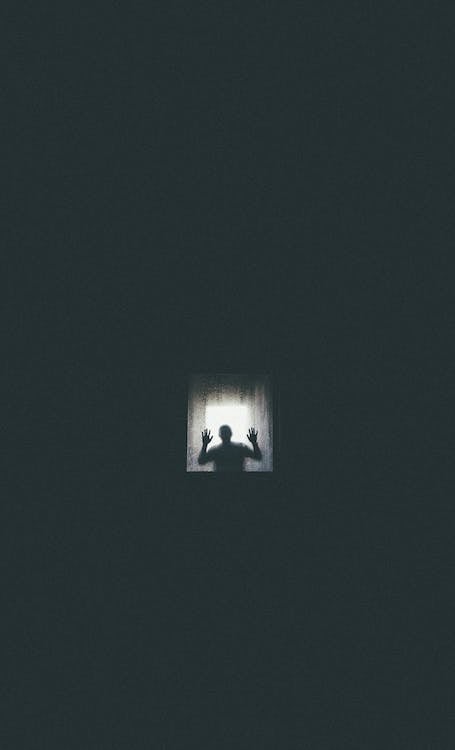
Source: Photo by Zachary DeBottis from Pexels: https://www.pexels.com/photo/silhuoette-of-a-person-2953863/

According to Marketwatch, which reports a study by researchers at several universities, “deaths of despair” have been growing dramatically among middle-class white Americans.

Deaths of despair, according to Wikipedia, are deaths attributed to “suicide, drug or alcohol overdose, or liver failure.”

Note the researchers:

The authors noted that many measures of religious adherence began to decline in the late 1980s. They find that the large decline in religious practice was driven by the group experiencing the subsequent increases in mortality: white middle-aged Americans without a college degree.

The disturbing rise in these tragic types of deaths among middle-class whites is not a new phenomenon. It’s been going on for a while, and has mostly been attributed to the opioid epidemic and economic inequality. However, this is perhaps the first article I’ve seen that attributes the trend to a decline of religion. That’s been a theory of mine for awhile, so it’s nice to see a study back up what myself and probably a lot of others might have already known intuitively.

This article struck me for a number of reasons. I am white (partly, anyway). I am middle-aged. And I am a former fundamentalist Chick-tract-passing-out Christian teenager turned non-religious/agnostic adult.

I’m almost smack dab in the bullseye of the target demographic.

The only exception is I do have a college degree, at least as far as a liberal arts diploma counts as a “degree.” FYI, it doesn’t.

Income and net worth wise, I’m well past the U.S. median, though still considered middle-class.

Despite this, I don’t engage in any behaviors that would lead to a “death of despair.” I don’t drink, smoke, or do drugs.

I do, however, struggle with general feelings of apathy and nihilism, which I would attribute partly to my agnostic worldview. Emerging from the vortex of fundamentalist Christianity was probably the most psychologically grueling process I’ve ever undergone. And I’d be lying if I said that I feel “freed” or “liberated” from the supposed shackles of religion.

Going from thinking you’ve got a mansion in the sky waiting for you after you die, to realizing you’re going to simply cease existing when your ticket’s finally punched, ain’t an easy thing to do.

Though nowadays I do lend credence to the concept of reincarnation. If it was possible for me to exist once, who’s to say it can’t happen again, in some future universe? Lightning strikes twice all the time, contrary to the old saying.

Sometimes, I wish I could go back. Sometimes, I wish, like Cypher in The Matrix, I could reinsert myself back into my religious worldview, and forget I’d ever left in the first place. It was comforting. Hopeful. It gave a sense of peace. I mean, how reassuring is it to think you’re communicating with the all-powerful creator of the universe when you close your eyes and pray? As opposed to just whispering into empty air?

But once you’re out of the religion game, there really is no going back. It would take monumental self-hypnosis, or a literal Road to Damascus moment, to psyche myself back into becoming a true believer.

I don’t align with the atheist movement, which is predominantly far left-wing, with a small libertarian aspect — two political ideologies I don’t espouse — and is also borderline toxic and hateful. I find the movement has a lot of misplaced anger towards religion, and is populated with ax grinders burned from bad childhood religious experiences. I am not anti-religious. I think religion has an important, even vital place in society, and for most people. Just not for me.

However, this article has prompted me to consider a question:

Is it worth believing in a “lie” if it makes your life better and gives you a sense of purpose?

I put “lie” in quotes because who’s to say that any one religion or another is truly just mythology or not, and whether a god or gods exist or not. I’m content with simply saying, “I don’t know,” hence my agnostic posture. I prefer to keep an open mind rather than make some arrogant declaration of certainty.

I don’t think the solution to all of these deaths of despair is simply getting back to religion. I don’t think a revival, even a Billy Graham-level one, would do the trick. Science has put too much of a wedge between glib faith and the cold, unrelenting force of reality. Information is too readily available that debunks so many religious claims, that in years past, would have gone unchecked and unchallenged. Naivete came easy thirty plus years ago. Now you’ve got to actively work at it. Facts are a mere Google search away.

For instance — and I’m ashamed to admit this, but I’m going to anyway — I believed into my young adult years the claim of a young earth. One of my “evidential” claims was the fact that Neil Armstrong only stepped into a small layer of dust on the moon, which would indicate, given the annual amounts of space dust that land on our lunar neighbor, that creation had only been around for 6,000 years. Then I found out how the dust compacts into the hard surface over time, leaving only a powdery top layer, and my long-held “theory” got blown apart.

Hey, at least that’s not as bad as claiming God is real just because the banana can fit in your hand, like Mr. Ray Comfort.

Living in a “post-religion phase,” coccooned in cold scientific truths, has its downsides. The loss of religion leaves a huge vacuum. The human mind is too active, reflective, and unwieldy in some ways to only subsist off of raw data. It craves meaning, purpose, and fulfillment, which are not things the world readily provides. Especially not our modern culture, which prioritizes consumerism, and trains its young to mainly aspire to corporate citizenship.

I graduated college almost five years ago. In my second to last semester, at the end of the term, one of my professors asked the class what our plans in life were post-college. The question did not indicate career specifically. It was general and open-ended. It was more about the vision we had for our lives. We were all well-acquainted with one another at this point. It was two weeks before Christmas.

Everybody answered something related to either career or continuing advanced degrees, with many stating they would be weaving political activism into their lives in one form or another. Not one person mentioned a desire or plans to get married or start a family. This was a class that was two-thirds female, incidentally, all ranging in ages from 22–25.

Everybody was apparently a good little worker bee eager to punch the time clock.

The lone exception was a young female international student from a Muslim country. She’d had an arranged marriage when she was a teenager, and already had one child. I don’t advocate for arranged marriages. But there was no doubt that this young woman felt fulfilled in her life. She often spoke glowingly about her daughter, and had published poems about her. This young woman was also a good student, though she was held back by the language barrier. She often reached out to me for help outside the classroom.

From a Western perspective, this young woman was “exploited,” because of her arranged marriage, and having a daughter at such a young age. Yet, I never got a sense from her that she felt exploited whatsoever. What’s more, she was freely pursuing an education. It’s not like she was being kept locked in the house in some patriarchal dungeon.

Even if you see religion as superstitious remnants of mankind’s ancient past, there’s no denying the role it plays as a social and psychological glue. Remove it, and people fill in the gaps with something else. And that something else may not always be comprehensive enough of a framework to navigate through the struggles of life. Things like career, poltical activism, social media, pop culture, even movie franchise fandom. Star Wars and Marvel may as well be de facto religions by now. Those are all nice things to care about, but I doubt any of them are enough for most people.

Religion also used to foster many romantic relationships. Now millions of singles turn to the slot machine world of Tinder, Match, Bumble, Hinge, and others. Reducing themselves to a mass of digitized pixels to be swiped away with the flick of a finger. A generation of secular wizards poofing away unacceptable mates on a magic screen. No wonder global population is plummeting.

Even basic relationships seem to have gone missing. Community is largely atomized and directed online. As though our souls were being slowly sucked into the cyber world, leaving skin-shaped husks behind to play pretend in the “real world.”

Ask most people today what their spiritual views are, and you’ll likely get the standard answer: “I’m not really religious.” A statement almost always delivered with a palpaple grimness, if not discreet regret. But whether one adheres to one denomination or another, or subscribes to one holy book, or the other, is not really the point. It’s more about what thread keeps your seams from splitting apart. For thousands of years, for most people, religion was that thread, however nonsensical, quaint, or silly it may seem to another’s perspective. But sadly, it seems many people have had that thread pulled, and whatever replacements they’ve found are sorely lacking.

Why I Don’t Drink Alcohol

Photo by Marta Dzedyshko from Pexels: https://www.pexels.com/photo/cognac-on-cut-glass-bottom-placed-on-table-6341420/

Except very rarely, as in once a year.

The Acceptable Poison 

I could probably count on one hand how many alcoholic drinks I’ve had in the past six years. Drinking is like my Halley’s Comet.

I remain steadfastly unswayed by the festive environments of Christmas, New Year’s, St. Patrick’s Day, and my birthday. 

Even watching my beloved Eagles win the Super Bowl four years ago was a dry affair. I only had one beer — the East Coast favorite Yuengling — the next day, during lunch, and only because a family member paid for it.

This is apparently “bizarre” and “abnormal” behavior, even for someone middle-aged like myself. Commercials (especially during NFL season) constantly tell me how freaking AWESOME it is to drink, and how good-looking drinkers are, and how it’s maybe even actually healthy. Every once in a while some article pops up touting the benefits of drinking a glass of wine a day. No doubt paid for by Big Grape.

Maybe drinking alcohol in moderation is healthy. It’s no doubt a good social lubricant. You see all those happy couples out there strolling down the sidewalk and holding hands? I bet half of them are only together because of alcohol. According to Jerry Seinfeld, it’s the only way ugly people can date.

Guess that means there’s no hope for me. 

::sad slide whistle::

The “Twilight Zone Realization”

It wasn’t always like this. Seven years ago, I used to drink strongly and regularly. Brandy was my drink of choice. I liked it because it’s heavy and warm. I find beer too fizzy, stimulative, and inconsequential. Beer is like the fast food of drinks. Mixed drinks like rum or vodka are too “party mode” for my liking.

But brandy. VSOP. Middle shelf quality. The honey-brown bottle with the blue label felt like a little trophy in my hand on my twice-weekly trips to the liquor store. Occasionally I’d sample the top-shelf cognac buys when I felt my liver needed something higher class. 

Brandy was perfect for me. It felt right. Classy. Aristrocratic, even.

Said Benjamin Guggenheim on the Titanic: “We are dressed in our best and prepared to go down like gentlemen. But we would like a brandy.”

One of my favorite movie quotes. Though soon it would prove a sad metaphor for my life. Guy, sitting there alone, enjoying a drink, while everything around him sinks. 

Unlike beer, which intoxicates you incrementally. Or party drinks, that bomb you into submission. Brandy’s effect is subtle, cumulative, and compounding. Almost tranquil. It sneaks up on you.

You can sip brandy and gently coast away into oblivion. 

But after a while I came to one of those “Twilight Zone realizations.” You know, where the main character finally figures out what’s really going on, and their whole world gets upended.

I realized I was using alcohol as a crutch. As an escape hatch from reality. And that rather than it enhancing my life in any way, it was actually causing me to atrophy and isolate.

In low moderation, alcohol can be a fun spice. But for the most part, it’s like a garrote slowly squeezing the life out of you.

Alcohol deadens the senses. It distracts you from improving and adapting your situation.

So, I quit. Not gradually. Immediately. 

I’m a good quitter. I had quit smoking cigarettes almost ten years before, cold turkey. Believe me, it wasn’t easy giving up my Lucky Strikes. 

At the time, I couldn’t exactly articulate why I needed to quit. I just knew I had to. I don’t think I was technically an alcoholic. I would sometimes go on “purges” for days or even weeks, before eventually returning to Inebriation Island. And once I started back up, it never stopped at just one drink. 

But I could have “quit anytime I wanted.” I mean, sort of. 

Alcohol no doubt was exerting far too much gravity in my life. But not all the reasons I quit were noble or life affirming. Some were just practical. Some were even vain. But here they are:

Seven and a Half Reasons Why I Don’t Drink (except very rarely)

1.) I’m cheap as hell.

I don’t like spending money on frivilous things. And for me, alcohol is about as frivilous as you can get. You’re blowing wads of cash on bitter-tasting flavored water that will just give you a headache. I think my brandy used to cost me $16–$18 a bottle. At twice weekly, that was almost $40. $160 a month. Not big money, sure. Some people spend that on porn subscriptions. But it’s money for which you get nothing of value back in return. At least if you throw money away on lottery tickets there’s a microscopic chance you jump a few tax brackets. But booze? It’s guaranteed waste. 

And that’s even if you’re a budget-conscious drinker, like I was, and you imbibe at home. If you go out to bars and clubs, the costs can balloon ridiculously.  

2.) I don’t like feeling like shit.

Maybe alcohol doesn’t agree with me on a genetic level. Some people mix with it, others don’t. Alcohol doesn’t make me want to party or hang out with people. It generally just makes me tired, and when drank to excess, it is guaranteed to make me feel like terrible the next day. Who wants to feel like they got run over by a steamroller when they wake up in the morning?

In addition to the physical side effects, there are the mental ones, too. Drying out during the day always made me feel anxious and volatile. Because drinking dehydrates you, the whole next day you’re playing the hydration catch-up game to get yourself back to equilibrium. And since you’re technically in chemical withdrawal, you tend to rush through things so you can get back to the bottle. It’s a cruel cycle. Even though you know it’s wrecking you, you have to keep it going in order to feel “normal.”

3.) I like to (try) get a good night’s rest.

Alcohol interrupts your brain’s ability to get deep sleep. The brain needs that serious downtime in order to “wash” itself. No joke. The brain emits cerebrospinal fluid like a car wash all over your cranial lobes while you sleep. Think of it as cleaning out the gunk between the gears of your mind. But even small amounts of alcohol can blow up that cycle, and make it impossible for your brain to scrub itself clean. What happens when you don’t change your car’s oil filters regularly? Your engine eventually locks up. It’s the same idea with your brain. When it’s never given the chance to clean itself, it malfunctions. This is why alcoholics are often so irritable and can’t think straight. They’re literally working with a busted machine inside their head.

Good sleep is hard enough to come by, for me. I’m lucky if I can get a solid 6 hours of quality shut-eye. I don’t need booze wrecking what little sleep I might be able to get. Plus, I like a well-scrubbed brain.

4.) I don’t like being dependent on chemicals or drugs for anything.

That goes for medications, also. I don’t even like taking aspirin or cold medicine unless I really need to. It’s not a macho thing. It’s a control thing. I like to remain sovereign over my mental faculties at all times. I think it’s why even when I did drink heavily, I had a knack for toeing up to the line, but rarely ever going full-blown Chernobyl. Even as a habitual drinker then, I stayed in the driver’s seat as much as possible.

5.) I just don’t have the time for it.

Looking back, I don’t know how I ever made time to drink. It’s funny. When you’ve got a good buzz on, time just melts away, and before you know it, it’s 2 AM, and you’re realizing you have to get up that morning for work. As in like four hours.

Alcohol is like a black hole. It sucks up everything in your life, and suddenly, everything revolves around the bottle. You plan your whole day by it. Work is just something you do before you can drink. Eating is just something to be gotten out of the way so you can drink. You ignore healthy, productive activities and hobbies and even people in order to reserve time for drinking. 

It’s a pure time suck. And a life suck. It’s a true vampire. Life is short enough not to spend 20% of every day (or more) half-conscious. When I think back to how much of my life I wasted avoiding reality behind a bottle, it honestly hurts.

6.) Alcohol withdrawal is a motherfucker. 

It can actually kill you. While I never got to the point where not drinking was a threat to my life, I had some uncomfortable experiences during my occasional cessation periods. A burning sensation in my chest. Heart palpitations. Sweating. Inability to sleep. Anxiety. Cold symptoms. Even hallucinations. I remember one night tossing and turning in bed, and seeing an owl, or some kind of bird, perched near the ceiling, partially hidden in shadow.

None of that shit is appealing whatsoever, obviously. 

It’s crazy the heavy toll alcohol extracts, even when you’re not drinking and making the effort to clean up. It’s like trying to get out of the mob. Better be ready to take a beating. It’s no wonder so many get sucked back in after sobering up for a short spell. 

7.) I value my health, and…

Alcohol is basically all sugar. And when you drink, you usually eat like shit on top of it. Or you lose your appetite the next morning because of the hangover. You’re throwing your body’s chemistry and digestive rhythm out of whack. You’re packing on excess calories. It’s why so many guys (and gals) get that gross fanny pack gut the more they sling those six packs around. 

And if there’s one thing I can’t stand, it’s the sad sack potbelly look that frankly too many fucking middle-aged dudes are bizarrely okay with having these days. 

Can’t be me, man.

7.5.) …drinking ages you

I don’t get it. Aging already degrades your appearance no matter how well you take care of yourself, or how evolved your genes. But alcohol puts rocket thrusters on the whole crypt-keeper look-a-like deal. 

It dries out your skin. 

It can give you diabetes. 

It ruins your internal organs. 

It eats your brain. 

It chews up your heart. 

And it ravages your biochemistry, until your body thinks it actually needs alcohol to function.  

Life is short enough. You’ll lose your youthful bloom and looks fast enough already. Why the hell would you hasten the process?


Nowadays

Life is better now without alcohol. I don’t miss the sickness that drinking ultimately became. I value the ability to think clearly and cleanly. When you’re younger there’s a tendency to want to run and hide from life. To cope somehow with raw reality. I think this is why binge drinking, drugs, bad relationships, or sex, can become such pitfalls. They’re escape portals from the scary real world. 

But as you get older, and the patterns of life become more familiar, you start to lose that hopeless lost at sea feeling that oftentimes plagues you when you’re just starting out. You start to appreciate things as they are. You care less about what others think. You learn to value what actually matters. And you start to lose that fear and anxiety and angst that powers a lot of bad decisions. 

Sometimes, you even look forward to dealing with problems, rather than running saway from them. You start to see them more as puzzles or opportunities rather than evil afflictions. 

This doesn’t happen overnight. It’s a process.  

I’m not an anti-alcohol born-again evangelist, or something. There’s nothing morally wrong with drinking. I still enjoy an occasional beer, usually with family, or for special occassions. It’s just alcohol is something that doesn’t jive with my programming. I realized that for me, it’ll always be a net negative. 

Plus, and this was hard to accept, but it’s too much of an addictive temptation. When I drank regularly, I could never just have one glass of brandy. It was at least three to four, until it knocked me out. It’s not easy to recognize a weakness in yourself, but eventually I had to admit the truth. But fortunately, one of my strengths is being able to pivot strongly once I’ve (finally) realized I’ve taken a wrong turn, and then learning from the mistake.

I’m glad alcohol is out of my life. Lucidity really is an underappreciated state of mind.