There’s Something About The Endearing 90’s-ness of ‘There’s Something About Mary’

For some reason, this movie popped into my head recently, and I just had to rewatch it. I don’t know why. I seem to recall seeing it in theaters while on a beach vacation in Ocean City, Maryland back in the summer of 1998. Though the film actually stayed in theaters for over a year.

Films did that back then. Now they dip in and out in like two weeks before hitting streaming oblivion.

It’s weird watching something from the ’90s, as it is basically a period piece anymore. This film is nearly thirty-freaking years old! It is as ancient to modern audiences today as something from the mid-’60s would have been during its premier.

There’s Something About Mary is a screwball romantic comedy about a guy named Ted trying to reconnect with his old high school crush–the titual Mary. Mary Jensen, that is. Following a catalysmically awful prom date that goes sideways in the film’s second most memorable sequence when Ted gets his dick and balls stuck in his zipper after arriving at Mary’s house. Poor Ted spends the next 13 years still pining (borderline obsessing) over Mary, until he gins up a scheme to sick a private detective on her to hunt down her whereabouts. Finding her in South Florida, Ted takes off to reconnect with his old flame, encounting a series of mad-cap adventures along the way. But competing with him for Mary’s heart is the greasy private detective, an old college boyfriend, a slippery pizza delivery guy, and even a famous football QB star. Will Ted, the ultimate nice guy, win Mary’s heart in the end?

Of course, the film is BEST remembered for its “Is that hair gel?” scene when Ted and Mary are preparing to go on a date. Believe me, that line was the height of bawdy comedy in my high school during that year. Between that and the many Monica Lewinsky jokes flying around (and there were many), my junior year was beset with semen-based hilarity.

In fact, I’d say there has likely never been a time ever in human history when male ejaculation centered so prominently in the cultural psyche as it did in the year 1998. That’s all thanks to Monica and Mary.

There’s Something About Mary is beset with a hideous amount of ’90s anachronisms, both technologically and cultural. Things that just wouldn’t work in today’s self-aware uber ironic entertainment landscape. The ’90s was all about being okay with looking stupid. It was the decade of Dumb and Dumber, Jim Carrey, and wacky attitude-y cartoons like Animaniacs. Weird toys like Gak. Very stupid and cringey TV shows. And lots of bright neon colors.

People nostalgia-gazming hard on the decade often forget how damn silly the ’90s really was. And that’s probably the best way to describe Mary. Silly with a capital ‘S.’

The entire conceit of the film falls apart in the age of Facebook and Google. Now it’s not only easy to look someone up from high school, you likely can’t even get rid of them anyway if they follow you on Insta or Facebook.

Then there’s the whole stalking angle. What Ted does is technically kind of creepy. While he does sorta pay for it when he’s forced to confess at the film’s “All is Lost” beat, and is consequentially kicked to the curb, true love conquers all of course in the end.

There’s the idea of a bunch of men fixating on Mary as a sex object in a predatory way that would be seen as “problematic” now. The film gets away with it mostly due to its unflinching cartooniness. The Farrelly brothers were at their peak. The story has heart, though its punctured by a lot of slapstick nonsense.

There’s Something About Mary really is one of those films that wouldn’t be made today. It’s an odd time capsule of a film. A relic from a very niche era of cornball humor that couldn’t be replicated. A perfect representation of what the ’90s was all about.

It does have some classical elements, too. The recurring motif of the singers reminded me of the singing muses often seen in Shakespeare plays or Greek epics. The crude sexual humor harkens back to the stylings of the ancient Greek play Lysistrata. There are some borrowed elements also. The police interrogation misunderstanding feels lifted from 1992s My Cousin Vinny, for instance. But overall it’s a funny original story with a handful of memorable scenes beyond the hair gel one. The fish hook gag, as an example.

Ben Stiller stars in one of his early big roles. At the start of his early 2000s tsunami of comedy hits like Meet the Parents and Zoolander. Cameron Diaz plays the lovely and lanky Mary. And there is the adaptable Matt Dillon as the greasy private eye with the porn stache.

Need some ’90s flavor in your life? Who doesn’t, right? Check out There’s Something About Mary.

What’s The Deal With Jerry Seinfeld? He’s A Billionaire Now, For One

The comedian has some life and financial advice.

Jerry Seinfeld’s a billionaire now. Which is no surprise given he produced one of the most successful and iconic TV shows in history. If you’ve ever met someone who couldn’t quote at least one line from the sitcom, you met a real live unicorn.

I always pay attention to what Seinfeld has to say, just because he usually has a unique take on things. The best comedians are also philosophers. Even his “show aboout nothing” was a hilarious commentary about social interactions and the endless quirks of humanity. It’s part of the reason why Seinfeld still feels fresh nearly 30 years after it ended.

Yahoo article recounts some of Seinfeld’s financial advice:

“I told a bunch of kids around the table last night,” he said, “If your work is unfulfilling, the money will be too.”

Good advice, but given enough pay, just about anything could become “fulfilling,” I suppose. You pay me a million dollars a year to paint telephone poles light gray, and I’ll be one deeply fulfilled guy, I assure you. I tend to agree with Mike Rowe of Dirty Jobs, who has a more practical, utilitarian outlook on life.

Work is not always meant to be “fun” or “fulfilling.” It’s called “work” for a reason, not “fun.” Sometimes even boring or unfufilling jobs can help ground you, and inspire you to focus your creativity into something as a counterbalance. Not everyone needs to become a Hollywood director, bestselling novelist, or secret agent. Even people who have achieved their dream jobs sometimes find the minutiae involved maddening. Fulfillment can come from all sorts of places, and looking to work to provide you with meaning can sometimes prove pointless. A paycheck is sometimes an end in itself.

What if fulfillment is making enough money from a boring, “unfulfilling” job that one day you’re able to be financial independent?

Jerry goes on to say:

“In the seventies, it was all about how cool your job was,” he said. “If your job was cooler than mine, you won.”

The article mentions that the attitude toward jobs changed in the ’80s, where the preoccupation became busting Benjamins over “coolness.”

I was not alive in the ’70s, so I can’t speak to that. But certainly work culture in the ’80s and onward became more coldly corporate and money-driven. Probably that’s due to automation, digitization, outsourcing, industrial consolidation, inflation, and the decline in the value of the dollar. No one’s got time for “coolness” anymore.

However, these days I’ve noticed that activism and social responsibility are bigger concerns with Millennials and perhaps Gen-Zers as well. Many young people I knew in college and other places expressed interest in working for non-profits, or for companies that seek to make the world a “better place.” Whatever that may mean (usually some left wing cause). For a while the company that represented this ideal was Tesla, but then Elon Musk started sticking his head out the Overton window and all, and has since fallen out of favor with many due to his thought crimes.

Maybe Notorious B.I.G. is the one who’s right here. “Get money, fuck bitches.”

The article goes on to mention:

A Harvard Study of Adult Development suggests that money can meet essential needs and provide security, but its ability to enhance happiness diminishes beyond a certain threshold. The study emphasizes that genuine happiness is more closely tied to relationships and meaningful work than financial success alone.

A Harvard study was needed to confirm that? That seems like common sense. Good to know an Ivy League institution is investing time and money into confirming things pretty much every blanket-knitting grandma on a porch will tell you.

Yeah, fulfillment is often a tricky, shifting goal line. Maybe you get it from clerking the midnight shift at 7/11. Or from a 24-hour Fortnite marathon. Or rewatching clips of Seinfeld. Or maybe nothing really fulfills you. Not that there’s anything wrong with that.

Time to Forgive Michael Richards (Kramer From ‘Seinfeld’) For His Racist 2006 Meltdown?

Is it possible to regrow your head after such a severe cancellation guillotine?

Source: Columbia Pictures Television

One of my latest distractions is watching old clips of Seinfeld on the ol’ YouTube.

Apparently, Steven Spielberg used to watch the show a lot during the production of Schindler’s List as a way to decompress from being steeped in depressing drama all dayWhich is certainly understandabe, though that makes for a little meta joke in the episode where Jerry gets caught making out with a woman in the theater during a showing of the holocaust biopic.

Seineld will always be comfort food for me. I used to watch it in college a lot, too, as a way to destressify and as a distraction. There’s something wholesomely timeless about the show, in addition to its jampacked hilarity. It’s like a string of gut-busting parables from some comedy Bible. It’ll still be funny and quite watachable even in 50 years. One hundred, for that matter.

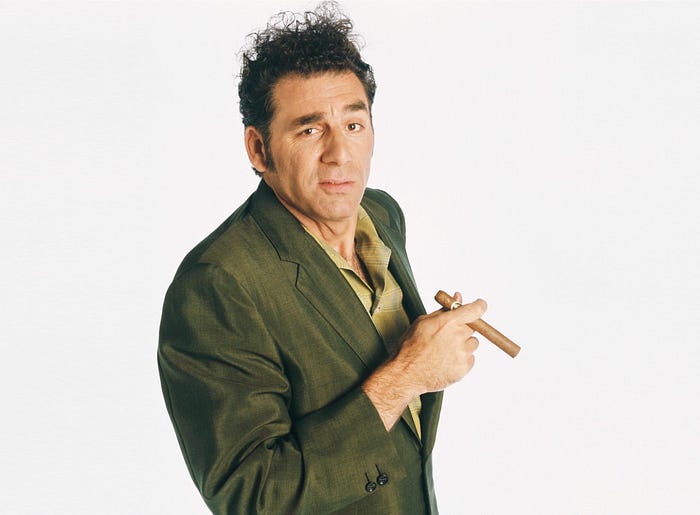
The character of Cosmo Kramer, played by Michael Richards, is one of the key ingredients to the show’s success. Kramer is like a classic slapstick goof from a Marx Brothers comedy, or The Three Stooges, offsetting Jerry’s barbed sarcasm, George’s interpersonal insecurities, and Elaine’s faux pas-laden hijinks with a distinct physical comedy. He’s like a human cartoon. Roger Rabbit made flesh.

Of course, Michael Richards is infamous for his 2006 meltdown at the Laugh Factory in Los Angeles. Respondng to a heckler, Richards started slinging racial slurs around like a malfunctioning tennis ball launcher. You can check it out for yourself:

I remember this happening like it was yesterday. On the one hand, what Richards says is obviously horrible, though I’ll admit when I first heard about the whole thing I thought it was just an attempt at making really edgy comedy. Bill Burr once roasted the whole city of Philadelphia in an epic rant the same year as Richards’ ferocious prejudicial diatribe. Other comedians like Sam Kinison and Bill Hicks have gotten into it with bad faith folks in the audience. Dave Chappelle has gotten into hot water over his jokes about transgender people, and he’s still chugging along just fine.

I wasn’t even offended by the leaked cell phone recording because I considered the comedy scene akin to a gladitorial arena. It’s the one place you can let loose and go nuts. It’s live theater, and sometimes shit goes nuclear. You don’t go to a Tarantino film and freak out when a character says “nigger,” do you? You don’t get your panties in a bunch when South Park makes fun of a mentally challenged character, or calls a celebrity a pile of crap, right?

The whole thing was kind of over blown, and I still think a lot of the “outrage” was performative and opportunistic. It’s not like Richards accosted some random guy in the street and started yelling all that obscene stuff. He was throwing it back in the heckler’s face in the worst possible way he could. Anyone who’s ever gotten into a verbal spat with someone on the schoolyard or anywhere knows things can get pretty heated and stuff is often said that is not really meant.

Of course, Richards crossed over the line big time. His racist tirade went super viral and essentially destroyed whatever was left of his career at that point. He hadn’t had much success in anything since his Seinfeld days. Since then, he’s done some bit parts here and there. But lately, he showed up on the red carpet for Jerry Seinfeld’s premier of his Pop Tarts biopic Unfrosted. He’s also released a memoir called Entrances and Exits.

Richards expresses deep sorrow and remorse for his outburst at the Laugh Factory. It still haunts him badly. In an interview with People magazine, he says:

“I was immediately sorry the moment I said it onstage,” Richards, 74, tells PEOPLE. But he knows he doesn’t expect the world to forgive and forget. “I’m not looking for a comeback.”

“My anger was all over the place and it came through hard and fast,” he continues. “Anger is quite a force. But it happened. Rather than run from it, I dove into the deep end and tried to learn from it. It hasn’t been easy.” He adds, “Crisis managers wanted me to do damage control. But as far as I was concerned, the damage was inside of me.”

He goes on to add:

“I’m not racist,” Richard said when discussing the racial slurs he used that night. “I have nothing against Black people. The man who told me I wasn’t funny had just said what I’d been saying to myself for a while. I felt put down. I wanted to put him down.”

Richards’ reflective words are similar to what he said on The Late Show with David Letterman shortly after the outburst as an attempt at damage control. Though his appearance with Seinfeld virtually by his side didn’t help matters, as many at the time considered it insincere, especially with his “I said some bad things to some Afro-Americans,” line. Ugh. Who says “Afro-Americans” who isn’t a racist 1970s newscaster talking about crime in the projects? Total Ron Burgundy moment there.

Richards turned 75 this year. If he was ever going to make a comeback, he’d have done it by now. It’s likely too late for him to make any kind of return to acting in any meaningful way. But I do think it’s time to let him out of time out. Let it all go. People do change over time. Very few have ever been so publicly lambasted like he was. He was the first major celebrity cancellation I can remember. They’re much more common now. Public shaming on such a scale is worse than prison.

In the West, we basically equivocate racists with pedophiles. Richards more than paid the price for a few bad words. It’s not like his Laugh Factory blowout ruined Seinfeld. I still love the show and his character. I say let the guy have peace in his golden years.

Four Helpful and Humorous Writing Secrets From Jay Cronley, Author of ‘Quick Change’

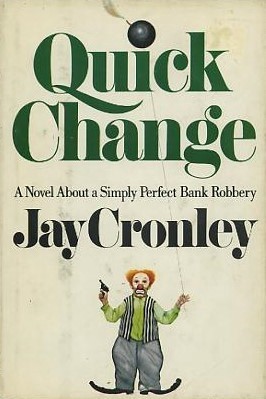
Source: Book cover for ‘Quick Change’ by Jay Cronley

So, I was doing some preliminary research on my next film review for the ‘90s-era “cromedy” (crime-comedy) Quick Change, when I stumbled across one of the most hilarious book introductions I’ve ever read.

Firstly, since you may not know, Jay Cronley was an author and newspaper columnist who wrote for Tulsa World, who achieved some notoriety in the late 1980s/early ‘90s for a string of comedy films made from his books. These adaptations include Good Vibes, made into the 1989 comedy Let It Ride, starring Richard Dreyfuss. Funny Farm, made in 1988, starring Chevy Chase. And Quick Change, which was adapted twice into film. First in France in 1985, then in America in 1990, starring and directed by Bill Murray, and co-starring Geena Davis and Randy Quaid.

Cronley had quite an under-the-radar run. For awhile, he was like the comedy version of Ira Levin. Everything he wrote got filmed. However, we’re not here to talk about his films, but about his writing. More specifically, his introduction to his 1981 novel Quick Change, rereleased in 2006 (not an affiliate link) with his reflections on the impact of his book.

Source: https://www.seattletimes.com/nation-world/author-newspaper-columnist-jay-cronley-dies-at-73/

Quick Change is “about a bank robbery,” as Cronley writes in the opening line of his introduction. It’s a comedy about three thieves who mastermind a clever heist in New York City, only to run into every problem imaginable trying to escape Gotham.

Cronley’s book introduction for Quick Change contains a lot of interesting, useful, and funny writing tips that I felt would be good to share. As an author of dark comedies and satires myself, I certainly appreciated happening across this gem. And I’m someone who almost always skips author intros.

So, here are four writing secrets from Jay Cronley’s Quick Change intro:

1. Dig Deep to Find an Original Idea

Writes Cronley:

Before I began to write this novel, I sat down with a pencil and a notepad and I thought of every way I had ever seen anything stolen…Name it, I noted it. Then I began making notes of all the angles and methods ever used to take what isn’t yours.

It’s fair to say that the crime genre is a fairly well-mined one. Especially with famous authors like Donald E. Westlake (more on him later), Agatha Christie, and classic writers like Edgar Allen Poe and Sir Arthur Conan Doyle, among many others, having hatched almost every conceivable crime story over the last 150 years of publishing history. It’s true now. It was also true back in the early ’80s, when Cronley wrote his book.

This sounds like an easy thing to do. Just research a bunch of plots and then write something that hasn’t been done before. What’s so hard about that, right? Except few writers do that. Instead, they grab hold of whatever new idea they have, refusing to let go. But if you’re trying to break through, you have to do something that hasn’t been done before, that will get you noticed ahead of the many other writers working in your genre.

Speaking of genre, this little tip also means you have to know your genre through and through. And that means reading the hell out of it. Or at least knowing some of the common tropes and twists, so that you can surprise with some of your own.

2. Don’t Give Your Good Ideas Away to Other Authors!

Apparently, all of Cronley’s research for the “last great bank robbery idea on earth” attracted the attention of Donald E. Westlake, whom Cronley considered, “arguably the greatest living American writer.” Westlake actually wanted to use Cronley’s idea for Quick Change in one of his own books. But, as Cronley writes:

“No,” I said to Don on the phone that night. “You can’t have my idea. It took me a year to think of it and a year to write it.”

It’s actually rather hilarious to me the idea of Westlake, the legendary crime author with almost 100 titles to his credit, coming to a lesser known author like Cronley hoping to procure a good story idea. It makes me wonder if this is a common thing amongst best-selling authors. It just seems wrong and impolite. Popular musicians borrow, steal, and pay homage to one another all the time, though, so I suppose published authors would do the same. I know I’ve provided good feedback, and even suggested story plots and ideas to other writers on forums and comment threads. But I’ve never given away, or even discussed an idea of mine that I felt had merit for a good book or screenplay.

3. Hollywood Sucks Because Nobody Reads

This is right in line with Stephen King’s famous On Writing maxim: “Read a lot, write a lot.” Cronley, who was criticising the creative shortcomings that were plaguing Hollywood even back in the early 2000s, goes on to say:

The simple reason behind the creative crisis is that nobody reads good stuff, which is the old stuff. The only way to learn how to write well is to read. If nobody reads, you get that Adam Sandler baby-talk thing.

This is especially true nowadays. It is so so easy to get wrapped up in the mindless bits and pieces of Twitter and other short-form-style social media. I find myself getting caught in this no-reading trap all the time. But sadly, so many today are smartphone slaves, addicted to the dopamine-giving hits from divisive news headlines, celebrity gossip, or vapid Buzzfeed-style articles that convey little to no useful information. To say nothing of the infinite scroll of YouTube videos, TikTok shorts, streaming shows and movies, Twitch broadcasts, and immersive video games. Who has time for classic literature?

This problem extends even beyond the general population, to English majors, writers, and novelists like myself, as well. When I was in college, I rarely encountered classmates who’d read much of anything beyond the Harry Potter series, or other modern books published prior to the 1980s. And that’s honestly a crime, because classics are classics for a reason.

4. Movie Deals Don’t Always Lead to a Pot of Gold — In Fact, They Might Even Get You Sued For $10 Million

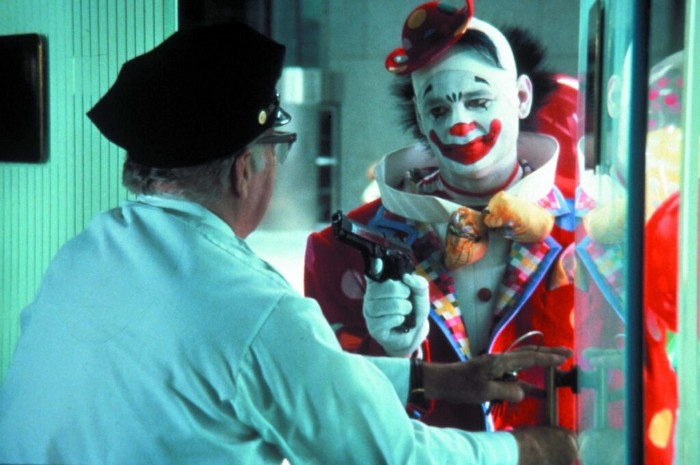
Source: Warner Bros. ‘Quick Change’ (1990)

Quick Change quickly landed a movie option, which is a contract during which someone has a given amont of time to make a piece of intellectual property into a film. Sometimes options may only last for a year, and an author might be paid a few thousand dollars. The company that first landed the option to Quick Change wound up in bankruptcy. Right before the option expired, Cronley’s agent offered the book to a producer in France. However, this caused the first option holder to sue Cronley for almost $10 million.

Fortunately, the lawsuit was eventually tossed. The French producer went on to make Quick Change into the film Hold-Up in 1985, starring Jean-Paul Belmondo. The Bill Murray version would, of course, come later. But it goes to show that sometimes Hollywood deals can actually be spring-loaded boxing gloves ready to punch you in the face.

If you haven’t checked out some of Jay Cronley’s books, now’s a good time. If you can find them, of course. Many of them are out of print. But evidently, judging by the Amazon link above, Quick Change is still readily available.