Going Back To College In Your 30’s: Is It Worth The Trouble?

Is college worth it at all? Examining the time and opportunity cost vs. benefits of a diploma.
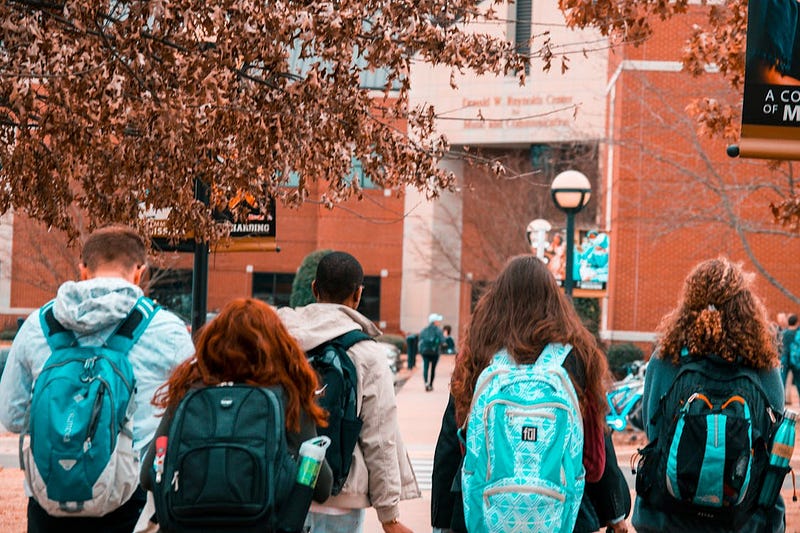

Photo by Stanley Morales from Pexels: https://www.pexels.com/photo/people-wearing-backpacks-1454360/

Nowadays, college is under fire. Enrollment overall is down. Fewer men are signing up, and instead choosing the trade route or just going to work. The value of a 4-year-degree is being challenged. The “uselessness” of liberal arts degrees (i.e. Himalayan Basket Weaving or Gender Studies) has become a meme.

But it doesn’t end there. Even business degrees, MBAs and Master’s degrees are getting excoriated anymore. We’ve reached our quota for finance bros.

You’ve got the extreme left wing culture that has permeated the college campus scene. 1960s UC Berkley looks like a GOP convention compared to today. Combined with the uber-feminized atmosphere, college is a weird place anymore. Many will charge that it’s no longer a place of free thought or learning, but an indoctrination camp. Yes, there is a strange preoccupation college has with turning students into activists. But to be fair, I think some of the right wing hysterics are overblown.

Above all, college is ridiculously costly anymore, and often it ends up just leaving graduates in serious debt with minimal employment prospects. Many end up working in jobs that have nothing to do with whatever degree they earned, if they find jobs at all.

College has become tainted by the S-word — SCAM. It’s grossly inefficient, too. Four years is a LONG time to invest into something, only to get little or nothing out of it. Apple went from its founding to IPO in four years. A presidential term is four years. Colleges takes as long all while making you learn a bunch of stuff you end up not needing in the “real world.” This is especially glacial in today’s fast-paced digital world where apps like TikTok have built up tens of millions of users in as little as a few months.

The college system seems antiquated today. Almost purposefully faulty. A lot of the reputational attacks against it are justified. But it helps to think of college not as an educational system, but just as big business. Everything makes sense when you understand that people are getting rich off a bad system. Billions are made from student loans and sports programs. School administration has swelled, giving an elite few cushy jobs and incomes protected from economic fluctuations through tenure and grants. All while parents and the culture at large reinforce the NEED to go to college.

Every year millions of psyopped young people zombie walk their way into freshman year, happily shackling themselves with undischargable student loan debt, while getting little in return, and giving four of their prime years they can never get back. College is like the modern day equivalent of selling indulgences, like the Catholic Church did centuries ago.

It’s not even a great place to meet anyone for a long term relationship anymore. Fewer students graduate with a partner, instead choosing to venture into the world single.

What about medical school, engineering, and STEM degrees? Those are surely valuable and necessary. No one’s arguing with them. But the modern college system would collapse if it were stripped down to just those essential components.


All that said, is it worth going to college at all, especially for a worthless degree? I think it depends on your goals and what you’re getting out of it. And how you’re paying for it and what it costs. Due to lack of money, but mostly a lack of drive and focus, I failed to finish college in my early 20s. I attended two community colleges to complete my general credits, working full-time and doing classes piecemeal as best I could. I was accepted into a decent private school I really had no business attending, but only managed to pay for one full year. I dropped out with around 72 credits, right in the no-man’s land before the required minimum of 120 to graduate.

After dropping out, I was forced to go back to work. This was tough and demoralizing. I took it as a real personal failure and it bothered me intensely for years. It wreaked havoc on my psyche and my sense of self-worth. You see, I had been one of the “smart kids” growing up. I was in all the advanced placement classes and so forth. I‘d graduated from one of the best high schools in the country. There were BMWs parked in the student parking lot, though I drove a troubled 1982 Buick Skylark at the time. Many of my peers went on to the Ivy Leagues. I simply had to keep up with them, even if I was from the lower middle class. I had fully bought into the cultural psyop that a college dgree was crucial to SUCCESS. Making matters worse, I saddled myself with over $20,000 of student loan debt for a degree I never finished.

For the longest time, I gave up on my dream of completing college. Trapped by debt and terrible job prospects, I consigned myself to failure. But eventually, I found my way to the North Dakota oilfield in 2012, determined to fix my financial problems and set things right. In a few years, I had paid down almost $35,000 in debt, all while living in a basement with five other guys. There was a severe housing shortage in the town I lived in during the mid-teens oil boom. I didn’t find an apartment until two years after I moved to ND. It was tough living, to say nothing of the harsh weather and isolative nature of the region.

The effort took a toll on my mental health, too. After almost four years I’d had enough of the oilfield and decided to finally go back and finish my college degree. I enrolled in the state school at age 35, choosing to attend most of my classes in-person. Even though I could have finished my degree through any number of online methods, I wanted to go back and “do it right.” Even if that meant giving up working in a lucrative industry and moving across the state.

I decided on English as my degree. Not because it offered any real economic utility, but because I liked writing, and it gave me the shortest route to finishing as quickly as possible. I was passionate about completing what I’d started, but I wasn’t about to invest anymore time than neccessary. I had built up some decent savings, and was largely able to pay the tuition out of pocket.

Is it awkward going to college in your mid-30s? Initially, it was. A lot people tell me I look younger than I am, which might have helped. But it is slightly uncomfortable sitting in classes with people who are 15 years younger than you. I largely kept to myself, though. For me, the biggest struggle was overcoming my own psychological limitations. I had tried several times before to restart my college degree, only to give up. Could I finally break through the invisible barrier? As it turns out, this was largely part of my rationale for returning. I needed to prove that I could do it. My failure to finish almost a decade and a half earlier had left me crippled with self-doubt, depression, and if I’m being honest, self-loathing. If I couldn’t even finish a “worthless” liberal arts degree, what good was I? I know that sounds harsh, but this is part of the pressure that is put on “smart” kids living in a culture where college attendance is akin to worship of the Almighty or else your soul is eternally condemned to hell.

For me, college was not really a practical “necessity.” It was more like therapy. It was a way to heal my damaged psyche and get the monkey off my back. After two years, I graduated with my degree with well over the 120 credits I needed. I had finally done it. Fifteen years later than I had planned. But it was done.

The experience reignited my love of writing and illuminated my outlook on life. It definitely changed me for the better. I’d spent my twenties and early 30s largely pessimistic and depressed. But after paying off my debt and finishing my degree — two things I’d once thought impossible — suddenly anything seemed possible. I felt like Neo finally breaking out of the Matrix at the end of the movie, as corny as that may sound. I saw life not as just a string of unstoppable misfortunes, or as something that was merely happening to me, but as something I could take ownership of. “No fate but what we make for ourselves,” as John Connor puts it in Terminator 2: Judgment Day.

After graduating in 2018, propelled by twin successes, I attempted completing a novel again. Something I had tried and failed at eleven years prior. I not only finished it, but went on to write another and another. I just completed my 11th.

Still, there was a severe time and opportunity cost to finishing my degree. Looking back, there were certainly ways of doing it that were more efficient and less costly. It did not cost me just the tution, but the income I would have made had I stayed working in the oilfield. At the time, I was making almost $90,000 a year. So, the decision to go back to school in-person, as opposed to online, really cost over $200,000 in income over the two years. That’s more than the cost of going to Harvard, for God’s sake. I could have bought a house for that instead of just a piece of paper with my name written in fancy font.

By every practical measure, returning to college like I did was not worth the cost. But you really can’t put a price on mental health and personal development. Finishing school helped transform my mindset. It helped me break a decade-plus-long negative feedback loop. Nothing succeeds like success. Paying off my debts kickstarted my “rebirth.” But finishing my degree permanently put me onto a better path. Even if my English degree has no real economic value, it means a lot to me.

After college, I returned to work in the oilfield. Using my reinvigorated mindset, I studied investing and personal finance. I’ve remained debt-free, and built up a solid net worth. Enough to know that in a few short years I’ll achieve another dream I never thought possible — becoming a self-made millionaire. And long before the statistical average for my age group. I’ll likely be able to retire before I’m 50.

College is not for everyone. College degrees, especially liberal arts ones, are overinflated in value and largely unneccessary. For most of history, the only people who went to college for liberal arts were rich kids whose parents could easily pay it. It’s only been relatively recent that anyone could “afford” to go via student loans. I don’t know that that’s a positive development. I think young people today are better served by staying out of debt, unless they are pursuing a degree with real economic value. You can learn most of what you need off YouTube and online for free. The future of education is not the grossly inefficient and costly system we have now, especially with the emergence of AI. It’s in learning specific, concrete skills with real utility. A monthly subscription to an online learning portal like Udemy is probably a better option than a four-year commitment. Way cheaper, too.

College is obsolete in many ways now unless you’re going for a high-value degree. It’s a dinosaur. It’s unnecessary for many. But so is climbing a mountain or putting a 1000 piece puzzle together. For me, going back in my mid-30s was expensive therapy, and a way to get back on the horse. Sometimes proving to yourself that you can do something hard can help motivate you to achieve other things as well. If college can help put you on a better path, then I say it’s ultimately worth it no matter how “worthless” the degree is that you’re obtaining. Not every decision will balance perfectly in an accountant’s ledger. Like with anything else in life, if it means something to you, then it matters.

‘The Killer’: A Frigid (and Bloody) Portrayal of Middle-Aged Ennui

What do you value when nothing matters?

Source: By Netflix — https://twitter.com/netflix/status/1696175927942660584/photo/1, Fair use, https://en.wikipedia.org/w/index.php?curid=74688944

David Fincher’s newest film The Killer, starring the always great to watch Michael Fassbender, perpetuates the director’s ironic passion for neo-noirish nihilism. Fincher might be the only director to have achieved A-list status making essentially highly-stylized misery porn. Even Kubrick’s cold, clinical style often gave some light at the end of each cinematic dark tunnel he crafted. Whereas Fincher tends to suffocate his films in cynicism, reducing his characters to puppets of impulse, hormones, and the wretched post-modern world.

Though it’s not to say Fincher’s works aren’t insightful and stimulating. Indeed, he may very well be the best director working today. But in the sense of being an eye surgeon who’s the world’s preeminent cataract remover. Admirable, of course, even if their work is gut-wrenching to watch at times.

In the case of The Killer, however, our protagonist is not drawn to his deadly profession as a hired assassin out of a need, or even a real desire to kill, but more a matter of needing a profession in which to display his competency and allows him to channel his detachment from humanity. Or maybe it was the job itself that made him that way. Or perhaps it doesn’t matter. As he states in the opening sequence, “I don’t give a fuck.” No doubt an oft-heard refrain from anyone stuck in the conveyor belt of a career, especially in middle-age. Propelled forward through the corporate beast no longer by youthful ambition or hope for some brighter future, but out of unfeeling momentum. For lack of a better alternative. Because retirement is too far away. Because even sitting on a beach in “paradise” becomes maddening after a certain period. So you might as well keep slaving away.

Fassbender’s portrayal reminded me somewhat of famed Navy Seal sniper Chris Kyle, aka American Sniper, as seen in interviews. Frank, unassuming, speaking of his military exploits as though recalling seasons from an MLB career. His 160 confirmed kills discussed like a slugger’s batting average. The morality or even necessity of them dismissed basically because a few suits in government said it was okay to do. I guess there’s no alternative other than to depersonalize as much as possible with that kind of weight on one’s conscience. I still agonize over social faux pas I made decades ago. I couldn’t imagine 160 lives banging around in my mind.

Aside from the standard revenge plot after The Killer’s girlfriend is hospitalized as payback when an assignment goes wrong, the subtext of middle-aged doldrums and detachment run throughout. Tilda Swinton’s character, aka The Expert, states during her confrontation with her vengeful colleague how those in the business fool themselves into thinking they’ll reach a point of financial satiety. It becomes a lifestyle. Automatic. To refer to Kubrick again, it’s like they’ve become clockwork oranges.

To help illustrate how strange a film The Killer is, it’s helpful to compare it to one with a similar plot, but which is quite different in tone and style — Kill Bill Vol. I and II. In those films, The Bride, or Beatrix Kiddo, goes on her “rampage of revenge” up through the hierarchy of her former employer, the Deadly Viper Assassination Squad, in order to ultimately rescue the daughter ripped from her womb. It’s a story about motherhood, in which Kiddo has very much retained a normal if vibrant personality even after years of slaughtering targets. Tarantino’s sexed-up hitman rollercoaster ride would indicate life after being in such a nasty biz can still go on just fine. You can still be “Mommy,” as Uma Thurman is credited in the send off no matter how many heads and limbs you’ve sliced off.

Then you have the live-action anime-style of the John Wick universe, in which Keanue Reeves dispenses head shots with video game-style proficiency. A stark contrast to The Killer’s grounded, methodical take, where important tools are boringly ordered through Amazon, and our assassin flies coach.

Ennui is a strange sensation. It’s not really sadness or depression. It’s a sense of feeling automated. I imagine it as the possible mindset of a self-aware AI. All the knowledge and directives are there, but lacking any feelings whatsoever. While young adults may grapple with it during the opening innings of a career and maturity, it seems to take hold mostly in middle-age. It’s a side effect of routine, narrowing life options, a decrease in libido, and a reduction in hormones. An inner sense that change is becoming harder. Attitudes and beliefs decreasing in flexibility. A hardening of being itself. Adoption of status quo. It’s as if one becomes a judgmental Simon Cowell toward everything in life; perpetually unimpressed, bored, even resentful of having even to show up.

And yet, still blindly following rules for their own sake. Because rules matter. The Killer goes on his warpath of revenge almost as a matter of formality. We don’t see him spend any quality time with his beloved. Only a brief visit in a hospital after she’s been patched up, in a scene that feels inserted because it’s what all those screenwriting how-to books tell you to do. Quite unlike Tom Stall/Joey Cusack’s loving and well-established relationship with his family in A History of Violence, before his old mobster associates reemerge and he’s forced to defend the homestead.

The Killer doesn’t have much to say. It’s more about conveying that sense of listlessness that comes with a life that’s stuck in a rut. There’s no redemption. No arc, really. This isn’t Jules Winnfield trying to learn “to be a shepherd” in Pulp Fiction. Our protagonist’s final confrontation with the Client serves to reinforce the detachment theme, as the billionaire’s only interest was having the “mess” of the botched hit cleaned up. Assured of no further reprisals, The Killer relaxes with his healing girlfriend at their beachside estate. A man-eating shark lulled into a food coma. At least until the vocation of killing calls again.

In The Killer, man is less his will and desires, and more whatever work or habit has gotten into his blood, and compels him to act.

Reflections on Turning 41

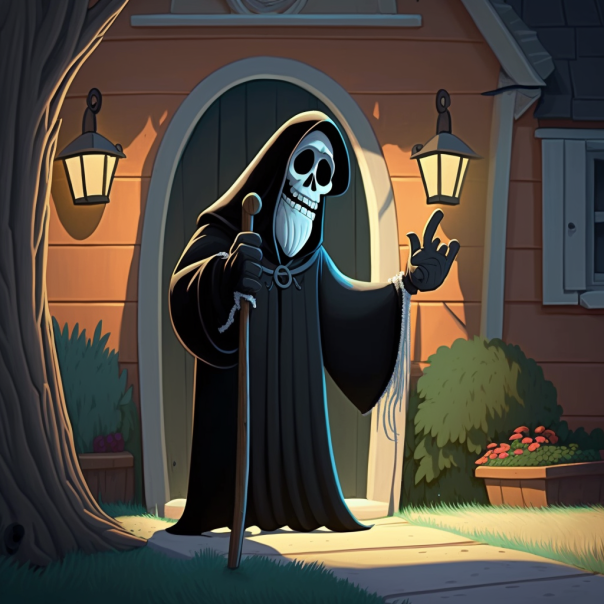
“Grim Reaper.” Made with Midjourney

Today, April 16th, is my birthday. And I don’t care what anyone says. Your birthday always feels special, no matter what your age. Even if you didn’t plan anything special. Or if you’re at work on your birthday, which I am today.

Last year I wrote a reflection article on turning 40, “40 Isn’t ‘Over the Hill,’ But Death Does Move in Next Door.” So why not do 41 also?

Forty-one isn’t exactly a milestone year like 40. At this point in life you start to only celebrate in ten-year increments. But like my article last year mentions, death does move in a little closer. Now it’s out there watering its grass, waving to me. It hasn’t asked to come over for a barbecue, or tried to borrow anything yet. But I’m sure that time will come.

Getting older past 40 is like walking around with a sniper targeting you, not knowing if the guy will pull the trigger, or turn his attention to bigger fish. And that’s because you’ve reached the Age of Sudden Heart Attacks.

Of course, people drop dead of heart attacks and other ailments all the time at all ages. But it’s kind of rare it happens to people in their 20s and 30s. It’s really your 40s when you start hearing about it. Even though I’ve been careful and conscious about my health, stayed in shape, maintain a good diet, and avoid health-busting vices like drinking, drugs, and smoking, and don’t have a family history of early heart attacks, it doesn’t mean I’m not in the crosshairs of that Sudden Death Sniper Bulls-Eye.

But I’m not going to sit here all preoccupied with death, like in my turning 40 article. I’d rather spend the time reflecting on things. Not just “getting older” reflections, but reflections on life in general.

So here they are, by category.

Love/Marriage/Relationships/Situation-ships/Etc.

I’ve avoided the black hole of marriage or a long-term committment at this point largely by choice, but also by the nature of my location and occupation. I work in a rural area in a position related to the energy sector. Not exactly the most conducive environment to meeting people, much less finding relationships. Where I live is where relationships go to die.

Though lately, that seems like almost everywhere. Even in major cities and denser population areas, it’s become problematic to find a long-term partner for everyone. People get married later, start families later, or don’t even start ones in the first place. And half or more of those that do end up divorced or in bad relationships anyway. I’d like to think I’ve dodged the bullet of a nasty divorce or failed marriage, but the reality is I actually have a lot of respect and optimism for the institution itself. I refuse to give into cynicism as so many do nowadays, dismissing the idea of a long-term commitment as some silly pipe dream. Even seeing a lot of people in my family go through the tortuous drudgery of divorce, I won’t give up hope in the practice itself.

It’s certainly not too late to find “love” at 41. But I maintain that the most ideal time to do so is in your youth. As in late teens or early 20s. Even as young as 16. Call me a romantic, but I’d always wished I could have met someone special as a teenager, and then been able to spend my life with that person. It may have been my Christian upbringing (I’m an agnostic now), a juvenile fantasy, or just my own naivete that made me long for that, but not being able to find someone when I was in that age group remains a disappointment.

It’s not as if modern life helps any in that department. Most people would scoff at the very idea of teenagers staying together past high school. Or even in college. The world wants young people dedicated to corporate needs. It brainwashes them into attending college for mostly worthless degrees, then advanced degrees, to find jobs that many don’t even find meaningful anyway, so they can buy shit they don’t really need. The Western world may have its technological wonders and materalism, but it’s a callous, heartless place. You don’t see it when you’re young — you don’t see how mindlessly the world wants to suck you in to become just another consumer cog. I see so many young people today just get swept up on the conveyor belt. They don’t realize that colleges are businesses first, that are more than happy to stick you with an enormous debt you’ll be left paying off for years. They don’t care about you. You are just a number.

It’s a tragedy, really. So many young people trading in some of the best years of their lives for a worthless degree, tons of debt, poor job prospects, or an unfilling job anyway. Just to overpay for an apartment, or even be unable to afford a house. Society expects, even encourages, young people to screw around. Enjoy a few flings. Not to be concerned with finding a serious relationship because who cares. But the truth is you don’t have as much time as you think. And high school/college are generally your best years to find someone with whom you are compatible. It only gets tougher as you age. Mistakes begin to compound. And it’s harder and harder to meet people you connect with. Then there’s all the energy expended on finding a mate. Trust me, it’s not something you want to do in your late 20’s or 30s. It’s really best to do that as early as possible, then build from there. Before it starts to feel more like a business transaction. But I suppose there’s no stopping the social trends in the West.

Money/Finance/Getting “it” done/Etc.

This is an area I’ve focused on a lot in recent years, and I’m proud to say I’ve made some good strides. The stock market crash of ’22, the crypto winter, and some learning experiences in a few trades have set me back. But I’m back on track. Even if the economy undergoes a recession this year or next, I’m still on the upward trajectory.

I still have zero debt. No mortgage. No credit cards, except one I use for a few subscriptions that I pay off every month. No back taxes. I took the Dave Ramsey approach to all of my student loans and other debts years ago, and now I’m a giant zero in that department. Which is exactly what everyone should do. I don’t accept the idea that we have an equity crisis in this country. Most financial problems are self-inflicted, the result of bad choices, or due to tragic health events. Not because Jeff Bezos and others are “too rich” or some crap. Generally speaking, if you don’t have children out of wedlock, and can manage to finish high school, you’ll stay out of poverty. You may not become rich, but you’ll survive. And even if you can’t finish high school, there are so many free educational sources on the internet or in your local library. There are tons of government programs and loans for college or assistance. Everyone gets stuck in a bind here and there. I’ve been there myself. But there are many tools to work through any issues you have. Much of the poverty and crime you see is due to drugs, alcoholism, poor culture, or mental illness, not the “evil capitalist system.” The capitalist system is what enables welfare and other government programs to survive in the first place. I’m not against having a social safety net. But I do believe that people need to try their best to pilot their own lives.

Diet/Exercise/Fitness/Etc.

As I’ve mentioned before in other articles, I absolutely detest the middle-aged pot belly look that so many dudes seem way too comfortable having. We have an obesity epidemic not just in this country, but globally, in many developed countries. The older I get, more of a premium I put on having a healthy diet and staying fit. I don’t mean you have to be jacked. But you should have a proper BMI for your height. You should be able to feed yourself properly without having to run to the fast food place on the corner. I find myself increasingly disgusted and filled with contempt toward the increasing number of irresponsible and slovenly fat asses who take up more and more space. Especially young people. How is it okay to not even be out of your teens and both your ass cheeks are sticking out on either side of your chair? I understand a 50-year old mother of three not having the best body shape. Or an older guy with lots of responsibilities. Fatness is sometimes justifiable. But if you’re young and in the prime of life? Totally unacceptable.

Many people just don’t realize or don’t care about the health hazards that obesity and a poor diet can cause. Diebetes, joint problem, heart disease, etc. Fatness has become socially acceptable. And if no one else will say it, I certainly will. That’s fucking disgusting.

Which brings me to one very positive benefit of getting older — you care less and less what others think. You become more concerned with obtaining and speaking the truth. Traditionally, it was the job of the elders in the tribe to impart their wisdom, or at least provide a more mature perspective. But no one listens to anyone outside their social media echo chamber, which is dominated largely by political and social activists with their own axes to grind. I’m not an elder yet. I’ve got a ways to go. But I’d like to think I do a better job now of thinking things through than I did at 20.

As I write this, it is almost exactly 41 years ago to the second that I was born. It’s been a fast four decades and one year. If I’m fortunate to get another four decades and one year (or more), I’m sure they will go even faster. I guess now’s the time to think of what I’d say to my younger self. What amazing “words of wisdom” would I impart? I’d say to my younger self to worry less about what the world wants from you, and more about what you want, and what will make you happy. I’d say to not be afraid to prioritize love and relationships, even it puts you “behind the curve.” Fuck that curve. I’d say that there’s a brief time when everything is light and magic, and afterward it starts to become increasing shades of dark. Especially when you’re alone. That the world wants to isolate you, and put you on the hamster wheel, so you can keep buying junk. But that’s really no way to live.

And I’d say happy birthday.