Donating Double Red Cells to the Red Cross: My Experience with “Power Red”

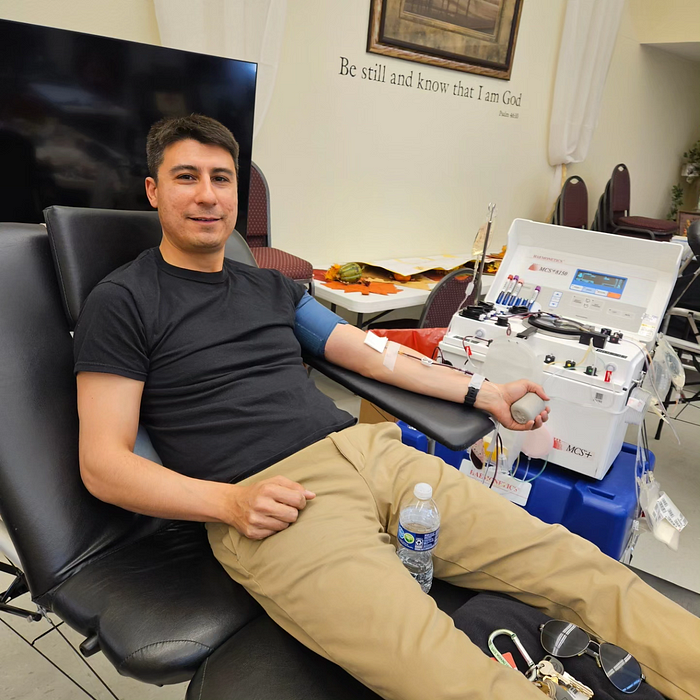
Photo of myself. Donating double red cells or “Power Red” at a recent Red Cross blood drive.

As I’ve written before, I’m a life-long Red Cross blood donor, first starting at age 17 during a blood drive in my high school.

Initially, I gave out of a desire to cure my needle-phobia (which worked, btw). But after seeing the kind of strong impact you can have on patients in need by donating blood, not to mention the positive effects I felt after giving, I started to donate regularly over the years.

Last Thursday, October 18th, was my 31st donation. Generally, I donate whole blood when I visit. During a whole blood donation, you give approximately a pint of blood. The process usually only takes about fifteen minutes. Whole blood of all types is vitally important for millions of people every year. My blood type is O+, which is the most common, according to the Red Cross. This allows my donations to help about 80% of the US population, as O+ is compatible with any positive blood types. But every kind of blood type is always needed.

In addition to donating whole blood, you can also give other blood products, like platelets and plasma. You’ve likely heard of places where you can sell your plasma for cash, or maybe even done so yourself.

You can also donate red blood cells, which are the most needed component in blood. In fact, you can donate double the amount of red cells as you would in a typical whole blood donation. The Red Cross calls this type of donation Power Red.

When I lived around Philadelphia, it was easy to set up regular appointments to donate whole blood. For a few years I went like clockwork almost every two months, as soon as I was eligible. But after moving to North Dakota in 2012, it became more difficult to schedule donations regularly. In fact, the Red Cross doesn’t even have blood drives in the state, but in Minnesota and Montana next door. This meant I not only had to drive quite a distance to each blood drive, but my days off from work had to align as well. As a result, I missed a lot of opportunities to donate due to blood drives and my schedule not lining up right.

However, while you’re eligible to give whole blood every two months (56 days), in a double red cell donation, you’re not eligible for double the time (112 days), while still being able to give the same amount of the most needed component in blood itself. This means fewer trips, which makes Power Red donations more suitable for busy working adults like myself, or for those who have to coordinate road trips to a Red Cross blood drive (also me). Three times a year is quite doable.

Up until last Thursday, I’d only been able to donate Power Red successfully twice, way back in 2013. I’d tried and failed twice since then due to either bad needle sticks, or my vein not cooperating, thereby ruining the chance to give. This put me off the whole process for a while. If I’m making a special trip and possibly taking time off work to give blood, you’re getting my blood and that’s all there is to it.

(I take this whole blood donation thing rather seriously.)

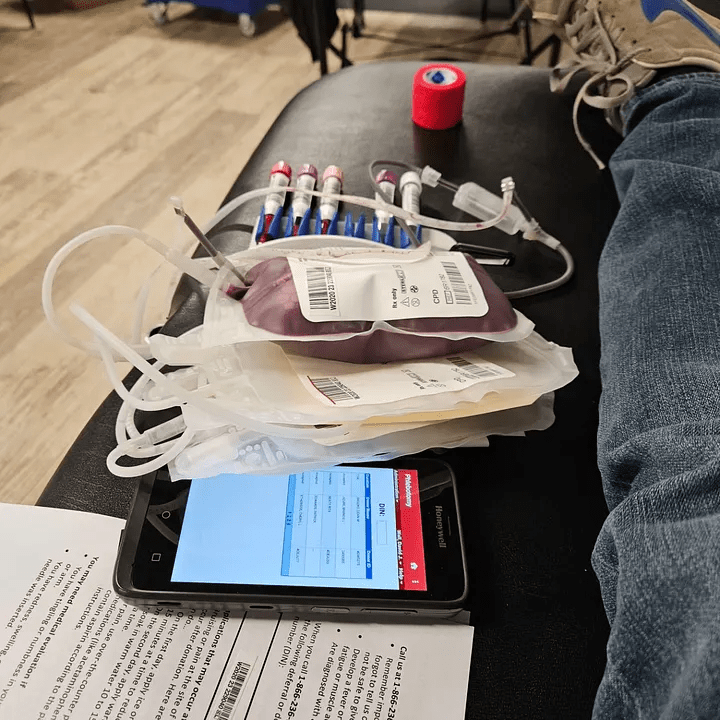
Double red cell donation is a little different than just giving whole blood. For one, the process takes about 30 minutes or so. It also involves using a blood centrifuge. This special machine separates the red blood cells from your blood, leaving the rest of your fluids in a bag. Then afterward it returns those fluids back into the same needle into your vein, along with some saline. The machine performs this twice, each time taking the amount of red blood cells that you would normally give in a whole blood donation.

I’ve posted a short video below I took while the machine was returning my fluids and saline back into my body:

So, what does it feel like? Well, it’s a strange sensation having parts of my blood returning to my body. Even though the saline is at room temperature, and mixing in with your warmer fluids, it still feels cold going back in. Remember, your body’s internal temperature is typically around 98.6 degrees Fahrenheit, so anything even a few degrees lower feels much colder. My lips began to tremble, or at least it felt like they did, while the fluids reentered. This is a reaction due to the brain thinking the body is short on calcium, as the nurse explained it to me.

The process is pretty quiet and smooth. And aside from the needle stick, basically painless. While the machine extracted my blood, I was given a ball to gently squeeze in my hand. On the screen there’s what looks like a little video game “health bar” that would indicate whether the “pump was primed.” A beep sounded if the machine needed me to squeeze the ball to help keep the blood flowing. Then, when the machine switched over to returning my red cell-less fluids, I just needed to relax my arm without squeezing anything.

Other than the coldness and the phantom lip trembling, double red cell feels the same as any other blood donation. Though there are some advantages over whole blood. For instance, I felt less diminished afterward. Usually it takes me a few days, even a week or so, to feel like my normal self again after whole blood. But because my blood “volume” so to speak didn’t change as much due to getting some of my fluids back, I felt normal again in only about two days afterward.

To be clear, in a double red cell donation, you’re still giving TWICE the red cells as you would in a whole blood one, so your body needs twice the time to replenish the red blood cells it lost. Even if you feel good, be sure to consume quality foods rich in iron so your body can recover, as they told me before I left. And of course drink plenty of water.
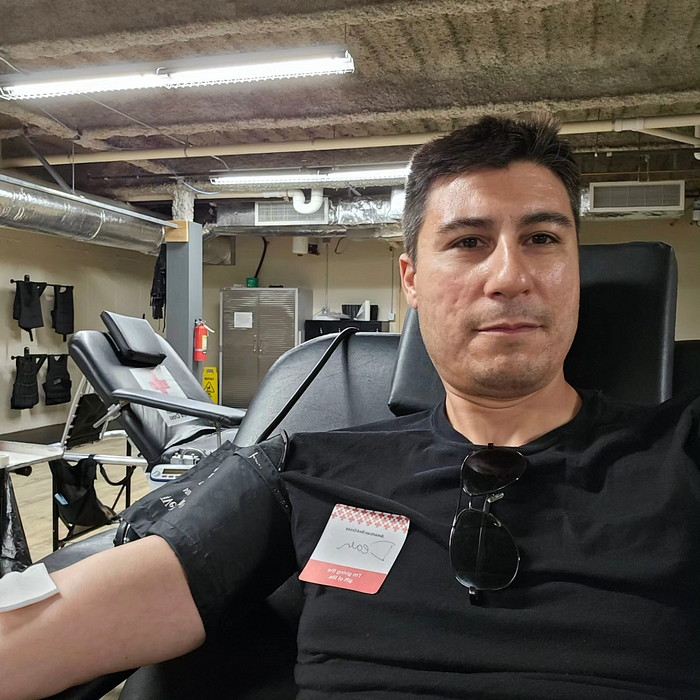
Pic by author. Donating whole blood in the summer.

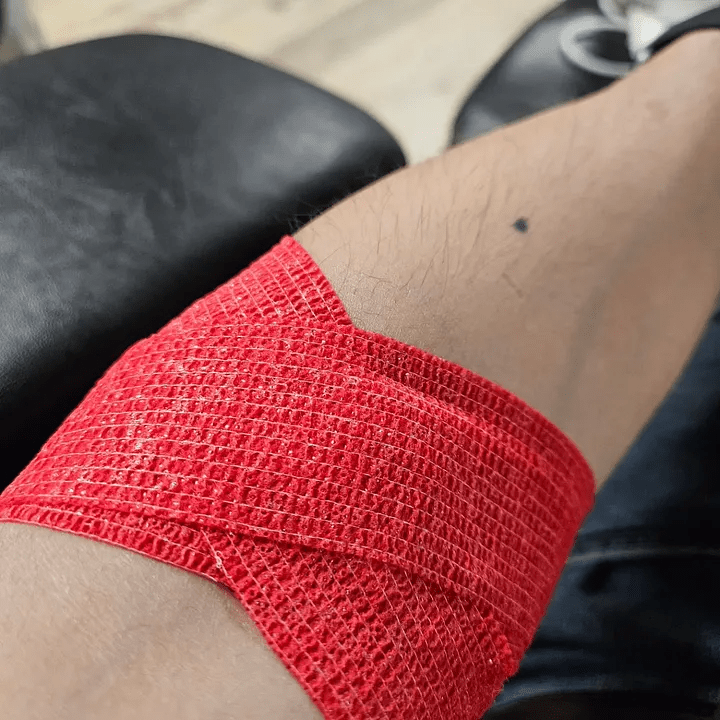
Another benefit is you’ll have fewer needle sticks over time. Like many long-term Red Cross donors, I’ve developed tiny little “battle scars” in the crook of my left arm. While these marks aren’t really noticable, the less time a vein is injected the better. I have a good vein, but it’s flatter than it appears, making it a tricky target to stick for even an experienced nurse or phlebotomist. Combined with my naturally low blood pressure, it can make donating double red cells a delicate operation. Perhaps this is why I had failed at it twice years ago.

When you combine the time efficiency advantages with the physical ones, making a double red cell donation is a pretty good deal overall. I think from now on I’ll try to stick to Power Red. I hope you’ll consider giving it a try, too. 🙂
Why I Donate Blood to the Red Cross

Today is World Blood Donor Day.

First established by the World Health Organization in 2005, WBDD, “serves to raise awareness of the need for safe blood and blood products and to thank voluntary, unpaid blood donors for their life-saving gifts of blood.”

Today, it just so happens, is also the day I’m donating blood myself. While I didn’t plan for my appointment to land on WBDD, it’s a cool coincidence that it did.

I’ve been donating blood to the Red Cross ever since I was 17.

I’m not sure what attracted me initially to contributing to this non-profit that has been around since 1881. It may have been a desire to give something essential that wasn’t simply money.

I was just a high schooler after all, working at a Save-A-Lot supermarket in upstate Pennsylvania on the weekends at the time. I wasn’t exactly flush with cash.

It may have been a desire to finally overcome my fear of needles. I’d suffered a crippling syringe-phobia ever since I was five and had to be strapped down to the examination table for a booster shot.

Certainly not a preferred early childhood memory.

Probably it had to do with the idea that the simple action of giving a pint of my blood could help someone’s life, or even several people’s lives. That appealed to me more than giving other things, like money, time, or labor. As the Red Cross states, “Blood and platelets cannot be manufactured; they can only come from volunteer donors.”

Since that initial decision to donate blood, I’ve given 23 times, and am scheduled to go again today in the afternoon.

If I’m able to donate about four times a year for, say, the next 30 years or so, that means I could potentially donate up to almost 15 gallons of blood. I’ve given nearly three so far. You can donate whole blood every 56 days. While it would be great to be able to make it in perfectly on cue, it doesn’t always work out that way.

I’d like to donate 20 gallons of blood over my lifetime. I think that’s a reasonable goal.

When I lived in Philadelphia I donated like clockwork every two months at the donation center on Spring Garden street near Center City. On the way back home, I’d drive past John F. Kennedy Plaza, aka Love Park, and admire the famous red sign with the swooning letter “O.”

After moving to Williston, ND during the oil boom my donations became less frequent. Sometimes, when my work schedule allows, I’m able to make the blood drives that take place on occasion in nearby Sidney or Fairview, MT.

Other times in the past, I’ve actually driven six hours to Saint Cloud, MN to donate at the Red Cross center located in town. The phlebotomists there are friendly, and often they ask where I’m coming from. So when I mention Williston, they give me these weird looks. You drove six hours just to donate blood? At the Red Cross? Aren’t there places closer you can donate? Yeah. There’s United Blood Services, but I don’t give there. I’m a bit of a loyalist. The Red Cross takes me back to high school.

Hey, everyone’s sentimental about something. Music, movies, wine. You stick a Red Cross needle in my arm to draw blood, and suddenly I’m feeling nostalgic.

While it’s nice to donate blood and know I may have helped save somebody’s life, I also do it because it makes me feel good. I follow a strict dietary ritual the day before, eating foods rich in iron. Lots of fruits and vegetables. A big breakfast.

And, of course, drinking plenty of water. Always make sure you are well-hydrated before donating blood.

Seriously, I’m like an athlete prepping for a big game before I give blood. You’ve probably never met someone as excited to have their blood drained as me the day before a draw.

Giving blood compels me to stay active and in shape. When you donate you receive a mini-physical. They take your temperature, measure your hemoglobin levels, and take your pulse. When you go in for your appointment, the technicians there will have you fill out a lengthy health screening questionnaire.

While the Red Cross check-up is not a substitute for a full-body one by your doctor, it’s a good, cheap way to keep an eye on your health.

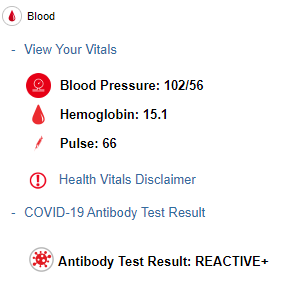
The Red Cross screens your blood before giving it to anybody, so if you have a disease or some kind of health problem, they’ll tell you. In my last donation, the Red Cross informed me that I had developed reactive+ Covid-19 antibodies. This means, according to the Red Cross anti-body test results page, that, “Antibody levels were detected at levels high enough that your plasma may be used as convalescent plasma.”

So, hopefully my blood went to someone who needed a leg up fighting that virus.

I have been told by several doctors that I have “great blood.” Which is no surprise. I work hard eating right and staying fit. I expect my crimson essence to be premium 94 octane.

I also think those who donate like me do so out of some unconscious need to affirm their own health and vitality. Some guys rip down the highway at 80 MPH on a Kawasaki motorcycle to “feel alive.” Me, I have a needle stuck in my arm to drain off a pint. It may not make for a Red Bull commercial, but donating blood is essential for millions of people every year who need transfusions or blood components to survive.

There’s also a very cool thing the Red Cross does that makes the ordeal worth it. They let you know where your blood donation went.

Usually just a few weeks or so after your donation, the Red Cross will send you an email with a message like the one above. It’s uplifting to know not just that your donation helps, but specifically where it did so.

Have you donated blood before? Or given thought to doing so? I know a lot of people are held back due to fear of needles, or concerns they’ll pass out or get sick.

Yeah, I’ve been there myself.

The whole blood donation process is mostly painless. I won’t lie, though. Sometimes it can hurt. It usually depends on the person sticking the needle in your arm. There’s a lot of finesse to finding the vein and inserting the syringe just right. I’ve had experiences where I barely felt anything. Other times the technician had to go digging around to find the right spot, and left me with black and blue marks. That sucked.

But look at it this way. You’re almost certainly going to have to have blood drawn at some point in your life anyway. Especially as you get older. You’ve probably already had blood work done up after an appointment.

At least if you get into the habit of donating regularly, you’ll get used to it. And you’ll be saving lives along the way. You might even become a freak like me and actually enjoy giving blood.

The technicians at the Red Cross are considerate professionals. They’ll make sure everything goes smoothly. It’s normal to feel light-headed after a blood draw. Having blood taken effects everyone differently. I’ve only had one instance where I felt like I was going to faint. That was likely due to being underfed and dehydrated before going in for my appointment. But the process has generally been a smooth one for me over my twenty-plus year Red Cross blood donation career.

This is why it’s so important to eat right and drink plenty of water before going in. Check out the Red Cross page on Tips for a Successful Blood Donation for more important details.

Anyway, I’m off to my 25th donation. Happy World Blood Donor Day.