It’s 11 p.m. Dark, no stars. Soft rain patters against the windows of the small town corner bookstore. The proprietor, a graying, middle-aged man, old and weary before his time, starts locking up.
Another bad day. Only one sale. To a little old lady who was looking for that “cute sparkly vampire” book for her granddaughter. He sold her Dracula instead. Maybe he could save just one Zoomer.
No else even came inside. All too busy staring down at their phones as they walked past. Doomscrolling TikTok, cat memes, and God knows what else. These glowing screens might as well be crack pipes, he thinks, wiping a distressed brow.
The proprietor lifts his tired eyes to the black abyss of a sky as he closes the shades. He used to be filled with optimism. He was going to change the world. He was going to be somebody. A bookseller. A real bookseller. He was going to nourish the world with the printed word. With physical books. Sure, they were dusty, old, and smelled funny. But they were real. Imprinted with human touch and ownership. A physical book is something that says, “I exist, I matter!”
Except nobody wants real books anymore. They just want their glowing screens. They want their Kindles with their “e-paper.” Ha! As if paper could be mimicked on a screen. What next? E-food? E-water?
Now the bills are piling up. Rent’s overdue. A utility company is howling at the door. Bankruptcy looms. It’s over, he thinks. Time to admit defeat once and for all. The glowing screens won. Damn them. Damn them all to hell.
Then he hears footsteps. A shadowy figure suddenly appears. It sort of reminds him of how Nick Fury came in at the end of the first Iron Man movie in the post-credits scene.
In fact, that’s exactly what it reminds him of.
“You think you’re the only bookseller struggling to keep the lights on? You’re part of a much bigger universe. You just don’t know it yet.”
“No, I’m fully aware bookstores are a failing business model,” he says. “My ex-wife reminded me everyday.”
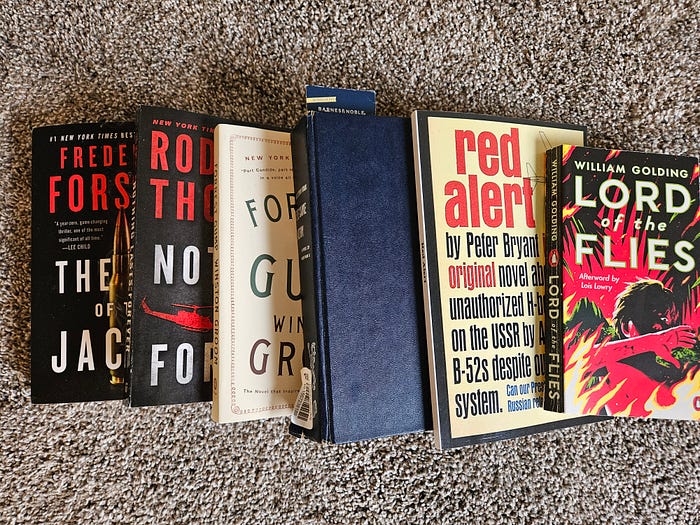
I step fully into the light. A stack of books under my arm. An eye patch placed crookedly on my face.
“Is that eye patch real, or did you just put it on for effect?” he asks.
“Never mind that. I’m putting a team together. I mean, I’m putting a library together.”
The proprietor glances at my books. Lost Horizon. The Caine Mutiny. Is that really Fahrenheit 451? Asingle tear forms in his eye.
A small smile cracks his cynical, grim visage. His first one in ages.
Maybe there is hope, afterall.
My books. Author’s photo.
Buying physical books may not be as dramatic as saving the world, but there’s nothing like actual “flesh and blood” print over e-books or words off a glowing screen.
Reading words off a screen feels more like scanning than actual reading. Though that’s probably just a generational bias. If you grew up staring into the pixelated prism of an iPad, you might prefer the digital version over the real thing.
I have a Kindle. It mainly sits there and collects dust. I only used it for a few digital books I bought. But the experience is not the same. Even if it is more convenient to hold a thin piece of plastic instead of a heavy, awkward book. Perhaps one I’ll finally get used to scanning the fake paper of an e-reader into my brain like a self-checkout machine.
I keep most of my books in storage these days. I like to keep things simple for the time being. Someday I’ll have a house to put them in. Someday I’ll have them properly displayed in my own library.
Jerry Seinfeld once joked that everything we own is just on an eventual jouney to the dumpster. Maybe having boxes and boxes of books like I do will one day prove a burden to family members. I have new books and old books from childhood. I’ve never thrown a book out. I’ve saved everyone I’ve ever had. One day after I’m gone they’ll be sitting on a plastic table at a garage sale. Donated to a library. Or just thrown in the dumpster. But they’ll have served their purpose, at least for me.
Are you daunted by door stop tomes like Larry McMurty’s Lonesome Dove? Intimidated by popular thick bricks like Stephen King’s It or The Stand? Just not ready to plunge into David Foster Wallace’s Infinite Jest (more like Infinite Pages)?
Sometimes a big epic story like War and Peace is what you need. I’m in the thick of The Caine Mutiny on a reread myself right now. But If you’d prefer your next read be more in line with Shakespeare’s ol’ “Brevity is the soul of wit” chestnut, then think about picking up one of these next seven titles.
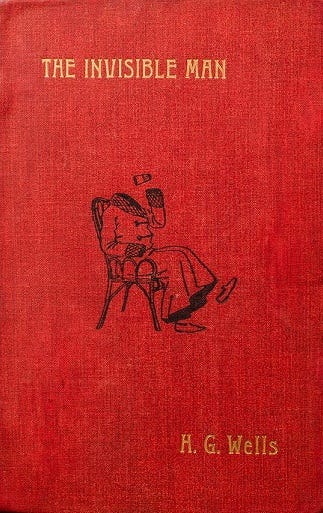
1897 was a banner year for sci-fi/horror classics, with both H.G. Wells’ brief but surprisingly brutal book being published, as well as Bram Stoker’s groundbreaking Dracula.
The Invisible Man tells the story of a mad scientist named Griffin who runs amok when his experiment in optics gets out of control. He turns himself invisible, as you might have guessed from the title. While being unseen is nice for awhile, when he can’t reverse the process despite his obsessive research, Griffin becomes homicidal. He terrororizes an inn, then threatens a town. After gaining a confidant named Kemp, he concocts a scheme to wreak havoc on the entire nation. But when Kemp betrays him to the police, a deadly vengeance-fueled cat and mouse game ensues.
The Invisible Man is definitely worch checking out, as is the 1933 Claude Raines-starring film adaptation. The 2020 film written and direct by Leigh Whannell is also pretty good.
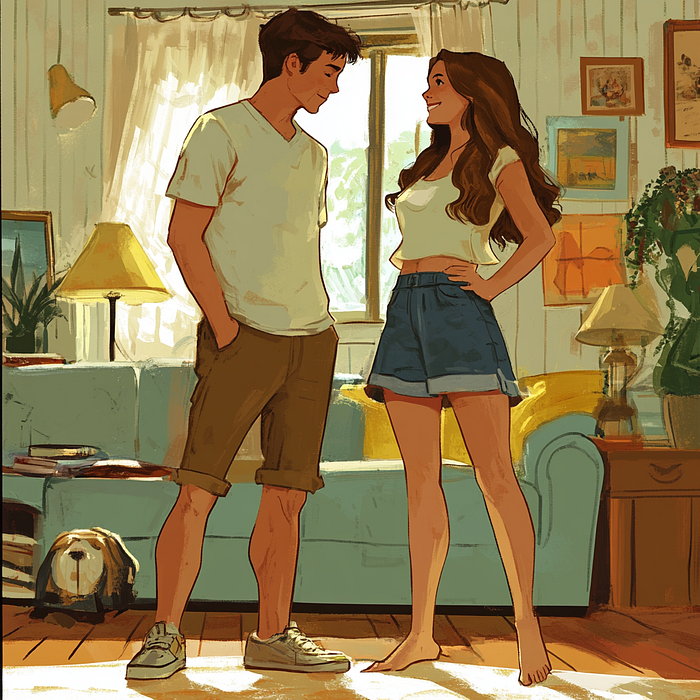
2.) I Know What You Did Last Summer by Lois Duncan
Source: Midjourney
As someone who had to endure that hip teen slasher wave of the late 90s-early 2000s that started with Scream and ended somewhere around Wrong Turn, I never knew the micro franchise I Know What You Did Last Summer was actually based on a bestselling YA book from the early ’70s. A book that predates the original teen slasher wave that saw Halloween, Friday the 13th, A Nightmare on Elm Street, and all the clones that followed. I always thought of I Know as just “that movie poster that shows off Jennifer Love Hewitt’s breasts.”
While the movie shares the major conceit of the book, it diverges significantly by adding in a fish-hook using crazed killer into the mix. The book is actually more of a slow burn in the style of an Alfred Hitchcock Presents episode, or something like the 1988 Dutch film The Vanishing, as opposed to the film’s sexier, slashier counterpart. For some bizarre reason, author Lois Duncan decided to rerelease the book to update the characters with modern tech and center them in the present. The effect was jarring as I started reading a book I knew was written in the 70s when suddenly a character mentions texting their friend. Note to authors: Don’t ever try to update your classics for modern audiences. George Lucas is your cautionary tale there. And besides, everyone loves retro stuff these days. Barnes and Noble sells records now. Half the new shows out there are set in the ’80s anymore. Stories should be like time capsules.
I Know works okay as a YA thriller, except I think it would have served the story better, not to mention a sense of justice, had the teens been hunted down one by one and actually killed. It’s too soft as it is. Only one of the kids is ever actually endangered — the frat douche, who gets shot, but not enough to paralyze him permanently. The darling main character is exalted so much that her BF actually says that his punishment from the killer would have been to have to live in a world without her in it. Get the hell out of here with that. These four kids ran over a little boy while they were out partying, and then left him there to die without getting help. They formed a pact to keep the secret, and then went on about with their lives. Even after the would-be killer is revealed and stopped, we don’t even get to see the kids face justice for what they did.
3.) Who Goes There? by John W. Campbell, Jr.
Source: Midjourney
As a writer of novellas, and a sci-fi horror fan, I had to check this one out at some point. It comes with a pretty nice pedigree, being considered one of the most influential and important science fiction stories of all time. Who Goes There? certainly extends gravity in the pulp lit of sci-fi, having been adapted not once, not twice, but thrice to the big screen (or twice if you don’t count the latest 2011 adaptation, which I don’t).
Does Who Goes There? live up to expectations? It’s an unusual book in the sense that it relies mainly on lengthy dialogue exposition between the Antarctic researchers, only occasionally cutting to glimpses of the monster shape-shifting and running amok around the station. Nowadays you’d probably see a lot more graphical description, blood and guts, that sort of thing. So it came across more as a cerebral read. Like a clinical description of heart bypass surgery in a medical school lab.
Still, what makes this novella famous is the monster itself. I think Campbell does a great job of depicting the horror of what would happen were such a creature to reach the mainland, where it would have a whole population of flesh and blood to replicate. There’s one heart-stopping scene where an albatross, which Campbell uses in reference to The Rime of the Ancient Mariner, lands near the camp. The men are forced to shoot it to keep it away, preventing the monster from copying it and potentially flying away. I’ve seen the original Thing from Another World, and Carpenter’s masterful ’82 version, and neither takes advantage of such a threat, which makes it unique to the book.
It’s kind of funny though how Campbell constantly refers to the monster as the Thing, and yet he titles the novella something else. Really, the Thing is such a perfect and obvious title, you’d figure it would have HAD to have occurred to the writer to call his story that. He was a legendary sci-fi editor, in addition to being a writer. Perhaps this is case of writer myopia. Who Goes There? comes across more as a murder mystery than a sci-fi horror.
4.) A Boy and His Dog by Harlan Ellison
Source: Midjourney
You could place a colon at the end of the title and add: “A true love story.”
Reading this novella is like handling a Hattori Hanzo sword. Ellison’s genuine love story is less a string of prose than a glinting weapon you equally admire and fear for its supernatural sharpness. Ignoring the outrageous arguments against this short, beastly narrative for its misogyny and big wet dick slap in feminism’s face (it’s Ellison, for Christ’s sake, did you expect a PC automaton?), and you can admire Mr. Always In Hot Water’s cinematic prose, subtlety, and black humor that would certainly warm the cockles of Vonnegut or Burgess’ hearts.
I made the mistake of watching the film version before reading the story, but let’s just say I’m glad it was made in the mid-70s instead of, well, pretty much anytime afterward. This is a young adult dystopian story with big, hairy balls, where the monolithic evil, teenage-exploitative system doesn’t get overthrown by plucky coeds in latex. Nope, our hero simply escapes to live another day, and then makes the ultimate “bros before hos” decision ever made. Which really isn’t a decision. I mean really, who in their right mind would turn their back on their loyal, sarcastic, telepathic doggo for some downunder wacko?
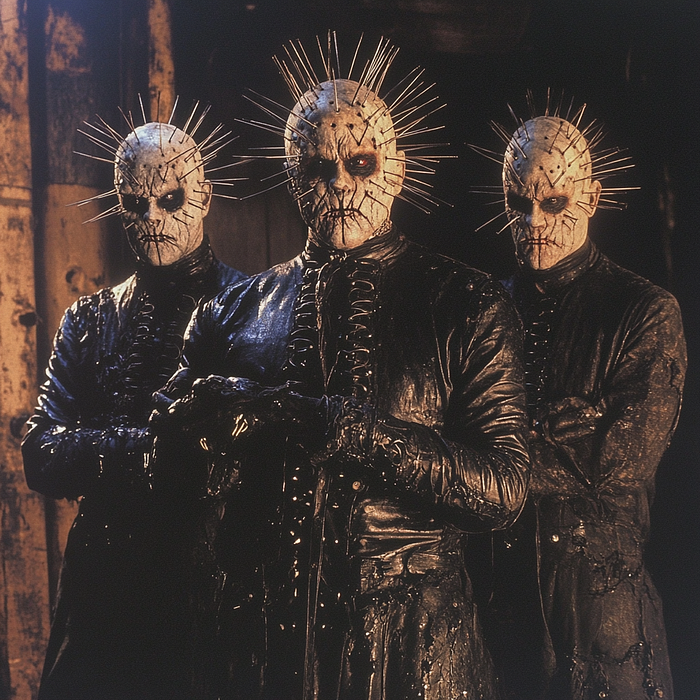
5.) The Hellbound Heart by Clive Barker
Source: Midjourney
This is a nice companion piece to Fifty Shades of Grey.
This was such a dark, twisted modern fairy tale about a couple nasty people ultimately getting what they deserve. You wouldn’t think a novella about BDSM demons from another dimension would be an insatiable read, yet this is one you can’t put down once you start. Barker’s writing is spooky campfire story tone, with sentences that pulse with blood and desire. Is this one of those rare books where the movie exceeds the source material? Probably not. Hellraiser is a decent horror flick, but Barker’s true talent lies in his writing.
I like to revisit this book every year around Halloween, but it also makes for a good stocking stuffer.
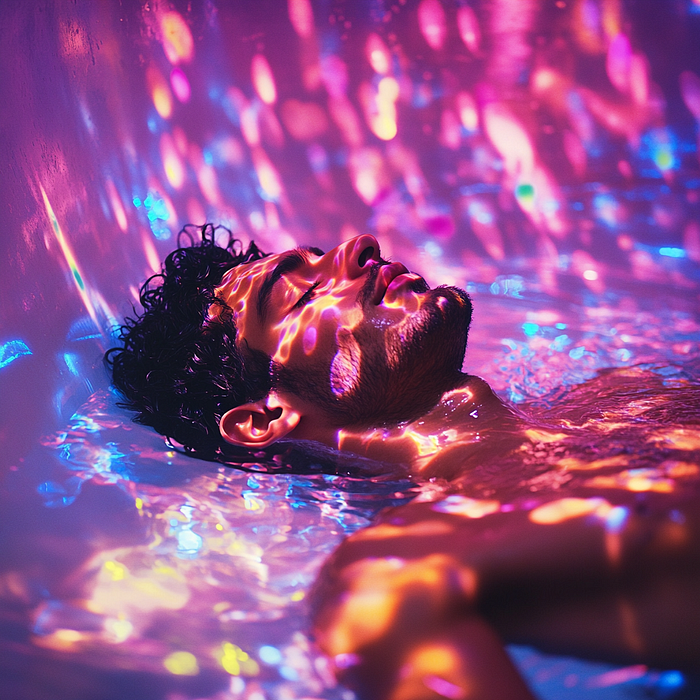
6.) Altered States by Paddy Chayefsky
Source: Midjourney
Ever wanted to experience the psychedelic/swinging 60s/70s in book form? Now you can! Well, it’s not quite same as dropping a tab of acid, or swallowing a handful of mushrooms, but Chayefsky’s novel, which he adapted into the movie starring William Hurt, is like an adult version of Alice in Wonderland crossed with Frankenstein with a dash of The Electric Kool-Aid Acid Test. Or imagine if Michael Crichton had become a theoretical physicist with a wake and bake routine.
I mainly read this book just to check out how Chayefsky, already a legendary screenwriter, handled a novel. I’d say this represents a culmination of nearly all his writing efforts. His work generally contained existential themes like the meaning of life, humanity in the face of industry, and such heady topics. But Altered States explores the very nature of consciousness itself. At times it’s a little too jargon heavy. Chayefsky’s two years of intense research amongst the Boston-area medical intelligentsia certainly shows. This is not a book that attempts in any way to be relatable, reflecting the monastic traits of its main character. Nor is it a book that will necessarily put you off due to its way out there premise. I think Chayefsky actually left a lot on the table, and could have explored the transformative effects Jessup experiences in the isolation tank more thoroughly. Instead, plot is dispensed with in favor of scientific soliloquies. Not bad, overall, it just feels truncated.
This is one of those books that you will likely revisit several times in your life, drawing different meaning from it depending on which era you’re currently in. The movie is decent, but don’t expect it to offer any more answers than the novel.
7.) The Luck of Barry Lyndon by William Makepeace Thackery
Source: Midjourney
You’ve heard of the D.E.N.N.I.S. System from It’s Always Sunny in Philadelphia. Allow me to introduce you to:
The B.A.R.R.Y. L.Y.N.D.O.N. System
Be of noble birth. Always be seducing wealthy and vulnerable heiresses. Rogues are cool. Really, rogues are super cool (especially Irish ones). Yes, my great-grandaddy was an Irish king.
Lying? Me? Never. Yes, I’ll have a fine brandy. All of them, in fact. Nora, that bitch. Destroy scheming step-sons at all costs. Only bang sluts, never marry them (unless they’re rich). Never surrender a chance to duel.
William Makepeace Thackeray’s Barry Lyndon is many things. It’s a picaresque confessional novel, a sort of 18th century American Psycho. It’s a satirical look at class and the aristocracy of England during a transformative time when the American colonists were overthrowing the rule of the monarch.
I found its greatest strength to be its cruelly honest depiction of an unhealthy and toxic marriage, in the form of the relationship between Redmond Barry, who becomes Barry Lyndon upon his marriage to Lady Lyndon (the wealthiest heiress in England, apparently). Despite being of low birth, through mostly violence and psychological warfare, Barry gains control over Lyndon’s entire estate, and promptly plunges it into near bankruptcy. He isolates his wife from society, abuses her in drunken black out rages, makes a mortal enemy of her son Lord Bullington; yet still produces a son with her to serve as his heir. As with everything Barry touches, it turns briefly to gold, only to crumble to dust. His son dies in a tragic horse accident, and he is ultimately undone through trickery just as he is ousted from his first love Nora at the beginning of the story.
Subtley, Thackeray seems to hint at the failure of English society, despite all its pomp and importance. All it takes is a mere “Irish rogue” with enough cunning to spearhead his way to the top of the heap (however briefly), to be undone only by the same vices that lead him initially to success. But perhaps Barry isn’t completely to blame. If one wanted to rise above his station in those days, in that part of the world, one had to be a force of nature. You had to be willing to do whatever it took. Only the few were born into the nobility, and so had the leisure of acting as “gentlemen.” For the rest, it was either through military service (risky, considering you had a high chance of death, disease, or dismemberment), or schemes. America had not yet been invented. There was yet very little means for one to climb upward.
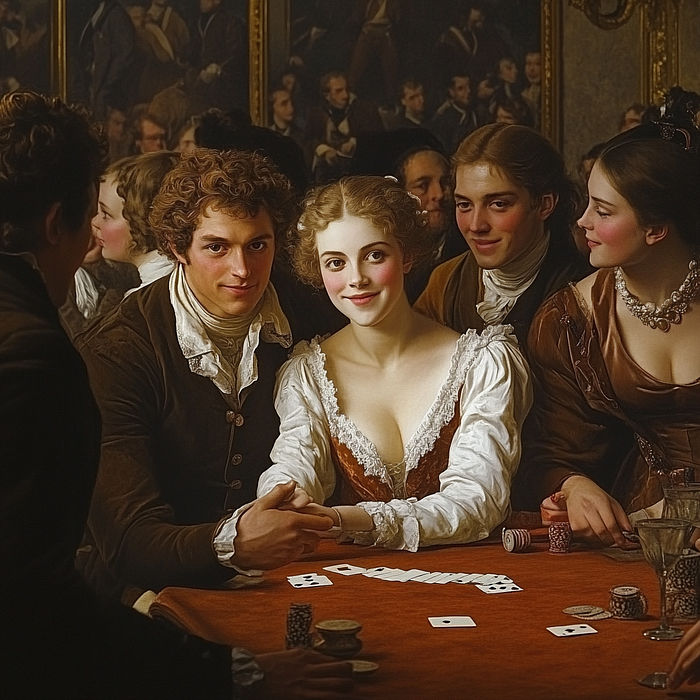
Barry gambles compulsively, a habit that serves him mainly in youth, when with his uncle, he tours Western Europe separating fools from their money. Barry’s only chief skill is in fact “play,” (cards) a perfect metaphor for the arbitrary fate that falls on those who choose the criminal life of deception and violence. Though nowadays Barry’s means of creating wealth might be related to the casino dealings on Wall Street. A modern day Barry Lyndon would probably be a Silicon Valley fraud, a la Theranos’ Elizabeth Holmes. Someone psychopathically fixated on achieving status not so much because it’s fulfilling or it even satisfies some inner need, but simply because their brain seems wired in such a way. The world is filled with Barry Lyndons, just as the world is filled with horrible, shitty marriages that nevertheless go on.
The Luck of Barry Lyndon is worth a read, as is Stanley Kubrick’s film adaptation, it goes without saying. It’s a bit dry in spots, but the parts with Lord Bullington are worth waiting for.
One thing I’ve found recently is that it’s getting harder to find fiction that appeals to me as a middle-aged man. This seems to apply to most mediums, though it’s most prominant in film. Rarely are films geared toward those male and older than 35. If it isn’t a superhero fantasy four-quadrant epic, it’s the latest mopey romance, or it’s a movie about a toy of some kind. I think this is why films like Top Gun: Maverick, Avatar: The Way of Water, and Oppenheimer did so well. They were actually able to pull in guys like me, who normally just bypass the theater because we know there’s rarely anything there for us.
The same holds true for the book publishing industry. During a stroll down my library aisles recently hardly anything caught my eye. The romance section is so massive it needs its own wing. Filled with iconic names like Danielle Steel and Nora Roberts. I’ve read Roberts in the past, and while she’s great, romance just isn’t my thing. What, you don’t expect me to read something like Fifty Shades, do you?
There’s your brand name male authors like David Baldacci, Dean Koontz, good ol’ King, John Grisham, James Patterson, and your high-concept thriller guys from the past — Michael Crichton and Tom Clancy. I’ve read most of Crichton’s stuff already, and hit a lot of Clancy’s highlights. And if I’m being honest, a lot of the murder mystery thriller stuff starts to sound repetitive. How many detectives investigating a conspiracy “bigger than they imagined” does one really need in life?
It’s understandable why studios and book publishers don’t care about us. Afterall, your typical 35+ dude is working all the time and/or married with kids, dealing with family stuff. Hey, we’re too busy trying to run the world here. We don’t have time to be wasting in fantasyland.
This is alarming as a novelist myself. Even though ironically many novelists don’t read themselves. Koontz can’t. There’s no way at the rate he pumps out his books. I’m pretty sure he wrote another Odd Thomas during the time I took to write this overly long intro.
Anyway, it sure wasn’t easy, but with some hard work I actually found a few books that appealed to me in 2023.
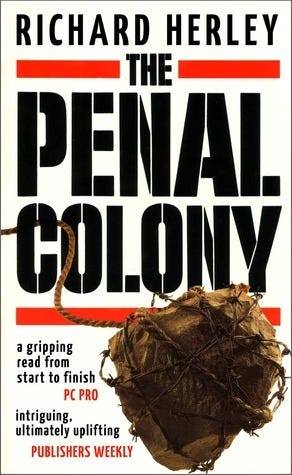
The Penal Colonyby Richard Herley
Book cover for ‘The Penal Colony’ by Richard Herley
This book is sort of dystopian future adjacent. In the near future, criminals are sentenced to an island penal colony near the British Isles called Sert that is divided between two warring factions. One side lives in relative peace and order, while the other has reverted to primitive barbarism. A wrongfully convicted man sentenced to Sert tries to survive and earn his place within the peaceful side under a wise ruling Father. But first he must try and survive in the wilderness to prove himself. If he can succeed, he may just find a promise of escape.
This was an interesting concept. Sort of like an adult Lord of the Flies. Stylistically it was rather dry. Very gray and British, if that makes sense. The Penal Colony was made into the 1994 film No Escape starring Ray Liotta. An adaptation which is currently on Amazon Prime, and one which I was able to endure watching for all of five minutes or so. So just stick with the book, which is ultimately well worth the time.
Unwindby Neal Shusterman
Book cover for ‘Unwind’ by Neal Shusterman
YA dystopian. Dark YA dystopian, mind you. I heard about this one on Reddit, and it has the most bonkers concept ever. In the future, adults can have their delinquent teenaged children “Unwound,” which involves harvesting not just their organs but every fiber of their body. One kid must try to escape government agents trying to capture him before his 18th birthday, the final deadline before he becomes an adult and is independent from his parent’s whims. Bizarrely, the whole unwind deal is done as a tradeoff to making abortion illegal.
The premise of this series felt both odd and familiar, sounding like a concept from the ’80s. Like something David Cronenberg or Paul Verhoeven would have dreamt up in their heyday. Say what you will about YA novels being superficial or silly, but that genre has some of the most creative, if not outlandish plots you’ll find in all of popular literature. No ditzy navel-gazing box wine sipping bored housewives here whatsoever.
Unwind is part of a series. While I found the first book satisfying enough, I don’t know that I’ll return to finish the saga. So many of these YA writers need to just wrap things up in a single book. Not everything is meant to become a Netflix series or become another Hunger Games. I mean, David and Goliath is arguably the first “YA novel,” and it was all of half a page in the Bible.
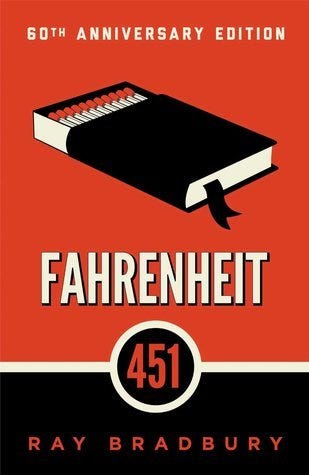
Farhenheit 451 by Ray Bradbury
Book cover for ‘Fahrenheit 451’ by Ray Bradbury
The classic novel about book burning, screen and media addiction, and censorship. Relevant, refined, though unsatisfyingly truncated. The endpoint feels more like a midpoint.
451 was unsurprisingly inspired by George Orwell’s 1984. It started off as a shorter story simply called The Fireman. Another point of trivia: the beginning originally featured Guy Montag having a dream where he’s captured for being in possession of books. Bradbury wisely scrapped this opening to instead start right in the middle of the action, with Guy burning a set of books, letting us see him in his element up close. It starkly marks his arc, which will ultimately take him into exile, where he will learn to become a “living book” in the woods.
If you were never assigned to read 451 in school like many are, you should absolutely add this one to your literary bucket list. I love reading books that have made a powerful cultural impact. Bradbury’s classic is referenced practically every day.
This was simply a pure delight. Every once in a while, it’s nice to go back and read an author who pioneered a genre, which Wells did in science fiction. In a pleasant surprise, there was ample dark humor to be found in this classic work of a mad scientist run amok. As was there also in the 1933 adaptation starring Claude Rains.
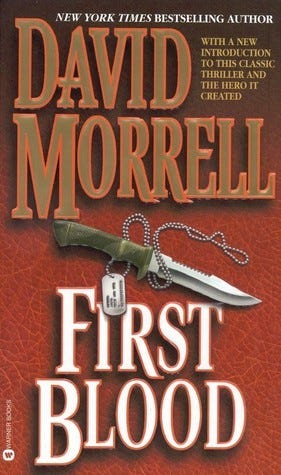
First Bloodby David Morrell
Book cover for ‘First Blood’ by David Morrell
First Blood is basically The Godfather of action novels/films. The DNA of Die Hard, The Terminator, Jack Reacher, and Predator are rooted in Rambo’s inaugural adventure. The book also contains a moving and meaningful theme concerning our nation’s Vietnam War veterans. My dad served two tours in Vietnam doing recon in the Army, so this book felt personal to me, even as someone who was never in the military.
First Blood is about how sometimes conflicts don’t end on the battlefield, and what can happen when they’re taken home. A great read you won’t want to miss.
Hopefully 2024 will provide more great reading opportunities. Finding something that appeals to me sometimes feels like performing alchemy. But I have faith.
It’s hard to read printed words these days. Who wants to crack open a boring old book when you’ve got an infinite scroll of the latest Twitter hatefest, non-stop booty-shaking TikTok videos, and Pepe Frog memes to look at? Now with Web3 out there, or the Metaverse, or Zuck’s Uncanny Valley, or whatever the hell they’re calling it, the days of reading plain old black and white text on dead trees are surely numbered.
Just look around you. Everyone’s become “smartphone-faced.” That’s when you hold your phone so close to your face it practically is your face. Ancient Hindu swamis once warned the youth of their day not to stare too long into the River Ganges, or else it would absorb their soul, and they’d spend eternity trapped underwater. The same warning could be applied to everyone today and their O.C.D. (Obsessive Cellular Disorder).
(NOTE: I made up that part about the ancient Hindu swamis, but the lesson still stands).
As a word-munching kiddo I used to read until I fell asleep every night. No Berenstain Bear book was safe from my crayon-smeared fingers. My mom would know I’d conked out because she’d hear the books thump against the carpet as they fell from my hand.
I loved to read. Still do. But even as a novelist and online wordsmith, reading sometimes feels like a slog to get through. I get smartphone-faced, too. I find myself falling into slumps, distracted by the circus of social media, or the impulsive need to Google stuff. Or I just get bored or don’t have the time.
Then comes the awul guilt for not reading from my inner finger-wagger. A cardinal sin for writers.
To be fair, not everyone has the time to get absorbed into a book as they’d like. And to be even more fair, there are a lot of bad books out there not worth even looking at. The New York Times Bestsellers list is less a list of quality than a ranking of which sales team did the best marketing for their product.
If you’re struggling with staying focused on reading these days, it’s important first to get over any guilty feelings you may have. Reading is all about learning, and there are a ton of mediums you can use to do that. Not just books. Losing temporary interest in reading could just be your brain’s way of saying it wants to try other means of data extraction.
When I was in college, I remember a student submitted a thesis asserting that people can learn history or other topics just as well through gaming as they can through researching books, using immersive MMORPGs, and historical-themed games as examples. His case study revealed that both the gamer and the reader retained information about equally. Which is great news, as I can finally call myself an Oregon Trail historian like I’ve always wanted.
Here are a few ways that can help you “read” without reading.
Audiobooks
Most everyone is aware of Amazon’s Audible program, which offers thousands of audiobooks on its platform. But there are also numerous audiobooks available for free on YouTube. Everything from classic books, to big name authors like Stephen King, to cult hits like Harlan Ellison’s I Have No Mouth and I Must Scream. In addition, there are tons of nonfiction bestsellers on there, like The Richest Man in Babylon.
If you don’t have the time or energy to read a book the old fashioned way, just type in a title and enter “audiobook” afterward into YouTube’s search bar. Chances are it’s on there, and narrated by a professional.
Podcasts
Everyone and their grandmother has a podcast these days. Which is awesome, because it virtually guarantees there will be something out there you’ll be interested in, no matter how small the niche or audience. True crime stories are really popular. But you’ve also got scary/paranormal stories that are getting big.
One of my favorite types of podcasts are behind the scenes ones for shows I like. I used to listen to the Better Call Saul podcast after each episode until the series finale aired. If you’ve got a favorite TV show or movie, chances are either the cast or crew has started a supplementary podcast. Or fans are still talking about it. Even shows that have been off the air for years, like The Office, have ongoing podcasts run by some of the cast members, such as Office Ladies.
Another favorite podcast of mine is Inside of You by Michael Rosenbaum, the actor best known for playing Lex Luthor on Smallville. Rosenbaum mainly interviews actors and other celebrities in a kind of therapist-on-the-couch manner, focusing on the psychological impact of fame and the grind of Hollywood. He’s even interviewed his former Smallville co-star Tom Welling, aka Superman. Times are tough when Lex Luthor is counseling the Man of Steel.
YouTube/TikTok Book Summaries
Sort of the Cliff Notes version books. These channels are increasingly becoming more popular, as people are interested in learning about what’s out there, but may not have the time to get deeply invested in any particular topic.
TikTok’s “BookTok” community has actually become so large and influential that its creating New York Times Bestsellers. Madeline Miller’s book The Song of Achilles became a viral breakout hit this year. I wrote about BookTok in an article awhile back. It’s becoming the place to go to not only learn about new books, but get reviews and summaries for genres you might be interested in, and even market your own stuff. Sometimes the best part about “reading” isn’t the actual reading, but discussing what you’ve read with likeminded people.
Read Aloud Feature on Medium/MS Word
Automated, or “AI” voices have made some progress in mimicking human speech. Medium’s read aloud feature sounds close enough that it doesn’t throw you off that much.
MS Word also has a good AI voice under the “Review” tab. I find using that feature is a good way to proofread, or get a sense of the flow of a document. But if you’re a busy professional, let’s say, and you’ve got briefs and other docs to read, using the Review AI voice could be a good way to save time while you do other things around the house.
In addition, there’s been a growing number of YouTube channels that summarize the news or particular subject interests, creating condensed and quickly digestible pieces. Altcoin Daily, for instance, covers a wide swath of cryptocurrency news and distills it all into a nicely condensed daily video. Then you’ve got pop culture channels like YellowFlash2, that talk about current events, with some added colorful commentary.
Go Back to Favorites You’ve Loved
Of course, you don’t have to go the headphones-and-listen-electronically route. You can go right back to physical books, which still exist believe it or not.
If you’re in an anti-reading rut, or stuck in that bizarre fog where the very idea of reading seems impossible, it doesn’t hurt to go back to the books you once read and enjoyed before. The books that may have inspired you to get into reading in the first place. Many people credit the Harry Potter books with that. While I’ve moved on from the Berenstain books, I’ll always enjoy a good Stephen King or Ira Levin novel.
Try Another Medium of Writing
Such as screenplays. So many scripts of classic or popular films are available on the web. You can get scripts for The Terminator all the way up to the latest Best Picture winner. Every year a certain number of unproduced screenplays are chosen for the Black List, and they’re almost always available for download. The 2021 Black List selections are all available here, for instance. And if you’re reading this year’s unproduced scripts, you’ll be aware of new films coming out before anyone else.
It’s also really instructive to the creative process. Screenplays are basically blueprints. It can be really cool to see how a movie starts from the page and progresses through the filming process. You get to see earlier drafts of stories before they were changed for the screen. For instance, in the original Alien script by Dan O’Bannon, the entire crew was male, including Ripley.
You can also try fan fiction, which has become pretty huge. Fifty Shades of Grey started off as Twilight fan fiction, and that worked out well for everyone. Or not.
Join a Book Club (Online or In-Person)
This can be a good way to force some accountability into your regular reading habit, though it may be more time-intensive than the previous methods. There are many book clubs on Facebook, of course. But usually your local library will be the place to go for in-person clubs.
If there’s not one in your area, consider starting one yourself. It could not only be a great way to discover new books, but meet new people.
—
Hopefully, these seven methods will help restart your drive to read. The world’s unfortunately become filled with zombies addicted to glowing rectangles with vibrant flashing images. Time will tell the kind of damage that will do to the human brain on an evolutionary scale, though we already know attention spans have shrunk to microscopic levels for many.
Spending time deep in a book is an increasingly lost art. It helps strengthen focus, foster critical thinking, and can create an appreciation for language and imagination. Social media and video may provide a pleasurable jolt of dopamine, but the effect is superficial and temporary. Those forms of data distribution also tend to be passive. They deaden and hypnotize the thoughts and senses. Whereas a good book (fiction or non) can be like stoking a fire inside your mind. Massive movements, revolutions, whole empires, have sprung from written works like the Bible or The Communist Manifesto. I don’t see the booty shakers on TikTok inspiring a lot of meaningful social change.
Even if some of the above solutions aren’t technically “reading,” they may help to put you back on a better path toward active learning and data processing. And that’s something we could all use more of these days.







 Dean Brooks