In addition to other benefits.
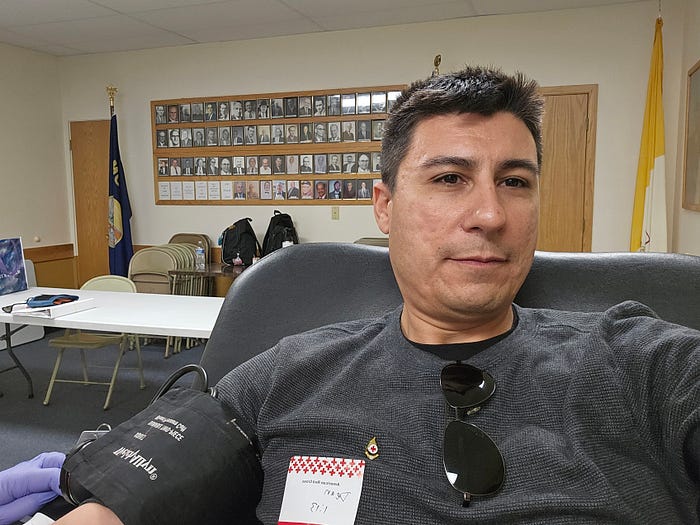
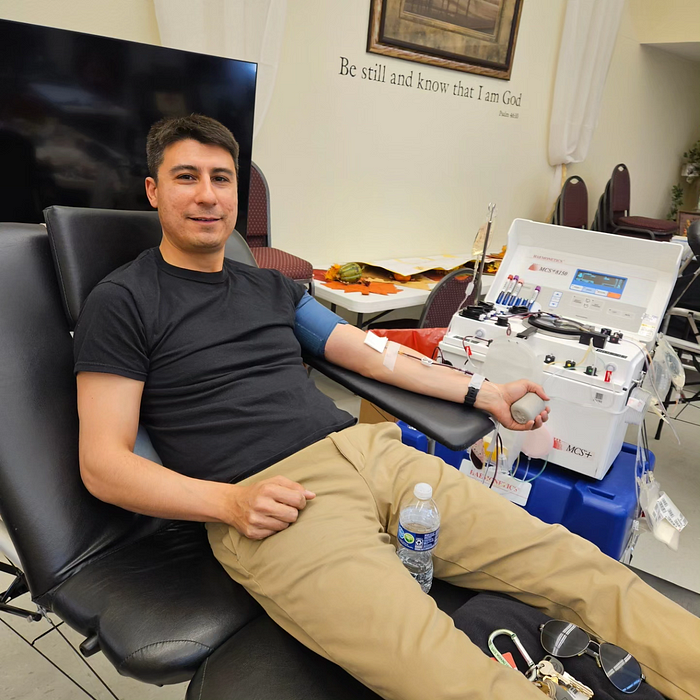
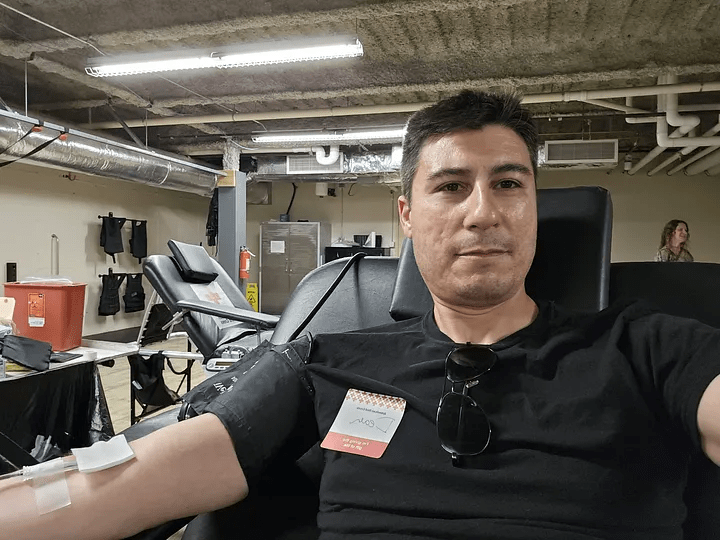
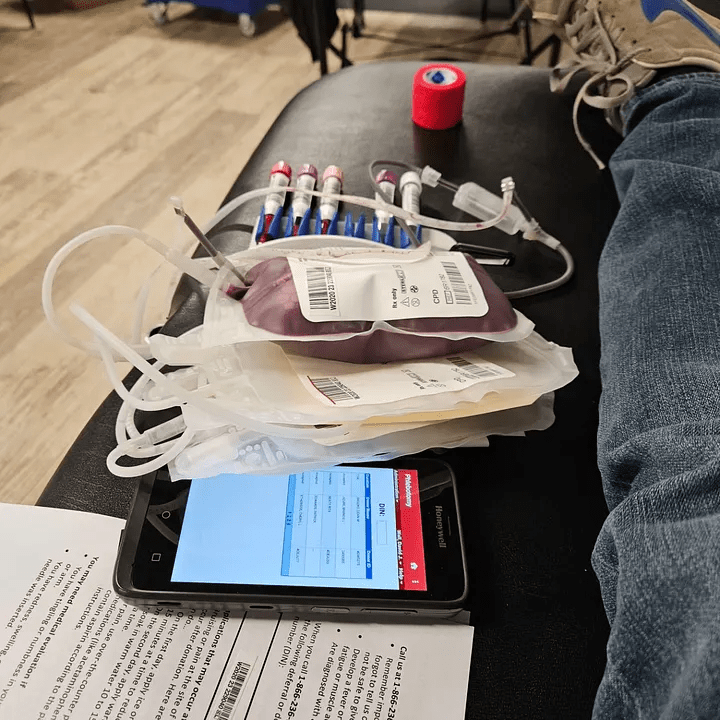
Yesterday marked my 32nd or 33rd lifetime blood donation to the Red Cross. I’ve lost count on the exact number. Most of my donations were whole blood. Others were double red cell donations. This is where an apheresis machine is used to collect your red cells, while returning your plasma and other fluids. So those visits count as two donations in one shot.
So far, my lifetime donation amount is over four gallons, which is almost the total amount of blood that’s in the human body (3.5–5 gallons).
I’ve been giving blood to the Red Cross since I was a junior in high school. I had just turned 17, and it just so happened my school was holding a blood drive in April right after my birthday. I didn’t need parental permission to donate. I did, however, need permission from my lifelong fear of needles.
My needle phobia probably goes back to a traumatic episode I encountered as a child. When I was four or five I was running around my chrch when I tripped and smacked my forehead right on the corner of a wall.
I don’t remember exactly what happened next. But I do recall waking up and being strapped to a hospital bed while doctors were trying to stitch my bleeding wound together, kicking and screaming, and trying to escape, while they held me down. This was the mid ’80s, so it was before they used tape. They had to sew my skin back together with a needle and thread. I’m not sure if I had to get any shots, but the experience with the needle so close to my eyes and skin certainly freaked me out.
The visit left a mark on me. Literally and psychologically. I still have a scar on my forehead. I was left with not only trypanophobia but with another fear. To this day I feel deeply uncomfortable in rooms or places where I feel trapped, especially if there are people I don’t know inside. Such as in small classrooms or office rooms. This is why I try to sit near the door. It’s not exactly claustrophobia. I do just fine in elevators and stairwells and other enclosed places. It’s more about fighting the irrational fear of suddenly becoming unable to escape. Or perhaps it’s more a social phobia.
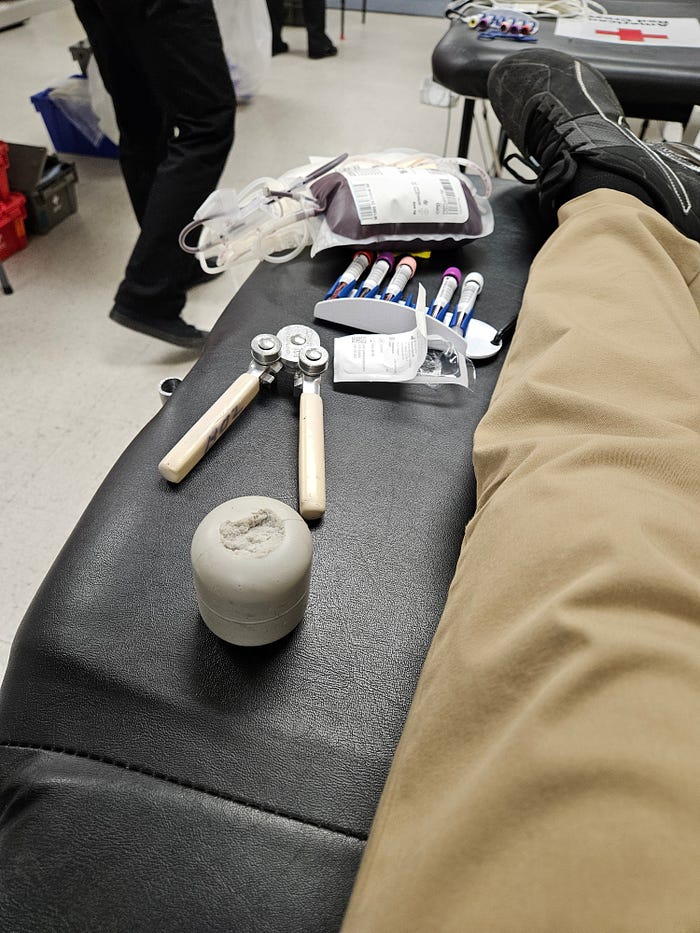
When my high school had the blood drive, I saw it as an opportunity to overcome my decades-long fear of needles. So, I signed up. I’d never given blood before. I’d only had immunization shots and a tetanus shot. I’d had surgery twice. I was no stranger to medical places. But I’d certainly never had a syringe inserted into my arm of my own free will. I wasn’t terrified. But I wasn’t exactly in love with the idea either.
When my turn came I must have lucked out with a good phlebotomist, because I don’t recall there being much of a sting or any pain. Inserting a syringe into a vein is a delicate art. Sometimes if it’s done just right, it’s virtually painless, and leaves almost no mark. I’ve had good and bad experiences with needle sticks.
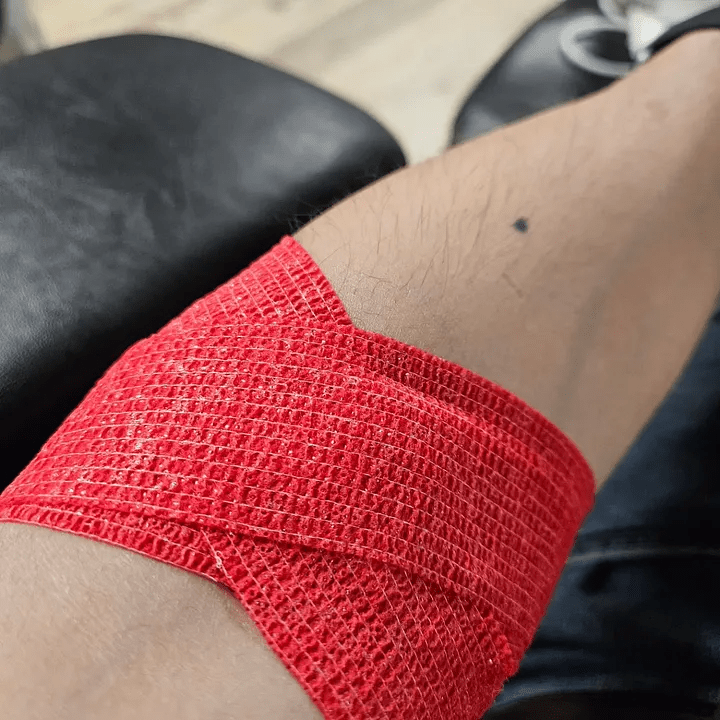
In my donation yesterday my vein was less cooperative than usual. Though it may have been a bad needle stick, too. In either case, a technician had to stand there and manually hold the syringe in place, sometimes moving it ever so slightly, in order to maintain my blood flow. A condition that would have been absolutely untenable for me previously when syringes filled me with wracking dread. Now it’s just more of an inconvenience.
Bottom line is that stepping out of our comfort zone is often the best way to overcome fears or flaws. While I still struggle with small rooms with people I don’t know, I have been able to give public presentations and participate as needed. It’s not as overwhelming a fear as it was before.
I’m glad I was able to cure my trypanophobia, especially by doing something that’s very good for society. Blood is constantly needed, especially during national emergencies. So, I encourage everyone to give if they can.


 Dean Brooks