How I Quit Smoking

Failure is your best option.
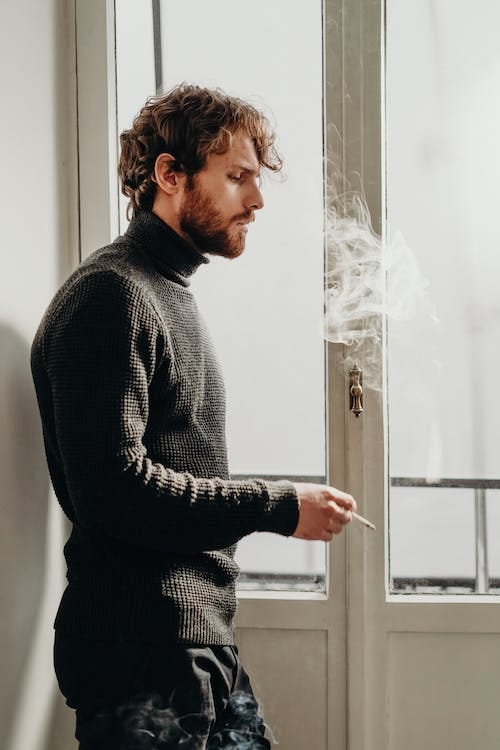
pexels

“Oh my God, YOU smoke?”

“Yeah.”

“You don’t look like you smoke.”

One of the weirdest things that kept happening to me when I was younger was strangers refusing to believe I was a smoker. Maybe I looked like a Boy Scout, or put off some Mama’s Boy vibe, or looked like your central casting-style ‘Nice Guy.” Someone for whom smoking was a big no-no. Or maybe I just didn’t look cool enough to smoke. I don’t know. But whenever I’d start working a new job, or meet new people, the moment I revealed I enjoyed sampling cancer sticks now and again, the reaction was often shocking. As if I’d revealed I was in the mob or something.

But smoke I did from ages 16 to 25. I started sometime in the spring of 1998, experimenting by myself under a bridge by a bubbling stream near my house with a good ol’ pack of Marlboro Reds. I was working at a popular chain resort as a waiter at the time, and there was a cigarette machine tucked in an alcove near the front desk. Remember those machines with the little plastic knobs with the glass display? They reminded me of foosball tables because you had to pull the knob outward underneath your selection. Like an arcade game that gives you emphysema. They also don’t check your I.D., which was a nice plus.

Almost everyone I worked with smoked. I was the youngest there. The others were mainly stressed-out college students who chain-smoked like chimneys. I never encountered any of the dreaded peer pressure those corny school special PSAs warn you about, to start inhaling chemical-laden smoke into my lungs, but I suppose unconsciously, I was trying to fit in.

So one day, I took a walk and found myself under that bridge. I can still remember unwrapping the plastic shrink wrap. Cracking open the little box. Inhaling the sweet smell of fresh Marlboro tobacco. Then with a shrug, lighting up my first one. It was warm and sunny, and the stream was peaceful. It was the idyllic spot to have your first cigarette. And that’s where my smoking career started.

Eventually, I would quit on December 29th, 2007, tossing my final drag out my car window as I drove on the Schuylkill Expressway through the heart of Philadelphia. Oddly enough, it didn’t feel like my last. I had some vague notion of quitting for good. I’d tried to a dozen different times in the past. There was no big dramatic determination that this time would be the one. Then two days later, during a rooftop New Year’s Eve party at a friend’s house in the city, I decided to test my resolve. If I could resist the urge to smoke after New Year’s, maybe this time would be the one.

As it turned out, all those years of failure had prepared me well because I was able to overcome the craving to light up in celebration. Perhaps it was succeeding at this early mental test that gave me the confidence to go forward. I never smoked cigarettes again. In fact, except on very rare occasions, I never even get haunted by the Ghost of Tobacco Cravings. There was one time I dreamt I smoked and woke up flush with guilt, only to realize I hadn’t actually lit up for real. I enjoy a cigar once in a while. But those have never tempted me back into a habitual smoking habit.

My relationship with tobacco was awkward, kind of pleasant, and also masochistic. Like dating someone who you know doesn’t really like you, but you keep pressing on with them because to break up would make you feel lonely, and hey, maybe they’ll change their mind and eventually like you someday. Yeah, I’ve never done that before.

:::sad slide whistle:::

Smoking was never something I felt really driven to do. I’d started due to some fatalistic thinking that this was just one of those things you tried, combined with a desire for acceptance and some nebulous notion of thinking it would help me “fit in.” Stupid rationales, for sure. But at least I wasn’t injecting heroin into my veins.

It feels weird to think about now, but smoking was far more socially and institutionally acceptable back then. Most restaurants had a Smoking and Non-Smoking section. Workplaces often allow smoking indoors. I worked at a printing company for four years where almost everyone smoked, and inside, too. Then sometime around 2002 or so, the company said we had to take smoke breaks outside. I had several family members who smoked. Even being underage didn’t stop me the most time. I could always find a classmate who either worked at a store that sold cigarettes or a co-worker willing to buy cigarettes for me if I asked.

Oh, and cigs were cheap back then, too. This was before the government began taxing the hell out of them. I think I used to pay around $1.20-$1.70 or so for premium brands like Marlboro. You can’t find them that cheap now unless you go to some war-torn Third World country where kids wear flips flops and carry Uzis around on their shoulders. Probably not worth it to visit just to get discount mini-stogies.

E-commerce was but a dribbling cyber infant at that time, too. In one of those uniquely adolescent genius moments, I found an online company that sold loose tobacco. Using my junior debit card, I ordered a whole freaking pound of Virginia tobacco. While I couldn’t buy cigarettes under 18, I could buy paraphernalia like rolling papers at the local gas station. I even ordered a hand roller online, too.

After everything arrived, I sat my 17-year-old self on the sofa rolling my own cigarettes, watching Third Rock from the Sun, feeling like a genius because I’d outmaneuvered the ban on selling tobacco to minors.

My high school only reinforced the need to smoke. At the high school, I went to for my senior year, there was a section called The Row that bordered the street and the school property, where all the smokers went to light up. It was just too easy to step off the school bus and stroll on over. Or use one of my many free periods to dip out and satisfy my cravings.

During my brief time in foster care, I even mastered the art of dipping tobacco while smoking for the ultimate morning head rush. Dipping tobacco was never really my thing, though. It was something I tried more because my foster brothers were into it. To this day, the scent of mint dipping tobacco brings me right back to my late teen years, state-mandated counseling sessions, waiting outside at the bus stop, occasional fist fights, and tromping through backyards to get to friends’ houses and such. Not to mention those disgusting spit containers. Usually, soda bottles. Dark brown saliva sloshed around the bottom of those ridges. Gross.

I came to disdain dipping and chewing tobacco as low-class. But smoking remained cool. I moved on from Marlboros. Briefly dabbled with Camels, a brand one of my cousins smoked, but which I found too “acidy.” Tried Newports but never cared for menthol. Then Parliaments, with the classy recessed filter. Until finally discovering the brand for me, Lucky Strikes.

Whenever I have one of those once-in-a-blue-moon moments where I feel a craving, it’s Lucky Strikes that I think about. The filtered kind. Never anything else. Made popular during WWII. All cigs all loaded with bad chemicals. But for whatever reason, the chemical composition of Lucky Strikes just did it for me. It was a niche brand, too. I have not sold everywhere like the big brands. No one else I knew smoked them. Which made them feel more special and unique.

I’ll never smoke again. But if Putin were to go nuts and launch the nukes, and the apocalypse was imminently upon us, you can bet I’d be scouring every gas station and store for Lucky Strikes, just so I could light up and enjoy that final dry toasted drag as the mushroom cloud vaporized me into dust.

It wasn’t quitting smoking that was tough. It was quitting Lucky Strike cigarettes that were tough. Even now, whenever I see one of those little white boxes with the red circle in the tobacco section behind the cashier, the song True by Spandau Ballet starts playing in my head.

Yeah, you could say I kinda liked that brand.

Photo by Βασίλης Ταραμανλής from Pexels: https://www.pexels.com/photo/grayscale-photo-of-cigarette-butt-8048552/

So, how’d I eventually quit smoking altogether? By failing a bunch of times first. It helped that, except for a brief summer in 2000, I was never much of a heavy smoker. Even though cigs were relatively cheap back then, for me at the time, with my $10-an-hour part-time job, they were a pricey luxury. So I mainly only smoked upwards of half a pack a day at most, with dry periods tossed in-between paychecks.

I encountered my first success at quitting, oddly enough, after having my wisdom teeth pulled in late 2001. All four of my teeth were impacted, so the dentist had to get in there pretty invasively with his mini jackhammer and yank them all out. I was conscious of the operation but obviously quite doped up. I couldn’t eat or drink much following the surgery. Obviously, I couldn’t smoke. But being forced to quit cold turkey like that isn’t what got me over the hump to cut down smoking going forward.

It was the Vicodin. I was only prescribed a week’s worth following the extractions. But for whatever reason, the drug, combined with the fact that my mouth felt like a gaping wound from a horror movie, put me off my regular smoking schedule for good. I never went back to smoking half a pack a day. From then on, it was 5–7 cigarettes a day, to only about 2–3. One with my morning Dunkin’ Donuts medium coffee. One after lunch. Then one, maybe two, after dinner. And that was it.

Later, after getting more serious about quitting, I tried the “filthy ashtray” technique. That’s where you leave a disgusting, smelly ashtray filled with old wet cigarette stubs in your car, so you associate smoking with a foul odor. This is supposed to help you quit. Well, it’s a terrible method. I don’t recommend it. It didn’t help me except to look for other tips and tricks to overcome the habit.

I tried nicotine patches, only to get some of the most bizarre and disturbing nightmares while using them. The feeling of my skin slowly absorbing nicotine all day was also off-putting and made me sick. Besides, it wasn’t so much the nicotine I craved. It was sucking down that warm smoke with the taste of fresh coffee on my tongue and getting that morning head rush. Or enjoying that post-lunch drag after having abstained all morning. And that final cigarette before sleep.

Sometimes compromise can keep you trapped. I felt that because I was only smoking 2–3 a day, that was good enough. That surely wasn’t enough to cause cancer, right? I was in good health otherwise. I worked out, stayed active, and had a good diet. Hey, I can smoke a few a day if I want.

It just came down to making the decision to quit and sticking to it. No magic trick, big secret, or anything. I don’t know what made me finally decide enough was enough. Maybe it was getting mid-way through my twenties and wanting to leave smoking behind as a bad habit leftover from youth. Maybe it was wanting to save money. By the mid-2000s, cigarette prices were starting to go parabolic. They were three dollars. Then four. It started to actually eat into my earnings, even at only a pack and a half a week.

In the end, I quit smoking as casually as I’d started. I flicked that final Lucky Strike cigarette out the window of my 1990 Toyota Corolla, watched it spark against the asphalt behind me, and that was that. When I overcame the urge to light up at the New Year’s Eve party two days later, I knew I could sustain being smoke-free for good. Two days turned into a week. Then a month. And finally, a year.

My senses returned. My sense of smell and taste. Things that had been inhabited for so long that I’d forgotten what it was like to have them at full capacity. As I cycled through new clothes, the familiar stench of washed-out tobacco faded from my laundry. I bought another car later and no longer had the triggering smell of lingering smoke to tempt me back into old habits. I enjoyed the reward of fresh air and clear lungs as my own reward. I felt healthier overall.

But the best part was the satisfaction of knowing I’d put my mind to something and overcome a tough obstacle. That was a way better feeling than anything even a Lucky Strike cigarette could give me.

Eventually, I stopped having to think about not smoking. It soon no longer occurred to me as something that I was “missing.” It was no longer a part of my identity. Until writing this article, smoking was something I hadn’t even thought about for years, perhaps. I’m glad to be smoke-free, even from my beloved brand. And so long as the nukes don’t start flying, I’ll never go back.

A Few Tips for Handling a Fear of Public Speaking

A systematic and actionable list that can help take you from stage fright to stage bright.

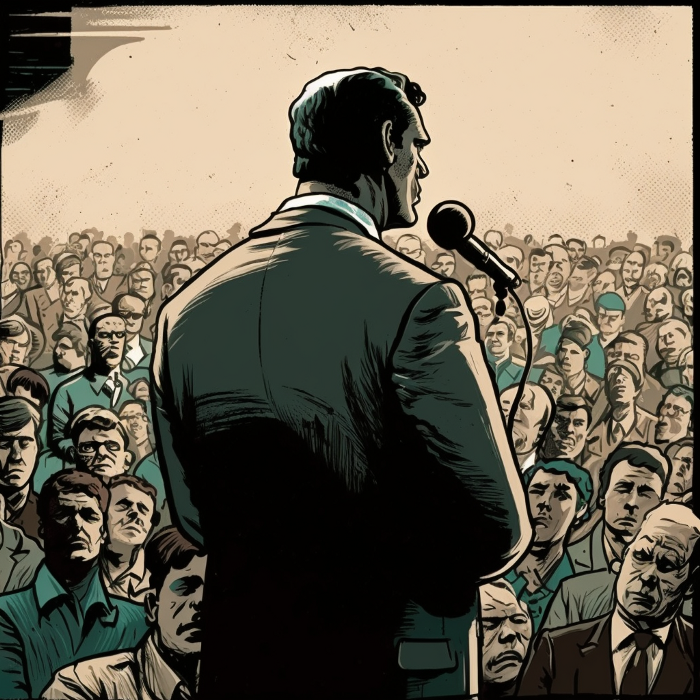
Made with Midjourney

A lot of “fear of public speaking” articles I’ve read are frankly worthless. And I’ve read a ton of them. The advice essentially boils down to telling you to just “psyche” yourself out of the fear of talking to a room full of strangers. Or some variation of “believe in yourself,” and the confidence will come.

That’s all nonsense. The fact is, it’s normal and natural to have a fear of public speaking. It’s the exceptionally rare personality that truly thrives off stepping into the spotlight. Even professional speakers like Tony Robbins get stage fright.

However, there are a variety of ways for handling the fear itself, and becoming more effective at speaking to a group.

The first step is understanding that it’s a problem like anything else. A clogged toilet. A stalled engine. There’s nothing special about being afraid of speaking in public. Learning to handle the fear is a process like learning how to throw a football or swing a baseball bat.

It’s something you must train your brain to handle. In fact, you have to somewhat reprogram your mind to deal with it in a constructive way. No, I’m not talking about praying or speaking daily affirmations to juice yourself up before a big board meeting. I’m talking about simple activities you can take that can retrain your brain.

Handling a fear of public speaking is not a psychological problem. It’s a biochemical one. It’s like overcoming a drug withdrawal.

It can only be accomplished by incremental exposure and physical confrontation. Meaning that you put yourself into smaller, more manageable situations that gradually build up your tolerance over time. Here are a few steps that have helped me, that I hope will help you.

1. Sit in the Front Row

I used to be someone who was terrified of even introducing myself in a classrom or group. If the speaker started off with that ol’ “Let’s go around the room and introduce ourselves” bit, my pulse went from 72 to 115 almost instantly. I wear a FitBit, so I know that’s accurate.

However, I realized one day that the main reason I felt unnerving dread just saying my name was because I was unconsciously sabotaging myself by always sitting in the back of the room. It’s like I was telling myself I had nothing to contribute to the group, nothing of value to say, and that I didn’t even want to be there. I was making it 10x harder on myself by positioning my body in a way to simulate hiding from the group.

Now, I’m someone who does have mild claustrophobia. I hate sitting in small rooms with the door closed, or any physical spaces where I feel trapped. So anytime I would go into a room, I would try to find a spot near the door or in the back, as that fed my lizard brain the sense that escape was possible should things get hairy. But acquiesing to that mild irrational phobia in turn made speaking up way more difficult, because I was already grappling with the fear of merely being in the room.

So, the way I dealt with that was by forcing myself to sit in the front row whenever possible. This accomplishes a few things. One, it puts you closer to the action. Being close to the speaker helps you see and become more comfortable with the mechanics of a public presentation.

Two, it helps you become more comfortable with everyone’s eyes being on you, even if they’re only staring at the back of your head. Unlike sitting in the back or on the side, when you’re sitting in the front everyone will likely be looking at you if you ask a question or make a statement, because they’re obviously already facing that way anyway. This will help you become more comfortable with what I call the “spotlight effect.” If you can handle fifty people looking at you for thirty seconds while you respond to a speaker inquiry, the idea of speaking in front of those people for five minutes, ten minutes, or more, starts to become more managable.

Three, by sitting in the front row you are unconsciously validating your presence in the group. You’re telling yourself that your opinions and thoughts matter. That you’re worth listening to. I’m not saying that by sitting in the back or middle it means you don’t think those things. I’m saying that forcing yourself up front can give you an unconscious edge if you’re lacking one. I find that when I sit up front I feel way more involved and “ready to jump in” if the speaker asks questions or wants participation.

Fourth, sitting in the front row has a strategic benefit. If the speaker cruelly does do the go around the room and introduce yourselves trick, you’ll likely be among the first to go. So you can get that out of the way sooner. This is where sitting in the back has its major downside. There’s nothing worse than sitting there for ten minutes with the fear compounding, as you are forced to wait your turn to say your name and your favorite hobby, or something. If you sit up front you meet the challenge head-on, rather than letting it come to you on its own terms.

I still get nervous introducing myself, by the way. But I’m way better now than I was before.

2. Speak Up More in Smaller Groups

The fear of public speaking is generally a function of shyness. So if you’re already introverted, or someone who doesn’t like to talk much to begin with, getting in front of a crowd is going to be a challenge. Your brain will chemically repel from that, because your brain interprets the activity as a threat to your well-being.

Human beings, even shy ones, are still tribal, by nature. We want to feel that we are contributing to the group in some way. We want to feel involved and validated. Well, it’s much harder to do that if you are constantly avoiding even just talking to people in the first place. The more you are able to speak up in front of of several people, the better you’ll work up the nerve to speak in front of dozens, or even hundreds.

This is easy to do if you are in college, and you’re in several classrooms everyday. Groups tend to form based on seating proximity, or if the teacher hands out a group assignment. When that happens, be the initiator, or at least help facilitate conversation in some way.

If you’re a working adult, this can be accomplished during meetings at work, or by joining an organization like Toastmasters. While I was in college years ago, I joined a Toastmasters group that met at a Microsoft facility. They were a great group of people. Toastmasters has structured meetings, formal scheduled presentations, and offers feedback for you on a speech. Generally they meet once a week, and are always welcoming to new members. Toastmasters ia great training ground for learning to communicate more effectively period, much less public speaking. They can also be beneficial for people who are trying to improve their English-speaking skills. The group I went to had several individuals from other countries who were there to help improve their diction and pronunciation.

Nowadays, I work a job that has plenty of meetings. So whenever I can, I try to take advantage of that and participate reasonably. I make it a goal to participate with an observation or respond to a question at least once. This has helped to delegitamize the fear I used to have of being in groups, and cut back on my natural shyness.

Additionally, you can help knock the fear of public speaking by talking to strangers. Even if it’s something as simple as asking the time, or complimenting a retail worker. The idea here is to help break out of the “shyness shell,” so that your brain does not interpret other people automatically as threats that causes your ability to speak effectively to get shut down. The goal is social fluidity. The ability to effortlessly mingle in a comfortable and confident manner. Not an easy task for a shy person like myself. I’ve always envied those that are socially graceful outgoing friend-makers by nature. But the reality is those types are actually pretty rare. Most people don’t operate too well outside their usual group of friends or associates. So the more you place yourself outside of your social comfort zones, the more you’ll be equipped to handle the big Power Point speech, or the best man’s speech at your next wedding, and so forth.

Believe it or not, you can also help break out of that shyness shell by doing activities like commenting online, posting on social media, or writing a blog post or article. Any little way that helps break the negative feedback loop of non-participation can help, even if you’re just sitting behind a computer screen. Even though I’ve been writing articles for either newspapers or the web since I was 12, I didn’t feel comfortable writing on Medium when I first discovered it. I lurked for awhile. Now I write freely, and that’s had a positive effect on me feeling more confident when speaking to people in real life.

Made with Midjourney

3. Improve Your Diet, Exercise, and Stop Drinking

Like I mentioned at the top, the fear of public speaking is not psychological, it’s more biochemical. That means it’s not something you can just trick yourself out of having. “Mind over matter” only goes so far. It’s a naturally-occurring phobia because it’s rooted in a fear of exposure and shame and loss of status within the tribe. That means your body is doing its job by reacting with nerves, elevated heart rate, sweating, etc. That’s all perfectly normal. Your body is a machine to some degree, and it will respond to things automatically.

And therein lies an opportuntity. The stronger and better nourished your body is, the better it and your brain will be able to handle fearful situations. I don’t mean you have to have a full stomach before a speech or presentation. Personally, I usually skip lunch or breakfast as I never have much of an appetite before one anyway. I’m talking about improving your diet so your body is healthy overall. That means cutting out junk food, fast food, foods loaded with sugar and carbs, and focusing on healthy, nutritional foods that will give your mind and body all the vitamins it needs.

Some foods, like sweet potatoes, can help lower blood pressure. And that can have a big effect on feeling “chill” when you have to give a speech. I have naturally low blood pressure already. Usually I’m around 100/60 at rest. But I’ve found that staying hydrated with water, cutting down on caffeine, and eating a balanced diet regularly helps immensely. But there are many dangerous foods that can elevate blood pressure or cause a spike in your mood, only for it to crash later. You don’t want to be on a chemical rollercoaster the day of a speech. You want to be as cool and in control as possible.

By the way, I’ve also heard that some people take beta blockers, prescription pills, and even things like Tylenol or Advil before giving a speech, as it helps to calm them down and can lower heart rate/pressure and such. I don’t advocate taking any chemical supplements like that. I’m not a doctor or health/nutrition expert. I believe in fighting a public speaking phobia naturally. But if it’s something that works for you, and the supplements are healthy and ethical to take, then that’s your prerogative.

Another good way to protect your nerves is to cut out drinking, or stop altogether. I used to drink regularly, and often heavily, until I finally quit and have only rarely drank since. Drinking dehydrates you, even if you try to offset alcohol with regular glasses of water. Alcohol obviously distorts your ability to think clearly. It makes it harder to function at your best. A hangover can kill any ability to be productive. And that can make giving a speech a more difficult and terrifying event than it ordinarily would.

One of the reasons I quit drinking years ago is because the aftereffects of a nightly binge made my nerves completely shot the next day. So this only compounded my fear of public spaces, speaking, or being in rooms filled with people. It got so bad that if I was in a meeting, I would suddenly get hit with a jolt of fear. And this jolt would escalate. I’d get dizzy. The walls would start to close in on me. Until finally I had to get up and leave. Then I’d have to come up with some excuse later, like feeling sick, or having to use the bathroom. That is no way to live, and it’s totally unacceptable if you’re trying to succeed in the workplace.

The human body is a vast chemical ecosystem. While it’s nice to pretend that you can just will yourself through anything, the fact is we are very susceptible to chemical manipulation. So the better you treat your body, the better prepared it will be to handle challenges.

Lastly, I found that working out right before a meeting or speech can do wonders, as it can help increase the sense of well-being and improve my mood overall. I always feel confident (albeit maybe tired) after a good pump, but certainly in better condition to handle a social engagement. Ask yourself, will you feel better walking into a room full of strangers if you’re in good shape or bad shape? I’m not saying you’ve got to be jacked and tan like a bodybuilder. But again, it’s all about unconsciously validating yourself. When you exercise and take care of your body, you are telling yourself that you matter, and that can pay huge dividends in the social arena.

You can enhance the exercise benefit if you join a gym, too. That way you’re putting yourself in a social environment, and giving yourself a chance to interact with strangers outside of your comfort zone. No matter what, exercise will make you feel better and healthier overall.

4. Record Yourself Talking on Camera

This is a neat trick I’ve recently learned while developing my own YouTube channel. In fact, one of the main reasons I decided to start a channel is to work on my communication skills. I am not a good “on the spot” talker, either in an informal conversation, or when delivering a presentation. I need a written speech, or prepared remarks. I’d carry around a teleprompter if I could, even for a five minute talk.

But if you want to really improve speaking on front of others fluidly, you have to learn to do it without notes. Which can really amp up the pressure. I tend to freeze up in those situations. I’m a writer, not a talker. But both activities involve bridging your unconcious with your conscious mind. And there’s no downside to being a more effective communicator.

Well, one way I’ve found that helps is simply by putting your smartphone camera on yourself, and just talking about whatever comes to mind, for however long you want. You don’t have to upload these recordings to YouTube, of course. I still read a script when making my videos. However, I have found that talking while the red light is on helps to simulate what it’s like to talk in front of a group. And that can do wonders to alleviating the stress invovled with having to give an actual speech.

I think this is because when you hit record, you have to be “on.” And there’s pressure there, even if it’s just you sitting in your car by yourself talking to your steering wheel. But it helps to see yourself talking. It helps make you more self-aware. And it gives your unconscious the impression that you can not only communicate, but maybe even do so quite well. Again, it’s all about overcoming this negative self-image. Replacing the unconsciously-held version of you that can’t talk with one that can.

I’ve recorded hours of myself in my car just rambling. After every session, I always feel better and more confident. It’s great practice for the real thing. And when you get really good at it, then you can think about making full-fledged YouTube videos. My goal is to get to the point where I can talk fluidly in front of the camera without needing any notes, or having to read a paper. Extemporaneous talk has never come easy for me, so to me this a challenge. But it’s one I hope to overcome with time. And it’s way better than just talking in front of a mirror.

If you want to take things an additional step, you could even make Youtube Shorts or TikTok videos. Personally, my style of content creation tends more formalistic and structured. Freestyle, randomized stuff is not really my thing. But for someone else it might be a great way to break out of the shyness spell.

5. Stop Using Past Trauma as an Excuse

It’s very challenging to break out of a personal identity mold or a reoccurring negative feedback loop. But it’s a necessary and important step toward personal development and self-improvement.

I theorize that a fear of public speaking is more about genetics than past trauma, or bad childhood experiences. This is why public speaking is such a universal fear. Most people have it to some degree.

That doesn’t mean past events can’t have a big impact that cripple your ability to communicate to crowds. I can think of two episodes that happened during my formative years. In fact, one happens to be one of my very first memories. When I was four or five I was running around the hallway of a church when I tripped and smacked my forehead into a corner. It must have been a serious injury, because I was taken to the hospital next. But what I mostly remember is hospital staff trying to hold me down, and then putting me in some kind of child restraint system to prevent me from moving. I vaguely recall squirming and fighting hard to get away, and then being coccooned and immobile in the straps or straight jacket, or whatever was used to tie me up. I think this is what may have triggered my claustrophobia and fear of physical entrapment that I mentioned earlier. It’s a very unpleasant memory, to say the least, and it no doubt left a negative impression on me. Whether that had anything to do with triggering a fear of public speaking I’m not sure. But it certainly gave me an aversion to being the center of attention, and a nagging sense of insecurity. Or at least it exacerbated a fear of being in the spotlight that might have already been present.

The second episode involved an invitation to give a speech to a group of second or third graders when I was twelve or thirteen about writing. It was a hot spring day. For some stupid reason, I wore a sweater and long pants that day. The meeting was held in a stuffy room with little ventilation. So by the time it was my turn to talk, I was sweating and ready to pass out. On top of that, my nerves were already shot just having to give a speech. So I froze up. It was a terrible, embarrassing situation that I wasn’t prepared for. Looking back, that moment undoubtedly cemented a lifelong fear of giving speeches. It made presentations for school assignments dreaded events. No matter how much I’d try to prepare, I’d always always end up bombing, because I couldn’t get past the nerves. It’s like my confidence had been shattered permanently. Making matters worse, I moved around a lot as a kid. So I rarely had friends or allies in the classroom. It was always strangers. I had severe acne, which itself can ruin any natural proclivities to socialize, robbing you of the chance to learn at a crucial stage in life. So it’s fair to say I was set up poorly from the start.

But none of that matters. One of the things I’ve learned as I get older is that a big part of life is fixing problems in yourself that you didn’t think you could, because you have to. Your survival in some ways depends on it. You can’t live life hiding under a rock. At some point you have to confront your fears. Just because bad childhood events hurt you, or put you in a negative feedback loop, doesn’t mean you can’t break out of them. It doesn’t mean you can’t redefine yourself as an adult, on your own terms. I know it may sound like pointless idealism, but understanding that you have the ability to reprogram yourself, is a vital mindset shift toward self-improvement.

I’m by no means a master public speaker, or some great stage performer. Overcoming the fear of public speaking is still an ongoing struggle for me. But I’ve found that the above steps have helped me immensely. I hope they help you as well. 🙂