Thoughts On Writing A Slasher

Recently, I completed the first draft of a slasher novella I’ve titled CUTTHROAT that I began in early September.

The premise is stupifyingly simple, though, like many of my works, it’s riddled with satiric malice and dark humor:

 A group of job applicants arrive at a sleek highrise for a coveted position, but find themselves trapped and fighting for their lives against a psychopathic assessor known as Cutthroat, who wields a briefcase full of nasty weapons and is out to kill all of them.

This first draft clocked in at around 31,000 words, and it proved to be both exhausting and grossly liberating at the same time. This was one of those “cutting loose” sort of writing experiments, where I didn’t feel bound by the ordinary constraints of storytelling. Though there are two character arcs, a strong mid-point shift, a late reveal, and a twisty plot with some inventive kills. Thematically, it’s centered around the tortuous difficulties attendant with job hunting, with the whole ugly process personified in the form of a psychopathic killer known as Cutthroat, who poses as a job recruiter performing interviews, only to hack his unawares applicants apart. I really tried to go for the economic malaise zeitgeist’s jugular here that mainly desperate jobseeking Millennials and Gen-Zers are suffering through or at least might relate to. Armed with briefcases filled with all kinds of nasty weapons, Cutthroat sadisticallly plays his own twisted “assessment” games with the group of twenty-somethings, and it’s up to the protagonist to figure out a way to stop him, or at least escape with his life.

Writing a slasher is brutish work, to say the least. I’ve written my share of horrors, such as The Devil’s Throne, released a few years ago, but a slasher is another beast altogether. Slashers, obviously, are less known for their elegant exploration of human themes through a lens of supernatural or psychological chills like traditional horrors, and more about delivering a certain graphic and visceral effect on the reader/viewer.

Cutthroat is sort of “Terrifier in a business suit,” as I’ve come to refer to it as a means to sum up its ethos in a pithy “elevator pitch” manner. The slasher franchise set around Art the Clown is a real phenomenon for its cult following. Walk by any Hot Topic store in a mall and you’re bound to see Art T-shirts and other merch. He’s as big as Freddy Krueger or Jason Voorhees were in their day. I’ve only seen the second film and the first half of the first one. That’s literally all I could stomach. From a writer’s perspective, I found them shockingly bereft of any “story,” even for a slasher series. The Terrifier films are more a bunch of gory vignettes strung together. A bloody highlight reel of makeup and special effects. Even Friday the 13th, with all its clumsy and meandering “plots” had a semblance of mythology what with Jason and his mommy issues. Not so for Terrifier, which seems content to just freak out audiences with new methods of bodily mutilation. Hellraiser seems tame by comparison, which seems not possible.

Honestly, I found writing my first slasher disappointingly mundane. How many ways can you really butcher human beings on paper? I found myself straining to somehow “make it more interesting.” I did this by interjecting a backstory for the villain in order to make him believable, and by adding humor wherever possible. At one point I gave up for a few days, put off by the whole thing. Only to return days later determined to finish the task.

Now that it’s done, like often happens when I’ve finished a writing project, I find myself wracked with a post-partum malaise. Though there is always the long and tedious editing process.

I remember reading about how John Carpenter, while struggling to write Halloween II (1981) hit some bad writer’s block. I wondered how in the hell could that happen. We’re talking Michael Myers here. Pehaps the most simplistic masked killer there ever was. Just set him loose in a school so he can stalk another group of dumb horny teenagers. How hard could it be, right? But after writing my first slasher, I can see where he was likely coming from, and how unfulfilled he probably felt trying his hand at the sequel. It’s no wonder he wound up throwing in the bogus development about Laurie Strode being Michael’s sister as a way to liven things up and add motivation. Something he later regretted adding to Michael’s “mythology” due to its inherent silliness. The whole point of Michael Myers is that he doesn’t need a “motivation.” That’s what makes him scary. But I can see how sheer boredom probably drove Carpenter to want to throw in anything, no matter how nonsensical, to make the writing process more palatable for him. At least The Thing had the intricate puzzlebox mysteries of “Who’s the Thing and who’s not?” “Who can you trust?” With Halloween, it’s more just about coming up with new ways Michael can kill people.

On the surface, writing a slasher is “stupidly easy,” sure. Kind of. We’re not writing a dense Cormac McCarthian Western here, even if Anton Chigurh is like a Mexican Michael Myers with a shotgun. But it takes a piece of your soul. There are also the tricky mechanics of coming up with a bigger than life villain. Something iconic. A Nightmare on Elm Street, to me, is the gold standard when it comes to slashers. It’s probably the most intelligent of them. Certainly it’s the best high-concept horror idea. A killer that stalks you in your dreams. The kind of idea that makes you go, “Why didn’t I think of that?”

Overall, I enjoyed attempting the slasher genre, though it’s not one I’d quickly want to return to. Technically, it’s not actually my first stab at it. I handwrote a short story about a group of masked killers stalking a school way back when I was a teenager in high school. It was a story obviously ripped off of Halloween as I’d just seen that film on cable, though I added a “clever” twist by not having one, or two, but three killers. Genius, obviously. With this latest attempt decades later, I like to think I’ve grown and matured. I feel I made Cutthroat suitably gory and satisfied the demands of the genre with all the requisite tropes, while putting my own touch on things and bringing something new. If anything, it was a fun writing exercise that felt perfectly appropriate with Halloween right around the corner. 🙂

There’s Something About The Endearing 90’s-ness of ‘There’s Something About Mary’

For some reason, this movie popped into my head recently, and I just had to rewatch it. I don’t know why. I seem to recall seeing it in theaters while on a beach vacation in Ocean City, Maryland back in the summer of 1998. Though the film actually stayed in theaters for over a year.

Films did that back then. Now they dip in and out in like two weeks before hitting streaming oblivion.

It’s weird watching something from the ’90s, as it is basically a period piece anymore. This film is nearly thirty-freaking years old! It is as ancient to modern audiences today as something from the mid-’60s would have been during its premier.

There’s Something About Mary is a screwball romantic comedy about a guy named Ted trying to reconnect with his old high school crush–the titual Mary. Mary Jensen, that is. Following a catalysmically awful prom date that goes sideways in the film’s second most memorable sequence when Ted gets his dick and balls stuck in his zipper after arriving at Mary’s house. Poor Ted spends the next 13 years still pining (borderline obsessing) over Mary, until he gins up a scheme to sick a private detective on her to hunt down her whereabouts. Finding her in South Florida, Ted takes off to reconnect with his old flame, encounting a series of mad-cap adventures along the way. But competing with him for Mary’s heart is the greasy private detective, an old college boyfriend, a slippery pizza delivery guy, and even a famous football QB star. Will Ted, the ultimate nice guy, win Mary’s heart in the end?

Of course, the film is BEST remembered for its “Is that hair gel?” scene when Ted and Mary are preparing to go on a date. Believe me, that line was the height of bawdy comedy in my high school during that year. Between that and the many Monica Lewinsky jokes flying around (and there were many), my junior year was beset with semen-based hilarity.

In fact, I’d say there has likely never been a time ever in human history when male ejaculation centered so prominently in the cultural psyche as it did in the year 1998. That’s all thanks to Monica and Mary.

There’s Something About Mary is beset with a hideous amount of ’90s anachronisms, both technologically and cultural. Things that just wouldn’t work in today’s self-aware uber ironic entertainment landscape. The ’90s was all about being okay with looking stupid. It was the decade of Dumb and Dumber, Jim Carrey, and wacky attitude-y cartoons like Animaniacs. Weird toys like Gak. Very stupid and cringey TV shows. And lots of bright neon colors.

People nostalgia-gazming hard on the decade often forget how damn silly the ’90s really was. And that’s probably the best way to describe Mary. Silly with a capital ‘S.’

The entire conceit of the film falls apart in the age of Facebook and Google. Now it’s not only easy to look someone up from high school, you likely can’t even get rid of them anyway if they follow you on Insta or Facebook.

Then there’s the whole stalking angle. What Ted does is technically kind of creepy. While he does sorta pay for it when he’s forced to confess at the film’s “All is Lost” beat, and is consequentially kicked to the curb, true love conquers all of course in the end.

There’s the idea of a bunch of men fixating on Mary as a sex object in a predatory way that would be seen as “problematic” now. The film gets away with it mostly due to its unflinching cartooniness. The Farrelly brothers were at their peak. The story has heart, though its punctured by a lot of slapstick nonsense.

There’s Something About Mary really is one of those films that wouldn’t be made today. It’s an odd time capsule of a film. A relic from a very niche era of cornball humor that couldn’t be replicated. A perfect representation of what the ’90s was all about.

It does have some classical elements, too. The recurring motif of the singers reminded me of the singing muses often seen in Shakespeare plays or Greek epics. The crude sexual humor harkens back to the stylings of the ancient Greek play Lysistrata. There are some borrowed elements also. The police interrogation misunderstanding feels lifted from 1992s My Cousin Vinny, for instance. But overall it’s a funny original story with a handful of memorable scenes beyond the hair gel one. The fish hook gag, as an example.

Ben Stiller stars in one of his early big roles. At the start of his early 2000s tsunami of comedy hits like Meet the Parents and Zoolander. Cameron Diaz plays the lovely and lanky Mary. And there is the adaptable Matt Dillon as the greasy private eye with the porn stache.

Need some ’90s flavor in your life? Who doesn’t, right? Check out There’s Something About Mary.

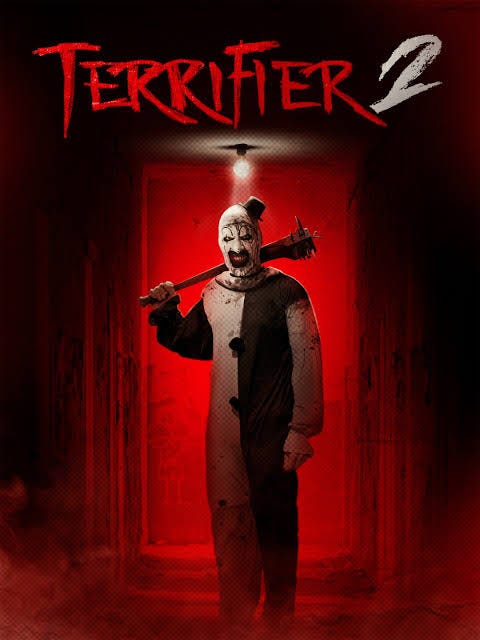
I Watched The First Two Minutes Of Terrifier 2: WTF?

Who the hell watches this junk?

Credit: Cinedigm

I’m actually disappointed in myself. I used to really be into stuff like this when I was younger. You slap the words “obscene graphic violence” on a flick and I was there like a six-year-old kid jumping into a dark van with “FREE CANDY” written on the side.

I remember watching Peter Jackson’s ridiculously gory Dead Alive years ago and laughing my ass off. I used to watch Hellraiser on repeat. When I was a little kid I begged my mom to rent a scary movie one night. She picked Jagged Edge, which bored me. I used to run to the horror section of the video store so I could scope out any carnage shown on the backs of the video covers. The Nightmare on Elm Street series always had some gems.

Lately, I’ve been hearing about the Terrifier films. A series I know nothing about other than it involves some kind of creepy blood-covered clown named Art the Clown. I kept hearing about how people were throwing up and passing out at premiers. The other day I passed a Hot Topic in a mall and I saw Art the Clownt-shirts. Now, as much as one can glean cultural impact from a store that serves the junior goth demographic, it’s clear this Art guy has some cachet with the youngins. I’ve got to keep up with the times, thought I. I’ve got to investigate this scary new phenomenon. I know all about Pennywise the Clown. But Pennywise is yesterday’s news, and I can’t fall behind on my killer clown mythology.

To my (at the time) delight, I saw that Terrifier 2 was offered on Amazon Prime. Oh, nice, here’s my chance to check this newfangled thing out. I looked it up on Rotten Tomatoes to gauge concensus, and to my surprise I saw it not only had a fresh rating, it was actually in the 80s.

What??? A critically praised ultra gory film? Now I definitely have to see this.

I clicked on the tab. Within minutes I was greeted with a silhouette of Art the Clown walking down an alley. Okay, that’s creepy but not too bad. Then it cut immediately to a medical office, and a one-eyed Art is stalking some doctor in an office who’s been stabbed in the stomach. The doctor tries to make a phone call, only for Art to come along and start beating him to death with a hammer. Then Art rips out the doctor’s eyeball and inserts it into his own eye socket to replace his missing eye.

And that was it. I was done. I clicked away, and actually turned to The Silence of the Lambs as a form of therapy. Yes, the flick about the cross-dressing murdering sadist and psychopathic cannibal was “easy watching” compared to the bloody eyeball-snatching clown.

Who the hell watches this ultra violent gory shit? Friday the 13th, Nightmare, and the Halloween series, all of which I grew up on, are tame and nothing anymore. Terrifier is like cinematic equivalent of a heroin junkie injecting the syringe in their last good vein trying to chase that dragon high of scares.

Man, there is some imagery I just don’t care or need to put into my brain anymore. Now there’s a third Terrifier coming out this weekend. Yeah, no thanks. Fuck off, Art the Clown.

The Strange Longevity Of The ‘Scream’ Franchise

Ghostface in Space when?

I’ve been on a horror kick lately. I finally watched Barbarian. A film I wanted to see two years when it premiered, only to completely forget about until it resurfaced on Prime recently.

Barbarian is the latest in the “socially conscious” horror trend, which started with Get Out in 2018. Even our horror film franchises have to be woke nowadays. I recall a much simpler time. A time when all you needed was a mask, preferably a white one, and some maniac with a knife. A little cat and mouse. Some butchered coeds. And there you go, you had your movie.

Of course, the slasher tropes started by Halloween and Friday the 13th were tired and formularic even by the late 1980s. This is why Scream was such a refreshing hit back in 1996. It playfully toyed with the genre conventions in a fun, meta way, with characters using them as a “rulebook” to help ensure their own survival.

  • Don’t go off alone.
  • Never say you’ll be “right back.”
  • Never, ever have sex.

Scream was the shit back in the day. It not only kickstarted the teen slasher craze all over again, it helped director Wes Craven get back in the game. It was a mega jackpot win for screenwriter Kevin Williamson, who wrote the script on spec. It’s unlikely his record for most commercially successful spec script not written by a writer/director will ever be broken. The Scream franchise has scored nearly $1 billion at the box office alone. Imagine that. Being some rank nobody 31-year-old screenwriter and you have a pdf file on your rickety old PC computer that’s worth billions. It’s the stuff dreams are made of. And he wrote it in a weekend.

Two sequels quickly followed the original hit. Then the franchise went dormant for awhile. This is back before reboots and requels and prequels became a big thing in horror. In 2011 Wes Craven directed Scream 4. That was followed by another movie lull, though the TV series Scream ran from 2015–2019. Until finally Scream (the fifth filmand Scream VI came out back to back in 2022 and ’23, with plans for a seventh on the way.

It isn’t just Scream’s almost 30-year longevity that’s amazing, but the relative high quality the franchise has maintained. Most horror series fall apart after the original. Some keep chugging along despite being objectively goddawful, i.e. Halloween, Saw, Hellraiser, etc. With the exception of Scream 3, every installment in the franchise is fresh on Rotten Tomatoes. Even Final Destination, with its clever teen-killing conceit, sits mainly in the sub-50s on RT.

So, what’s Scream’s secret? Why has it qualitatively lasted for so long while so many others have pathetically limped from one refresh to another?

Scream has some built-in requisite elements that act as quality control. Every Scream film has its gimmicks — mainly a twisty whodunnit plot with multiple meta references. A balanced measure of comedy, thrills, and melodrama. A tone that strays just outside the lines of realism into cartoonism. This precarious tight rope act isn’t easy. The latest two films are meta inside of meta; referencing the in-movie Stab series, which itself is a self-aware horror film that replicates scenes from the first Scream. The whole self-referential effect becomes like an MC Escher staircase, but with blood and knives.

‘Scream’ (1996): Dimension films.

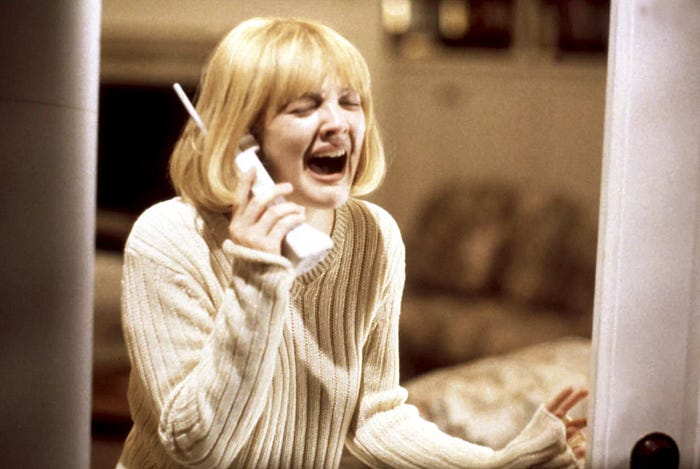
Scream has also served as a recurring mirror of the current state of horror, if not the cultural subtext influencing the genre. In 1996, it was quite innovative to introduce a beloved B-list sweetheart like Drew Barrymore, only to brutally kill her off in the opening. By 2011, the franchise had to adjust that formula with multiple twists, with mixed results. The latest two films have followed Hollywood’s latest diversity push, replacing the mainly White teen cast in the previous four with two leads of Hispanic origin — Jenny Ortega and Melissa Barrera — and assorted minority back-ups, with hardly a White male in sight (save for villainous roles, of course). All while letting OG Scream-ers like Neve Campbell, David Arquette, and Courtney Cox reenter on occasion.

It all makes for a nice adaptive organism of a franchise that can constantly reinvent itself to fit the times. I wonder what sort of State of the Horror Union address a Scream re-re-re-boot might make come the 2030s or even 2040s. The latest sequel already transplanted us to the Big Apple, à la Jason Takes ManhattanGhostface in Space is just a matter of time.

These days, it’s not enough to just throw another set of endangered teens out there and watch them get butchered in obscene ways. Scream films are a thinking man’s slasher flicks, dare I say. At the least they offer something a cut above your typical violent bloodletting. I find myself strangely looking forward to the next one.

Movie Review – Barbarian

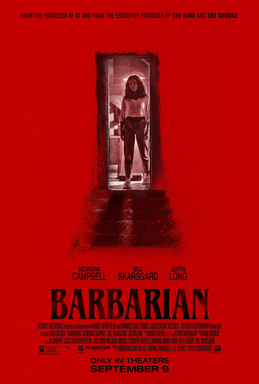
Barbarian: Timely Treatise On Sexual Assault, Or B-Movie Schlock? Or both? A well-crafted but weirdly-structured flick.

Last night I finally had the chance to catch Barbarian, the 2022 horror film written and directed by Zach Cregger. Like most films with memorable twists that I’m not able to see the very second it premiers, I had this one spoiled massively for me due to rampant YouTube reviews with certain images in the thumbnails.

Can we talk for a second about the humanitarian crisis this clickbait spoiler-craze really is? Barbarian is the just the latest in a string of highly anticipated films and shows that had plot reveals ruined for me. Don’t Look Now was, too. I’ve also had every major plot twist of Invincible (my new favorite show) shoved in my face thanks to YouTube shorts and “critical analysis” vids. It’s frustrating, but I suppose that’s the way things are now.

That said, SPOILERS incoming.

Barbarian starts off appearing to be your standard Hitchcock-style roommate stalker thriller, like The Resident or Single White Female. A young woman named Tess (Georgina Campbell) shows up late at night during a thunderstorm to her AirBnB in a decrepit part of Detroit, only to find someone else staying there. A young man named Keith, who looks nice enough. But can she really trust this guy? Somehow their reservations were booked simultaneously, leading to the awkward situation of two strangers having to share a house for the evening.

After Tess is unable to find a hotel due to a medical conference, she’s forced to spend the night. But soon she discovers this AirBnB has dark, macabre secrets, including a creepy basement room with a dirty mattress and a subterranean labyrinthine that seems straight out of a Kane Pixels “backrooms” video. But that’s only the beginning of the terror. A hideous humanoid monster also lives down there, too. And she feels the need, the need to feed.

Then suddenly we cut to Southern California, where working actor AJ (Justin Long) is cruising along in his convertible when he receives word from his agent/producer that he’s been accused of rape by a former co-star. With his life in shambles, he’s forced to liquidate some assets to pay for legal defense. So he flies off to Michigan to visit his, you guessed it, AirBnB rental property, where Tess and Keith just disappeared. It isn’t long before he too is captured by the monster, who has a bizarre need to “mother” her captives by forcibly breastfeeding them.

Suddenly, we’re launched into a flashback to the early 1980s, when the neighborhood was in good shape. We’re introduced to Frank, a middle-aged single man who kidnaps young women and holds them prisoner in his house of horrors. The “mother” creature there now is the hideous offspring of numerous inbreeding generations over four decades. Essentially, the ultimate thematic representation of male sexual assault coming home to roost.

Barbarian is mostly a smartly-written B-movie flick with a tight opening act. But I’m not sure the transition from its tense-filled beginning into a sequence straight out of The Hills Have Eyes, entirely works. It feels like two seperate stories were mashed together in the service of creating a Get Out-style socially conscious horror film. It’s tonal shift and plot twist is basically Psycho. Even Keith, played by Bill Skarsgård, reminded me of Norman Bates. The underlying theme regarding male violence, sexual harassment, and rape, is a relevant and timely one.

The movie is a cut-above the “hilbilly horror” schlock of the early 2000s, such as Wrong Turn or Jeepers Creepers. I enjoyed it, overall. But the film was far more engaging during its subtext-soaked first act, when even something like a simple bottle of wine appears menacing. When it becomes a freaky monster mash, it loses its thematic impact. Sexual predators rarely appear like the monsters they are. They’re often smooth talkers, manipulating their victims emotionally, only implying the threat of violence, until finally trapping them. Sexual assault is a grotesque physical crime, but much of it is psychological, too. Such ghastly human behavior is better explored realistically to relay its horror. AJ has a conversation with his best friend at a club, where he confesses how he had to “convince” the young actress to have sex with him, which is far creepier and more true to life. As is his later drunken phone call to his victim. AJ is a classic “mild-mannered” wolf in sheep’s clothing abuser. Clark Kent, except he rapes instead of changes into a hero in a phone booth. That sort of everyday psychopath is far more intriguing to observe than just another mutated creature.

There are many illogical plot turns and character choices that no sane person would ever make. While it’s believable that a single woman might stay at an AirBnB with a strange man by herself due to a reservation mix-up, you’re telling me she never even checked out the surrounding neighborhood? Google Maps is your friend. I also highly doubt anyone, male or female, would keep heading down into a creepy labyrinthe, even if their new guy friend was supposedly in trouble. The irritated police showing up, only to dismiss Tess as just another slumming crackhead, was far too convenient. Most police have very good sixth senses. Tess comes across as clearly educated and articulate, i.e. someone you take seriously. And wouldn’t there have been a history of young women disappearing in the general neighborhood that would trigger some suspicion from the cops? Frank’s abductions numbered in the dozens. There was no logical need for AJ to even visit his rental property, as liquidating it could all be done via email and pdf file signatures. He only went there because the plot needed him to. And how did a malnourished inbred freak develop super strength and become a giant? Most victims held prisoner in similar cases have usually turned up bony and uncoordinated due to isolation and vitamin deficiencies.

Then there’s that ending, which was almost laughable.

These questionable elements aside, and its jarring narative shifts, Barbarian is a decent film worth checking out.

NEW BOOK: The Devil’s Throne


My new novel has just been released, and is available for purchase now on Amazon. 

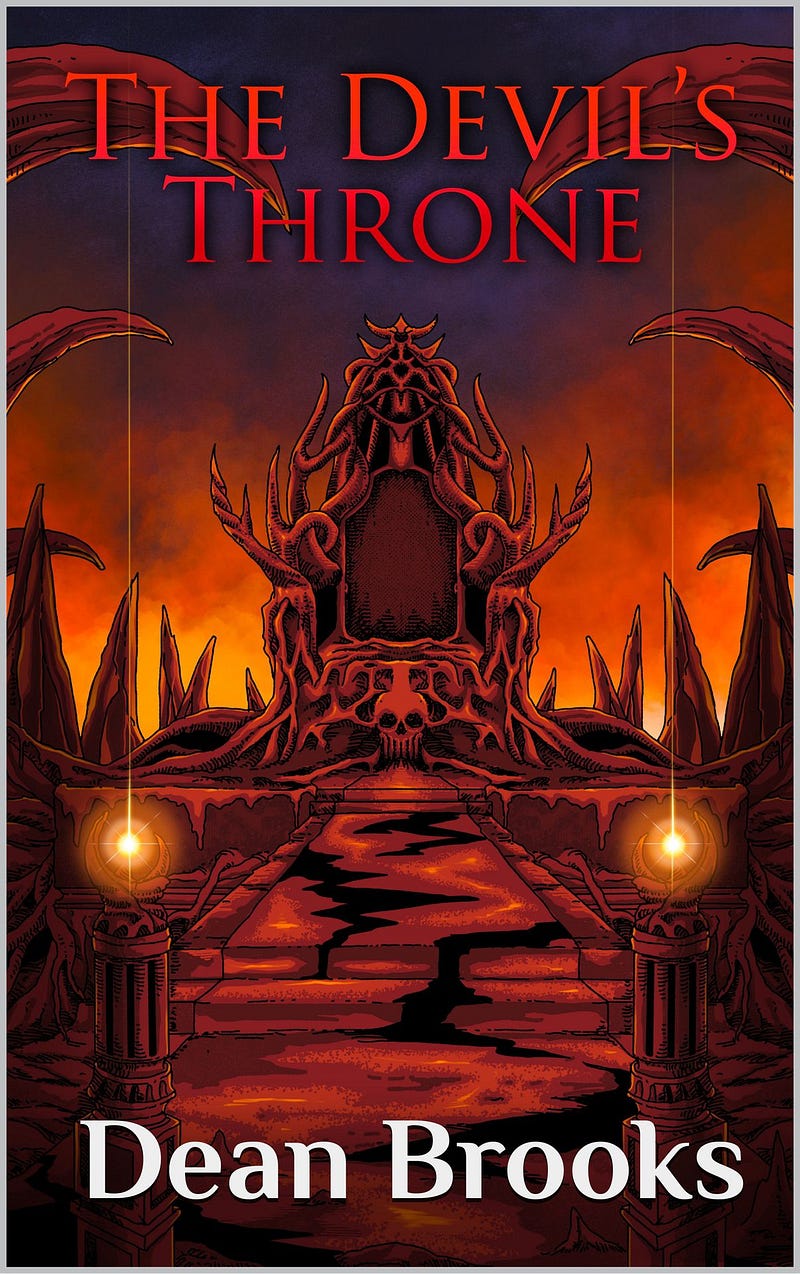
“The Devil’s Throne.” Cover design by “Denywicka.”

I’ve just released my third self-published, and fourth overall novel, THE DEVIL’S THRONE.

Available here on Amazon for purchase, and through Kindle Unlimited. 

Here’s the synopsis:

Christian “Flick” Stevenson and his fiancé Margo Bennett are both American graduate students studying demonology. They and two colleagues and their professor are in Prague to investigate the Devil’s Throne — a mysterious chair built by members of the Occult, that supposedly can summon the Devil.

When Margo is brutally attacked, and left dying in a hospital, Flick determines to do whatever necessary to save the love of his life. Even if it means allying with the demonic forces behind the Devil’s Throne. Even if it means sacrificing others for a frightening ritual that will grant the Prince of Darkness dominion over the earth for eternity.

A modern Gothic set in the Heart of Europe. A love story that inspires even the Devil. An ancient artifact promising power and immortality, but at a deadly price.

Come in, have a seat, and enjoy…

The Devil’s Throne.


I wrote The Devil’s Throne back in 2019, right after The Lek. It’s primarily in the horror genre, as can be gathered from the front cover design, but possesses a balanced mix of dark humor. It’s inspired from such classics as Dracula and the Clive Barker novella The Hellbound Heart, that formed the basis for Hellraiser. If you like films like An American Werewolf in London, Drag Me to Hell, The Evil Dead, This Is the End, and other horror/comedies that place a little more emphasis on the chills than on the giggles, than you’ll likely enjoy The Devil’s Throne

At its heart, my novel is a love story. One centered around the question: How far would you go to save the person you love? My main character, Flick, engages in the ultimate Faustian bargain to save his fiancé, Margo, which just may bring about the apocalypse.

Good God, what some men will do for love.

I’ve always wanted to write a “romance.” Not one of those steamy ones, mind you, with some barechested sexy pirate with long hair on the front cover manhandling a swooning damsel. Something more grounded and relatable, but with a supernatural element. Something with a frightful, tooth-lined edge. Something gory, with a moral dilemma component. I’ve always liked stories where ordinary people are compelled to commit depraved acts out of necessity. 

I’m not sure where or exactly when the idea initially came to me for the novel. It was certainly during my time finishing my degree at NDSU in Fargo, ND. It might have been during one of my long walks through a bitter winter blast. Or during a class where I was wishing to be someplace else. Or maybe I just awoke with the idea one morning. 

As I usually do with ideas, I wrote out the bones of it in an email, and then sent it to myself. And there it sat for perhaps a year or two before I eventually scrounged up the flesh and blood to complete its body. 

It took me several more years to publish it. Until finally, the day came at last. This day. Now. 

I hope you’ll check out The Devil’s Throne. If you do, I hope you’ll enjoy it. 

-Dean

By the way, the artist who designed the front cover goes by the name “Denywicka” on Fiverr. He’s brilliant, and I was overjoyed at what he came up with for my novel. He specialises in high quality, detailed dark art illustration. Please check out his profile here

The Problematic Morality of the New Hellraiser Film

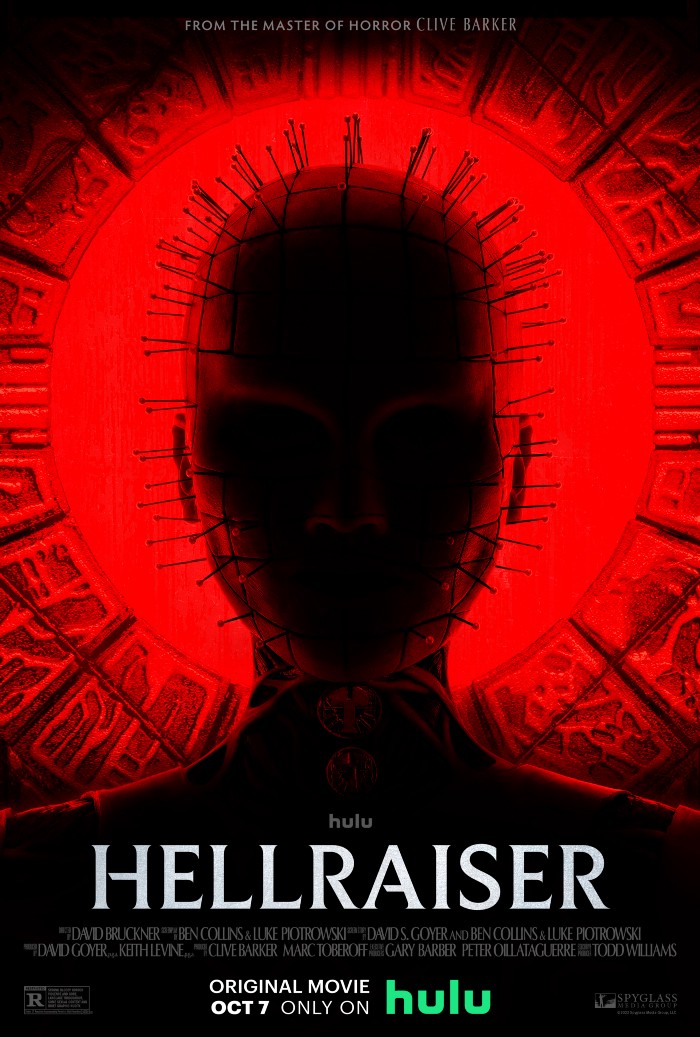
Source: Spyglass Media Group

The original 1987 Hellraiser was never an upper-tier horror film. It lacked the craft of Halloween, the dramatic intensity of The Exorcist, and the inventive charisma of The Nightmare on Elm Street.

Still, it stood ahead of derivative dreck like Friday the 13th, Critters, and a host of ’80s flicks largely forgotten or relegated to the cultural graveyard.

But where I always thought the original Hellraiser exceeded expectations as a gory B-movie was in its moral messaging. An odd thing to say, perhaps, about a story where deformed demons from hell torture people with chains and hooks. But Clive Barker’s story — based on his novella The Hellbound Heart — had the trappings of Catholicism’s divine retribution. The original is like a Victorian Gothic crossed with a hardcore BDSM porno, but anchored with the thematic strength of a fairy tale.

The main theme being that obsession with pleasure leads to self-destruction. In the first film, Frank, a low-life deviant always trying to push the boundaries of self-gratification through sexual experimentation, gets more than he bargained for when the Cenobites give him an experience “beyond limits.” Hell by overstimulation, if not excruciating pain. While we’re perhaps initially somewhat sympathetic to Frank’s plight — he all but assaults his brother’s wife when he comes to visit for the wedding — he quickly condemns himself when he conspires with his married lover to bring him fresh bodies to murder so he can reconstitute his flesh and return to the living. Even going so far as to murder his own brother so he can steal his skin.

Frank is deservedly recaptured by the Cenobites when he’s tricked into confessing his presence by his niece Kirsty, to be ripped apart again and sent back to hell. Kirsty, the “Snow White” of the tale, is saved, and through her ingenuity, is able to defend herself from the Cenobites, who then attempt to claim her soul for themselves after harvesting Frank’s.

As messy and dirty as the original Hellraiser is graphically, the moral is pretty tidy and clean. Perversity and deviance — explicitly sexual violence — are punished. Virtue and chastity are rewarded. And while one innocent is killed — Kirsty’s father — she avenges him by bringing the killer, Frank, to justice at the hands of the Cenobites.

I only ever saw the first two sequels, Hellbound and Hell on Earth, which seemed to largely capture the essence of that theme by degrading degrees. The rest of the sequels, which were direct-to-video, honestly looked too godawful to even warrant a glance.

Which brings us to the latest installment, starring Jamie Clayton as the iconic Pinhead.

The new Hellraiser (2022) is mostly a return to “form,” if you considered the original, and maybe the first two sequels solid B-classics. Visually, it appears more loyal to Barker’s concept of the gender ambiguous Cenobite demons as depicted in his source novella. Their bodily desecrations are also much more sexually explicit. Gone is the bondage leather of the ’80s. In its place flesh gruesomely woven and ribboned with decorative beaded pins and jewerly. Hey, you gotta keep up with modern fashion, even in hell.

The new gang of Cenobites are freakishly cool, though lacking perhaps some of the menace of the OG four. The new Chatterer feels a step down from the first, which bore the unforgettable wide-open maw secured by tightened barbed wire. Pinhead’s grid-hammered nails receive a shiny upgrade. It’s hard to top Doug Bradley’s portrayal. He’s sort of the “T-800” Terminator model of the Hellraiser universe. All brute force and physicality. Whereas Clayton’s presence is more like the T-1000 — scary in a Portuguese man-of-war gliding under the waves sort of way. But with her synthetically-enhanced voice and gleaming black eyes, combined with a slippery seductive sadism, she makes for a refreshing and satisfying new look from from Bradley’s stolid, detached-to-almost-bored manner as the reigning Hell Priest.

Where this new Hellraiser loses bite is the puzzling abandonment of the clear morality tale that anchored the first two (and somewhat the third).

The Lament Configuration was always about man’s obsession with pleasure, with those seeking to satisfy their unholy perversions getting their comeuppance. In this new one, even innocent people can be ripped apart by pure accident, and all just because the box sticks them, in effect “marking them” for death. Even the villain Roland Voight — a sort of Jeffrey Epstein — is (apparently) given some great final reward for his maliciousness. Turned into a kind of god, merging with the Leviathan entity as an angel/Cenobite. His flesh flayed open, his cheeks stripped to resemble an X-rated version of The Joker smile, yet seemingly enjoying, or at least tolerating, his unholy transfiguration. It makes for a strong final image, yes. But a woefully unsatisfying conclusion for such a disreputable character. Whereas Frank in the original, sleazy deviant that he is, gets what’s coming to him, and by no short measure.

This makes the theme of the movie muddled and problematic, to say the least. What is the overall message here? Suffering is random, so why bother trying to be a good person? The first Hellraiser bore the markings of a twisted Christian allegory. Like an extreme reimagining of The Rich Man and Lazarus. Or a deep cut side quest from the Sodom and Gomorrah tale. This new one teased at a “corrupting nature of power” theme, but was too timid to commit. What is it with so many new films afraid to take a stand outside of obvious politically fashionable convictions?

Then you have the main character, Riley. A boozing, drug-addicted trampy human blight who, with the help of her hunky two-faced boyfriend, steals the infamous puzzlebox, wreaking havoc on everyone around her. What consequences does she face, even after indirectly causing the death of her brother Matt— the one person who cared about her, and who allowed her to live in his apartment? None, other than some half-assed idea about lifelong regret, as stated by Pinhead. Riley is even given the opportunity to reject the rewards the Cenobites offer, when she realizes their “gifts” are actually horrifying mutilations of one form or another.

Then you have her other murdered or endangered friends. Nora, brutally slain for no other reason than tagging along with Riley, and just as quickly forgotten. And Colin, Matt’s boyfriend, gashed and almost killed. For sure, Trevor, Riley’s double-crossing man candy, faces a final deserved judgement. But only because Riley happens to stick him with the pointy puzzlebox. Even the Cenobites themselves are strangely not immune from random fate, with the new Chatterer getting poked, and facing a Frank-style chain-and-hook-ripping end. Which left me wondering how a soul already condemned to hell can be targeted again by the box. I guess the concept of double jeopardy doesn’t apply to the realm of Leviathan.

In the first two Hellraiser films, and for some of the third, there was a sense of fairness. Of rules. A distinct moral line between good and evil. The Cenobites themselves occupied a gray area. Not necessarily “bad,” as they only targeted souls who asked for pleasures beyond reasonable mortal constraints, showing up to give them (more or less) what they asked for. Summoned by “desire,” not hands, as Pinhead states in the first sequel.

But in this new one nihilism and chaos apparently rule the day. Innocents are butchered. And the guilty and disreputable allowed to manipulate the levers of fate over others. Perhaps this new Hellraiser best serves as an allegory for social media than drug addiction, as it’s purported to be. Riley is no sooner flopped over brain dead from pills than suddenly up solving ancient puzzles and outwitting demons from another realm. The whole drug addiction theme goes by the wayside soon after.

If there’s a “moral” in this new Hellraiser other than the hopeless “the universe is random and cruel,” perhaps it’s to carefully mind the company that you keep. The weakest link in your group may just snap back at you with a hook on the end.

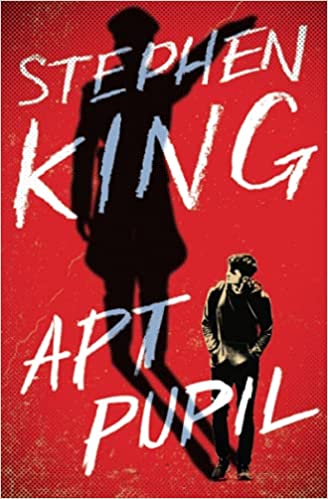
Book Review – Apt Pupil

Apt Pupil is a novella by Stephen King that comes from the short story collection Different Seasons.

It was published in 1982, and tells the story of a young Southern California teenager named Todd Bowden who discovers that his elderly neighbor, a supposed German immigrant, is actually a wanted Nazi war criminal named Kurt Dussander, who was personally responsible for committing horrible atrocities in the Holocaust.    

However, rather than reporting Dussander’s whereabouts to the authorities, Todd instead blackmails the Nazi into becoming sort of like his own personal historian. Todd is a bit of a strange kid. He’s obsessed with WWII history, in particular the Holocaust, and instead iof being repulsed by Dussander’s past actions, the kid is instead enthralled. Even inspired, to a degree. 

However, the blackmail goes both ways, as the Nazi Dussander turns the tables on the kid later. See, the longer the kid has known Dussander, the more complicit he has become in keeping him from being brought to justice. Furthermore, as an “all-American” kid, with potential and college prospects, Todd risks having his future and reputation destroyed forever due to his association with an older Nazi. 

With their hands on each other’s throats in a sense, Dussander and Todd are forced into an uncomfortable alliance of secrecy over a period of four years. Ultimately, Dussander’s real identity is found out through a coincidence, and Todd, now age 17, is forced to reconcile with not only how he protected a war criminal, but his own very twisted dark side.

It’s nice to every once in a while be able to read an old Stephen King story. Because, when you ignore all the films, especially the newer ones that have been made of his works, and how slick and clean they all look, you can really appreciate just how good of a writer Classic King really was. 

King is at his best when he’s exploring the darkness of the human heart. He may be categorized as a horror writer, but really, his best work looks into human nature itself. But he’s also a great plotter, always ratcheting up the tension like an ever-turning corkscrew.

When Todd’s grades begin to slip at school, the boy forces Dusaander to act as his grandfather for a meeting with the guidance counselor. 

Apt Pupil is unusual. A story about a young kid associating with a Nazi war criminal on its own would probably be enough. But King throws in the wild card that both Todd and Dussander start murdering homeless vagrants and bums around town. For me, it was sort of like smashing two concepts into one. And I was never entirely sure exactly what precipitated both of them to start killing. I never got the sense of Dussander being a serial killer. For sure, he was a brutal Nazi war criminal. But his crimes were state-directed, not necessarily ones he set out to do in order to satisfy his own desire for bloodshed. 

For Todd, his turn toward killing felt like it came out of left field. I was expecting something more along the lines of Dussander influencing the boy into killing, mirroring how the Nazi war machine, and Hitler’s propganda, tranformed Germany into a genocidal state. King, however, doesn’t go for subleties here. So essentially, what we have here is the story of two psychopaths meeting each other, and more or less provoking one another’s propensity for murder and violence. All while ironically occuring in an idyllic Southern California suburb.   

Apt Pupil is a worthwhile King novella to check out if you haven’t already. A few interesting facts: King started writing Apt Pupil immediately after The Shining. And the novella is placed right before another King classic, The Body, which of course became the film Stand By Me