Fiction Affliction #5: Son of Rosemary, by Ira Levin
A novelist’s career is a strange thing. You can have “it” for a number of years/books, and then suddenly lose “it.” Maybe sometime later you get “it” back. Or maybe you never get “it” again.
What is “it” exactly? The good stuff. The spark. Creative synergy. Your finger on the pulse of the zeitgeist. The muse’s lips whsipering in your ear. Austin Power’s mojo.
You know, “it.”
Whatever “it” is, Ira Levin had it in abundance for the first half of his career. Starting with his global best-sellerA Kiss Before Dying. A book he wrote when he was all of 24. Then his play Deathtrap, which became the longest running thriller in Broadway history. His book Rosemary’s Baby became a smash sensation. He followed that up with classics The Boys from Brazil and The Stepford Wives. And cemented his legacy with This Perfect Day, a dystopian novel which I’ve written about previously.
The man had “it” in abundance. Everything he wrote turned to gold, or became household vernacular. To be a “Stepford Wife” meant to be a compliant Barbie doll, a terrifying prospect for any self-respecting feminist.
Ira Levin did it all before age 45. Simply astounding. Basically a reverse Cormac McCarthy, whose best novels came after he was old enough to collect social security.
But at some point, for whatever reason, Levin lost “it.” His second-half catalogue of material is decisively lackluster compared to his first. It’s also sadly deriviative. Son of Rosemary is, of course, a sequel written 30 years after the classic Rosemary’s Baby. Stephen King would eclipse that with his 2013 book Doctor Sleep, written 36 years after The Shining. Another unnecessary sequel seemingly written more for the fans than the need for the story to continue. Also a title that earns the distiction as worst sequel book I’ve ever read. Though Son gave it a run for its money.
His 1991 novel Sliver feels like something that would have come from the feverish fingertips of Dean Koontz, with its themes of obsession, control, and abuse of technology. Levin’s gift was always injecting the macabre into the mundane. Making the outlandish seem not only quite possible, but ordinary.
Levin wasn’t exactly a prolific writer. There was a 14-year gap between A Kiss Before Dying and Rosemary’s Baby. During which he wrote a handful of plays. He wrote only a total of seven novels. One of which, The Stepford Wives, is really more of a novella, at all of about 120 pages.
Son of Rosemary is Levin’s final novel. And it’s a disappointing sour note to a very long and distinguished career. Levin is one of my favorite writers. He’s like Hemingway, with sparse, minimalistic prose, but with the adrenalin of a Frederick Forysth. A literary Stanley Kubrick, with a cold, intellectual style powered by unforgettable high concepts that examine human evil within the confines of a tightly structured thriller format. His words eating across the page like the tapping of a snare drum, building to a crescendo.

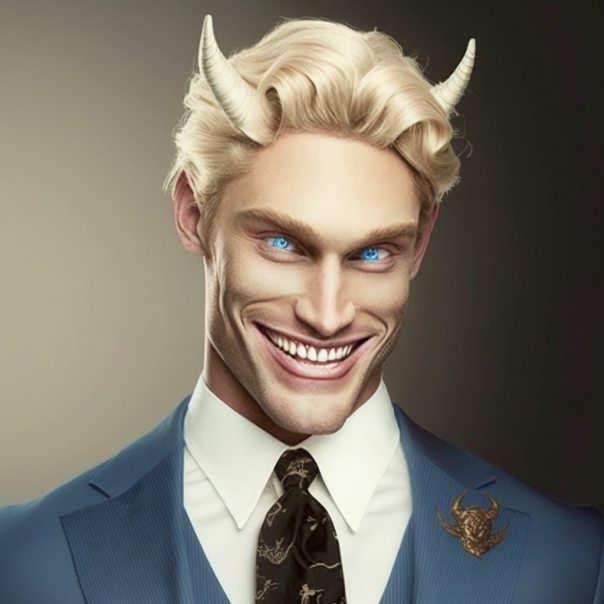
Son of Rosemary picks up about 25 years after the events of the original novel. Rosemary has been in a coma for almost three decades. During this time, her son Andy has risen to global prominance as a popular leader of a charitable organization. Apparently due to his infectious charisma, Andy appears on the cusp of political ascendency. He’s admired by world leaders, constantly recognized on the street. He even resembles Jesus Christ (or, at least the Western image of him) with his blonde locks and blue eyes. His mother’s remarkable return from the dead only raises his (and hers) status even more. Now, with the new millenium fast approaching, his organization wants to unite the world in peace with a special candle lighting ceremony. But does this agenda contain a sinister purpose? All signs point to yes.
This was a book that took me way longer to read than it should have. I actually took it out from the library twice, having had to return it early the first time due to a move. It shouldn’t be difficult to read an Ira Levin book. But I think the reason I did with this one is because Levin’s formula was pretty obvious. It almost follows the same beats as the original, staying with Rosemary’s POV, while throwing a few wrinkles along the way to spice things up, before the final big twist.
Levin makes a half-hearted attempt to show Andy’s struggle as a “half-breed,” being both human and the son of Satan, and therefore imbued with certain demonic capabilities. But it’s all minor, superficial stuff. He can grow horns, and his blue eyes turn tiger-striped when the devil in him comes out. He has insatiable lust, even going so far as to make out with his mother at one point, in a bizarre moment early on in the story. But despite his genetic predisposition to eeevil, Andy’s still a “good guy” overall, or tries to be.
It would have been more interesting to be in Andy’s POV than Rosemary’s, and explore more of that inner struggle. How does someone reconcile a human heritage with the Prince of Darkness? It would have been more compelling narratively speaking also. Rosemary is largely passive and reactive throughout the story, observing Andy and his quasi-political apparatus from afar. All the while Andy works behind the scenes.
But sadly, Levin seems more comfortable sticking with boring old Rosemary, despite the fact that her story has largely been told. We follow her around as she acclimates to all the cultural and technological changes of the ’90s. Watch her elevated into a celebrity as the mother of Andy. Get wooed by an older gentleman. Interesting stuff, sure. But it’s like sticking with an Oldsmobile when you’ve got a Porsche collecting dust in your garage. That POV made sense in the original, as the entire plot spun around her being the unwitting victim of a demonic rape so she could give birth to the devil’s spawn. In Son, she’s less involved. The evil conspiracy isn’t happening against her, but (apparently) against the whole world.
Regarding that, it’s never really made clear what the devil’s scheme is against earth. There’s something about the candles being poisoned with a virus. On New Year’s Eve, durng the countdown to midnight, in a coordinated televised event, everyone is supposed to light them. In effect wiping out millions in one go. A plot that reminds me a lot of the one from Halloween III, where an evil company plans to use a TV signal to activate Halloween masks on children, that will turn the kiddies’ heads into bugs.
But why wipe out humanity, especially in a plot that will certainly place the blame squarely on Andy’s nonprofit organization (and Andy himself), for promoting the candles? Would make it hard to set up an antichrist or rule the world when you’ve just blatantly killed millions.
Another issue I had was Andy’s inexplicable popularity. Everyone goes around wearing “I Love Andy” buttons. Everyone on earth is conveniently sucked into his cult of personality, with but a few anti-Andy stragglers. But it’s never really made clear what makes Andy so popular, or what he did to earn such a distinction. Especially at so young an age (33). Even Prince William doesn’t have that kind of clout, and he’s been a royal celebrity in the public eye for four decades.
Then there are the two twists at the end. One pretty good. The other nonsensical.
:::Spoilers:::
Turns out, the gentleman who’s been seducing Rosemary the whole time is the devil himself, in disguise. And not only does he still want a relationship with her, he’s an abusive father. Not surprising, he is Satan, afterall. When Andy tries to defy his father’s scheme to destroy the world, the Devil nails him to the wall in a crucifixion, and then drags Rosemary to hell (I think).
The second twist is a ludicrous cop-out, and bears similarity to the ending to the The Devil’s Advocate, which also came out in 1997. On the verge of the apocalypse, Rosemary suddenly finds herself back in 1965, married to Guy Woodhouse, the actor who sold her out. It was all a dream. Or perhaps this is purgatory. Almost like the ending to Advocate, where Keanu Reeves’ lawyer character finds himself unknowingly back in the courthouse where he was at the begining of the movie. Destined to repeat the same steps toward meeting devilish Al Pacino in Manhattan.
Deus ex machina is when God suddenly intervenes. What is it when the Devil pushes the big reset button? Diaboli ex machina? That sounds like an Italian dish.
It’s hard to tell what Ira Levin was trying to accomplish by writing an update to his 1967 classic domestic thriller. It’s not like the world was clamoring for a sequel. Rosemary’s Baby’s power lay in its dark implications, and subtle themes of marital deception and feminine vulnerability, not in explicit spectacle or world-building.
It’s not scary, and it’s far too tame and timid to be thrilling. This Is the End, the 2013 apocalypse-comedy starring Seth Rogen, has more frightening moments, not to mention a far more satisfying ending.
In the end, the only horrifying thing about Son of Rosemary is that it constitutes a portrait of a novelist who lost his magic touch. Even the best can lose their fastball. I’ve never quite agreed that every author really only has one story inside them, and merely writes variations of that one story again and again. But I do think that every writer has a certain fixed number of stories they were “meant” to write. Then afterwards, it’s all going through the motions, coasting on momentum as it were.
If you’re desperate to see what happened to Rosemary after the events of the first novel, or you like ’90s pop literature, or anything devil-related, then give Son of Rosemary a shot. Otherwise, you’re better off sticking with Netflix.
 Dean Brooks