The Fog (1980)

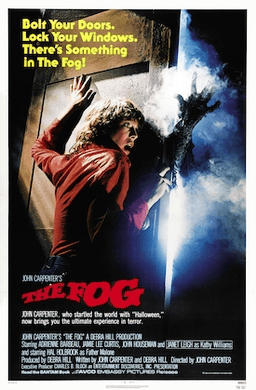
(By Avco Embassy Pictures/ Debra Hill – This image can be obtained anywhere online or directly from the film’s initial distributors. This particular image was taken from the internet, at: https://www.imdb.com/title/tt0080749/, Fair use, https://en.wikipedia.org/w/index.php?curid=48724378)

John Carpenter has recently come into the news due to weighing in on the ever-persistent debate regarding who is a Thing at the end of his classic 1982 film The Thing. MacReady and Childs are portrayed as the only survivors of the shape-shifting alien’s rampage in their blown-apart Antarctic base. But which is the Thing? MacReady or Childs? Or ar they both Things? Or possibly neither?

Carpenter says there is a clue that points to the answer, and that no one has ever gotten it quite right. However, to me, it’s obvious they are BOTH Things. And not because of any clue hidden somewhere. But mainly because of tone. As in the film’s apocalyptic doomsday tone. Even the closing music sounds like something from a funeral procession. They are both Things that don’t quite realize they are Things, which makes it scarier. Because the Thing is not a hivemind. Each particle of its whole can act independently, to the point that two separate beings who have been Thinged don’t even recognize that they are on the same team.

At least, I’m picking that option because it is the scariest version of things. There is not a note of hope whatsoever in the film. The human research crew is doomed from the start, as is the rest of humanity. As soon as a rescue crew shows up, they are going to find a few innocent-looking frozen bodies, which they’ll take back to the mainland. And then that’ll be all she wrote. No wonder the film bombed hard in 1982. It being up against the annoyingly maudlin E.T. didn’t help matters either. Thankfully, The Thing’s morphed into a cult classic and provoked an ongoing debate.

But anyway, what about a lesser known John Carpenter film, The Fog? Is it any good? Does it hold up like his alien classic or his other classic about the psycho in the mask?

I enjoy how Carpenter really lets you marinate in the setting of The Fog. The story is set in Antonio Bay, a small coastal town in California on the verge of celebrating one hundred years since its founding. Unfortunately, a major faultline exists under this quiet town that threatens to tear it apart. Its original founders ripped off gold from a leper ship, and then gave it bad coordinates so it would crash and sink. Well, the sailors are back from the dead, and they want revenge. And their gold back.

Like a lot of Carpenter’s work, there is a strong degree of fatalism in this one. As well as some very immersive staging. This is largely due to the genius work of cinematographer Dean Cundey, who lights the film in a way that is realistically heightened. I’m a fan of “real-world” lighting. Grainy shadows. Juxtaposed with appropriately artifical dramatic lighting. Videodrome is a perfect example of the type of lighting I like to see in a film. I’m also a lover of scenes that are lit deep red, such as the ventilation shaft escape sequence in Aliens, or the scene in Videodrome after Max Renn dons the headgear.

It’s very easy to see The Fog’s influence in modern stuff like Mike Flanagan’s Midnight Mass on Netflix, or the new Apple series Widow’s Bay (which I started watching but lost interest in and don’t care for). It’s perhaps Carpenter’s most underrated influential film.

As for the story itself? It’s rather light, plot-wise. The character work is absymally thin. Tom Atkins sorta plays the protagonist, who picks up hitchhiker Jamie Lee Curtis. The two then have some baffling love affair despite Atkins being twice Curtis’ chracter’s age and looking about as good as a week-old potato. Curtis’ mother Janet Leigh (of Psycho fame) is in it, as is Carpenter alum Nancy Kyes.

The fog stuff is, of course, done really well. There is a scary scene in the hospital involving a dead body that stands out. It might have been better to open the film showing the tragic event of the ship sinking, rather than revealing it as a campfire tale. But that was likely nixed due to budgetary constraints.

The Fog was a rewatch for me, as I hardly remembered most of it, except for the stinger of an ending. It’s worth checking out if mainly for Cundey’s fine work. All of Carpenter’s strengths visually are there, but also a lot of his writing weaknesses. It’ll be perhaps too low-key and bloodless for many. But what makes Carpenter films so good is how immersive, cozy, and intimate they are. He has a way of really putting you inside the world of his story. Which is not something I find a lot of horror films do today. He also writes a memorable synthesizer score, which feels very Halloween adjacent.
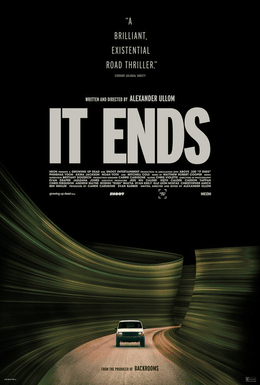
Is ‘It Ends’ Worth Watching?

(By http://www.impawards.com/2025/it_ends_ver2.html, Fair use, https://en.wikipedia.org/w/index.php?curid=82428273)

No. Not really.

I was intrigued by this film’s conceit–characters get stuck driving on an endless road. It’s part of the newish “liminal spaces” sub-genre. It reminded me a little of the 2019 film Vivarium, which shows a married couple getting trapped in some enormous empty suburban neighborhood for years. Vivarium was tedious, dry, and unfulfilling, though it at least had a suitably creepy conclusion.

It Ends really reminds me more of The Twilight Zone episode “Five Characters in Search on Exit.” An episode that made great creative work of a very limited stage setting by including five unique characters, and one hell of a twist ending that I’m pretty sure had to have inspired the idea for Toy Story.

Really, it’s easier to sort spooky films these days into the category of those that weren’t inspired by Rod Serling’s classic TV series. And that would be a small list.

It Ends features four diverse characters, three guys and a girl, on a road trip after finishing college, who after taking a turn on a road through the woods discover that it seemingly has no ending. But not to worry. They don’t feel hungry. They don’t get tired. They don’t seem to feel much of anything, actually. If they stop the vehicle, strange people from the woods wake up and start running after them screaming, and try to rip them apart. So the foursome has to keep driving and driving if they want to survive. But where is this road taking them? Who put them on it? And why are people chasing them everytime they stop?

This was an unsatisfying film, overall, that offers little answers or resolution. Which is something you can do if your film is an artistic puzzle that’s meant to evoke individual intepretations. Such as Blue Velvet. It Ends is very minimalist and utilitarian, similar to the run of very contained thrillers in the early twenty teens, like the Ryan Reynold’s film Buried.

And it seems content not to offer any explanations, instead wanting to present a metaphor something or other about the mundanity of the adult world. The characters are suitably Gen-Z. Passionless. Devoid of any sexual agency. Suffering from various mental problems and insecurities. Automotons. If you’re going to present neurotic young adult characters, at least make them entertaining. I felt like I’d seen all these character types in films before.

I’m a fan of this budding liminal spaces sub-genre. I enjoyed Backrooms this year for the most part, and all the YouTube content built up around the creepypasta. My favorite book recently is Steven L. Peck’s A Short Stay in Hell, which deserves a cinematic release. It’s an attractive genre not just because it’s in vogue now but also because it’s high-concept and low-budget–the producer’s dream.

I just wish there had been more variety in It Ends. More menace, murder, anything. It needed to be nastier. Look at how much juice was wrung out of the 22-minute Twilight Zone episode. After a few scares in the first act it largely peters out until coming to a plopping end. There were so many realistic ways to go that could have livened it up. I mean, if four people were stuck on the same road forever, they’d eventually go so batty they’d be trying to kill each other. Instead these four just catatonically keep going forward. I just feel a lot was left on the table. At the least, there needed to be an impactful twist ending.

Cancer with a Small “c”

I have cancer, but it’s only the kind with a small “c.” A very small “c,” thankfully. Basal cell carcinoma, a type of skin cancer, and evidently the most common type of cancer overall.

It started as a tiny sore on my nose that just wouldn’t go away. Based on pictures, it likely started around the second half of last year. I thought it was just a blackhead/pimple situation. I had more than my share of those growing up, so I was used to contending with bleeding pores on my face. I have bad skin anyway, so this new development didn’t really alarm me.

Because I often work in harsh weather I figured it was just an ongoing skin issue. The tips of my fingers are sometimes chapped and cracked for months at a time, too. In the winter I usually have to bandaid up my fingers like football players do around any nicks or cuts. The air is dry here in the Upper Plains of North Dakota. It can get up to 100+ degrees F in the summer, to as low as negative 60 degrees F in the winter. The wind chill feels like razor-wire pulled across your skin. And then there’s the dust, which in high winds feels like getting blasted with little BBs. You need armadillo skin to endure up here.

So, for awhile, I ignored the little sore on my nose which would heal up, seem to go away, only to come back like an unwanted house guest. But after a few more months of this, I realized it was clearly more than just some temporary blemish. So, I did what any normal person would do–I consulted AI, of course. I fed my symptoms into Grok through my X account, and the very first thing under its list of possible causes was Basal cell carcinoma.

Here’s what Grok said:

Basal cell carcinoma (BCC): This is the most frequently mentioned concern in medical sources for a non-healing or recurrently bleeding spot on the nose. BCC is the most common skin cancer, often linked to sun exposure, and typically appears as a small sore, pearly bump, or flat red patch. It can bleed easily, crust/scab, seem to heal, and then bleed again—exactly matching your description. The nose is one of the most common sites. It’s usually slow-growing and very treatable if caught early, but it won’t resolve on its own and can grow deeper if ignored.

Afterward, I made an appointment with a dermatologist in Colorado. Because it can take six months or longer to get an appointment with a specialist up here in ND, I knew I’d have to go out of state for speedier treatment. My appointment was about a week and a half ago. During which, my derm took a biopsy to send to a lab. Just yesterday the results confirmed what I already strongly suspected thanks to Grok–BCC.

So, big thanks to Grok and Elon Musk. AI does have its uses beyond making atrociously distorted video and imagery slop flooding across social media and YouTube.

The biopsy went pretty quick and easy. My derm used a local ansthetic. I didn’t feel a thing, actually.

I’m having Mohs surgery to remove the cancerous cells from my nose later this month. Mohs is a simple procedure where they scalpel away the skin cancer layer by layer, testing each slice for the presence of cancer as they go, until it’s completely gone. It’s a tedious, long procedure that can take several hours, apparently. But it’s usually not very invasive. Judging from the appearance of my small sore, I’m not anticipating them having to go too deep. I’m hoping it remains superficial without having to remove too much of my flesh. I’ve been researching Mohs and BCC every since my diagnosis. What I have looks pretty tame and mild compared to other cases I’ve seen online. But then again, you can’t be sure until surgery is complete.

I also found, in my research, that Hugh Jackman, aka Wolverine, has had several brushes with BCC on his nose as well. It’s pretty common.

This little medical hiccup caught me by surprise because I take pretty good care of myself. At my physical last year my doctor even said I had a “young heart.” That’s not just sentimental poetry. There is such a thing medically as a young heart, and it has to do with the timing between beats. I regularly donate blood to the Red Cross, as I’ve mentioned before. My last donation was for double red cell on August 11th, in fact. I certainly don’t think I’m invulnerable, though. I’m 44. Something was bound to break by this point no matter what I did. I’ve been very fortunate health-wise for my entire life. That’s largely due to living cleanly, though genes have a lot to do with it, of course. My dad has a resourceful immune system. He’s 80 and still going strong, even after Covid hospitalized him. I always apply a mild sunscreen every morning, and add a stronger type if it’s a particularly sunny day. Even though I work in the sun often, I don’t spend too much time outdoors in it when I’m off the clock. I’m not some avid outdoorsman.

In the future I’ll be more attentive to anything that looks out of the ordinary. I should have made an appointment sooner and had this issue dealt with more promptly rather than waiting thinking it would just resolve itself. You don’t want to play games with cancer, even if it’s the kind with a small “c.”

I’m also real glad we live in a time where I can consult an AI, which actually gave me a solid diagnosis. Not that I’m recommending that anyone rely on AI. Grok is upfront with a disclaimer that it’s not a doctor. Though I keep hearing of AI contributing to medical evaluations. In fact, during my dermatology visit, the doctor, and the PA that saw me, had to gain my consent to record my voice. They employ an AI program that uses voice recordings to construct their notes from the session, and I wouldn’t be surprised if it also suggests diagnoses.

I’ll update following my Mohs surgery, which is scheduled for later this month. Hopefully, it all goes well, and I’m not left with too much scarring. I have enough of that. 🙂

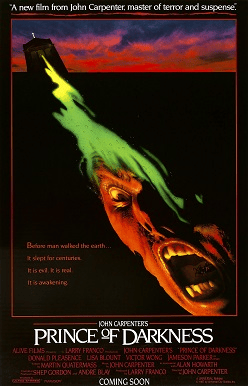
Prince of Darkness

(By http://www.impawards.com/1987/prince_of_darkness.html, Fair use, https://en.wikipedia.org/w/index.php?curid=17211922)

Not one of John Carpenter’s best films, but an enjoyable cult classic all the same. To be fair, JC set the bar so high with Halloween and The Thing that anything else feels ordinary, even if it’s still better than most. The guy didn’t make horror flicks. He made horror art.

Prince of Darkness is a bit muddled in its execution, settling more for atmosphere and vibes than a coherent story, much less compelling characters. The narrative centers around a group of scientists, grad students, and one very sweaty and apocalyptically paranoid Donald Pleasence (was this guy ever not freaking out in a Carpenter film?) as a priest, trying to make sense of some creepy green goo swirling around in a cylinder in the basement of some decrepit L.A. church.

Evidently, this green slime contains pure evil, or something. It’s never really clearly stated exactly what it is. The whole thing feels made up as it goes along.

Prince of Darkness toys with some interesting ideas, while throwing around enough scientific jargon to at least sound plausible. Basically, the idea is that “evil” is a force of nature. Something that can be measured with physics and science doodads and whatnot. Except evil can also somehow influence the surrounding world telekenetically whenever it feels like it.

Earlier in the film it’s stated that the Catholic Church misrepresented evil as some figurehead, like Satan, when in fact it’s as common as gravity. But then later, after some of the college students have become influenced by the green ooze, they are are trying to conjure forth the Devil through a mirror, which acts as a portal to a dark dimension. Only the Devil’s hand appears in our world from the mirror, before Old Scratch is repelled back. Fans of Ridley Scott’s Legend will be reminded of Darkness’ appendage. And if Prince of Darkness works as anything, it’s as an unofficial sequel to the 1985 Tom Cruise-starring fantasy film. Whatever did happen to Darkness after Jack sends him hurling into the black void anyway? Now we know where he wound up.

The film is not bad, really. It has some clever ideas mixed in, and its many unexplained developments provoke questions in the viewer. What is the green ooze? Is it a personification of evil? Why does it happen to choose tonight to usher in the end of the world? Why does it need to possess college students and turn them into zombies to do its bidding? What exactly is all the scientific equipment measuring? Why do homeless vagrants surround the church, preventing the characters from escaping? Why are they killing people who try to leave? Is that really Satan trying to come through the mirror? What’s going to happen if he comes through into our reality? Is he going to end the world as we know it?

The film frustratingly doesn’t see fit to really answer anything.

Prince of Darkness boasts an impressively moody score reminiscent of the one from The Thing. There are some genuinely creepy sequences, such as the reoccuring “dream,” which is actually a signal sent from the future to warn the present. There are one or two good jump scares. Carpenter makes good use of his trademark over the shoulder shots. The make-up effects are satisfyingly gory.

While the story is not all there, Prince of Darkness is worth a watch, especially around the Halloween season. I just wish Carpenter had given the screenplay more time. It feels like a script that was two or three drafts away from being something. The ending stinger is pretty good, though. Especially if you like ambiguous Inception-like endings.

James Bond’s Unapologetic Sexism is Refreshing

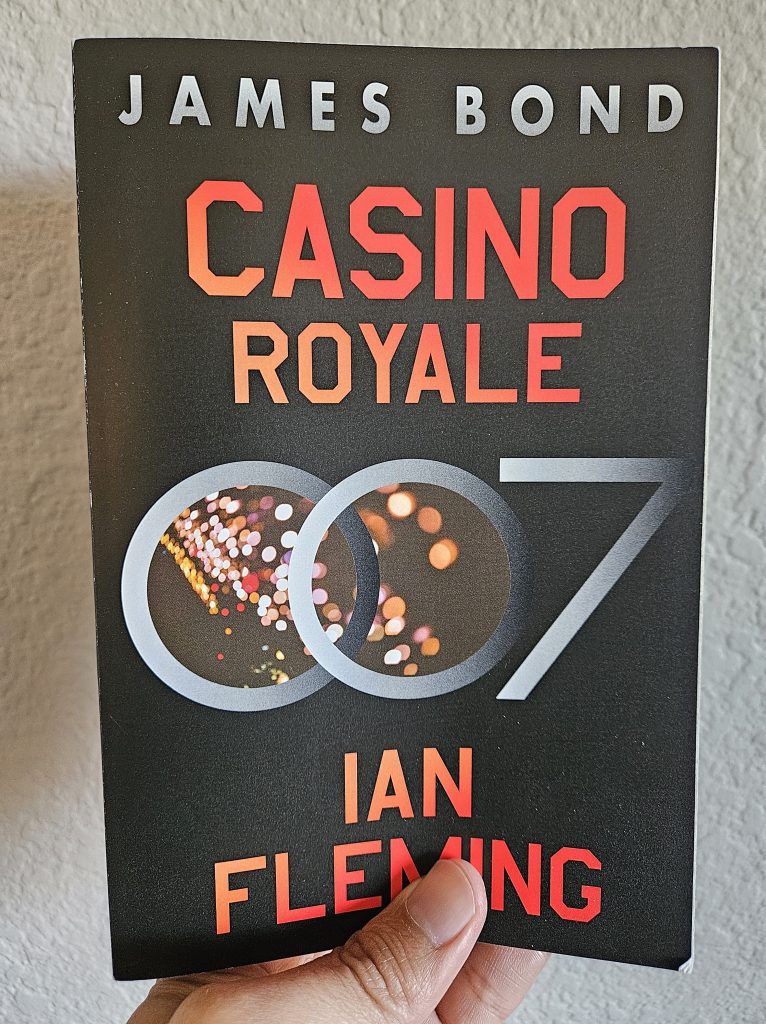
(My own photo)

We live in a very neutered age. Everything is very watered down. Everything is fake or feels fake. People walk on eggshells, afraid to offend. Even writers. And writers are supposed to offend. Not because it’s “shocking” or because they are just railing against cancel culture or trying to be alt-right or something. But because writers are supposed to communicate truth. Sometimes that means sharing raw subconsious feelings. Taking what people secretly think and putting it on the page for all to see.

By the way, none of those are reasons for why James Bond’s sexism is refreshing.

No, the reason is because while most male characters in modern literature and media have been effectively castrated in order to please feminist sensibilities, almost all shelf space anymore is devoted to so-called “romantic fantasy,” aka porn, aka masturbatory material for women. There are niches, too. Like the “monsterbait” sub-niche. There’s even a growing Bigfoot sub-niche.

Women read more than men, yes. But most of what they are reading is smut so they can jack off.

Therefore, I posit that if it’s okay for women’s reading demands to fill the shelves of Barnes & Noble with pornographic “literature,” it should be more than okay to feature a handful of books with some lovely male sexism. If I’m to contend with reams of books featuring minotaurs jizzing on college girls, I should be able to read books with male thoughts that men think all the time anyway. Only flabby-armed neckbearded soyjack male feminists will disagree. It should be my right, actually, to not only read it but to write it.

In fact, there should be more male sexism in books these days. We’re at a severe deficit. Scientists whine about a population collapse. I’m here pointing out the much bigger concern of there being inadequate male chauvinism in reading material.

I do try to help with my own books when I can, though even I’m not doing my part to bridge the gap.

I used to work at Barnes & Noble many years ago. One night some conservative asshole came up to me at the “cashwrap” (the check-out counter) and complained because he had come across a book titled “The No Asshole Rule” on display and he was offended. My supervisor happened to be nearby, a cute middle-aged redhead woman who dressed like a carnival fortune teller. She informed him diplomatically that Barnes & Noble did not “censor” any of their books. He huffed and walked away.

So, there you go. Bond can have his license to kill. I want authors to have a license to depict women as cunts whenever they feel like it.

I recently read Casino Royale, Ian Fleming’s inaugural James Bond book. I also watched the movie as well, so I could compare it to the book. I have to say, the movie is far better. I’ve never been a big Bond fan. I remember sort of liking some of the older Sean Connery films as a kid, but being turned off by the cartooniness in the ’90s Pierce Brosnan Bonds. I never watched any of the gritty Daniel Craig ones when they first premiered. But Casino Royale is a very solid action flick.

The first Bond book is an odd thing. Rather than starting off with an explosive narrative to really grab your attention, Fleming opts for something more low-key and subtle. An exclusive card game. It almost feels like it should be the third or fourth book in the series rather than the first. But it’s actually the perfect first book, because you get a good look into Bond’s psyche and understand his desperation as a man and a secret agent.

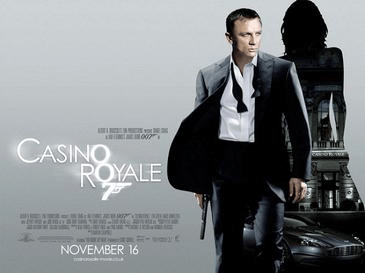
(By Designed by Empire Design – http://www.dailymail.co.uk/home/moslive/article-2085176/James-Bond-movies-Moonraker-Casino-Royale–choose-favourite-poster.html, Fair use, https://en.wikipedia.org/w/index.php?curid=37453644)

I can see why the movie translated the source material so well, though it begins with a more actiony first act.The main plot is basically the same. Bankrupt Le Chiffre, an accountant for bad guys, in a game of poker (baccarat in the book), to hurt his financiers. In the book it’s the Soviets, while in the movie it’s a complex of arms dealers and tin pot dictators. At stake is $150M, which seems a pitiful sum. There are cryptocurrencies based on Pokemons that have higher market caps. But whatever.

While watching the film, I panicked at the idea that Fleming’s sexism might be expunged from its cinematic counterpart. I was relieved to see Bond still refer to his female love interest Vesper as a bitch. Several times. Just like in the book. It’s actually one of the things that made the book stand out when it was published back in 1953. Fleming also adds some other flourishes, such as this one on Page 34, after Bond discovers he’s to be saddled with a woman assistant during his mission:

“Women were for recreation. On a job they got in the way and fogged things up with sex and hurt feelings and all the emotional baggage they carried around. One had to look out for them and take care of them.”

Love it. Because there isn’t a man alive who hasn’t thought that at some point. Especially when it concerns women in the workforce. I could give story after story, but that’s for another time.

There is also this fine nugget on Page 116 after Vesper is kidnapped by Le Chiffre’s agents.

“These blithering women who thought they could do a man’s work. Why the hell couldn’t they stay at home and mind their pots and pans and stick to their frocks and gossip and leave men’s work to the men.”

After which, Bond refers to Vesper as a “silly bitch.”

What makes this hilarious is that it all preceeds Bond evidently falling in love with Vesper after the conclusion of the mission. But the real subtext of Casino Royale is male virility. Or “mojo” as Austin Powers would put it. After having his testicles lashed during the torture session (which is just as the movie depicts) Bond frets about having lost his potency and being afraid to see Vesper again because he’s worried he won’t be able to get a boner. Well, he doesn’t say it right out like that. Fleming couches it all in as British a manner as one can. But the idea is there.

What follows is like a mini romance sequence, wherein Bond attempts to woo Vesper during their oceanside resort stay. Only to discover he’s chasing fool’s gold, as the silly bitch was a turncoat all along, if a reluctant and blackmailed one. All the same, she was already taken by another man. Even Bond has to deal with the reality that every man first learns in junior high school: There is always a guy who got to her first, and it’s never you.

I may continue with the Bond book series. I was honestly losing interest in it until the very end, after the big reveal about Vesper. It’s like how they say in wintertime you should take Vitamin D pills to compensate for the lack of sunlight. Unfortunately, they don’t manufacture sexism pills to make up for a lack of literary chauvinism. So I’ll have to keep reading. My health depends on it.

‘Jagged Edge’: A Rewatch Almost 40 Years in the Making

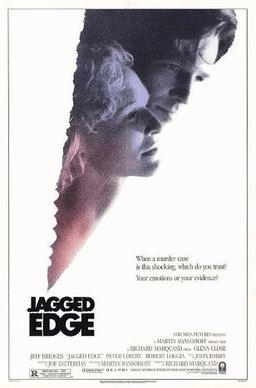
(Fair use, https://en.wikipedia.org/w/index.php?curid=8198266)

When I was five or six, I told my mom I wanted to watch a “scary movie.” At the time, I lived in a small town in Colorado, and right downtown there was a little video store we used to frequent every week to rent movies. This was the video store we’d rented classics like Alien, Aliens, Superman: The Movie, and many others.

I loved that video store. It’s a coffee shop now.

I saw a lot of films at that tender age that I probably shouldn’t have. But I’m glad I did. Aliens is still my number two favorite all time, just behind Jason and the Argonauts.

Anyway, for some reason, I requested to see a scary film, and for some other reason, my mom picked out Jagged Edge. Why that film and not one of the more popular releases at the time? Why not a Halloween, Friday the 13th, or A Nightmare on Elm Street? I’m not really sure. However, my mom has mentioned liking other films that star Jeff Bridges, and my mom does kinda resemble Glenn Close. So, looking back, I think I can see why she might have been drawn to the 1985 thriller. Plus, I suspect she didn’t want to expose me to a bonafide “horror film” in order to protect me from seeing anything too graphic or scary. But at that point I’d already seen the Alien rip out of John Hurt’s chest and watched Arnold blow away a whole police station after doing surgery on his eyeball. Watching Freddy Krueger eviscerate a couple of teenagers wouldn’t have really done anything traumatic to me at that point.

Like many films that imprint on us when we see them as kids, over the years, I have found myself haunted by bits of it that lodged themselves into my subconscious. Especially the creepy opening scene. So, for a long time I’ve wanted to rewatch it. But since I don’t recall ever liking the film, I kept putting it off until finally last night I gave in.

Jagged Edge is directed by the same guy who did Return of the Jedi and is written by ’80s spec script hotshot Joe Eszterhas. It tells the story of Jack Forrester (Bridges), who is accused of murdering his wealthy newspaper owner wife, and is defended by ace attorney Teddy Barnes (Close). As the trial progresses, the lawyer falls under the seductive spell of her charming client, a brief but torrid love affair begins, culminating in some twisty revelations that reveal the truth of whether Jack committed the murder.

Jagged Edge is sort of the Gone Girl of its era, and it inspired a lot of copy cats afterward. Which is surprising, as it’s quite tame by today’s standards, almost feeling more like a Lifetime TV movie than a feature that starred two A-Listers at the time.

What it’s mainly known for, of course, is the killer opening scene. A fantastic Michael Myers-esque POV of a masked killer brutally invading a posh seaside mansion, slaughtering a Hispanic maid, before turning his attention to Page Forrester, whom he ties to the bed and butchers. This is what I remember most seeing as a kid.

As for the rest of the film? It’s okay. It really sags as the trial gets underway. In Anatomy of a Murder, which was written by an actual attorney, there are excellent and realistic trial scenes. But it’s very obvious the writer of Jagged Edge had little understanding of the courtroom. There are, of course, the requisite “I object” moments, and the surprise witnesses, but on the whole, the trial stuff felt rather cliché and cartoony. Your typical Law and Order trials are done with better and more engaging verisimilitude. But remember, this was the ’80s and you could get away with half-baked legal sequences in a feature so long as they just looked right. No so much now with so much content and competition out there.

However, the writing succeeds better when it comes to the personal relationship side of things. Close’s Teddy makes for a sympathetic divorced high-powered attorney. Though not a particularly respectable one. What kind of middle-aged mother with two young kids living at home invites a man over accused of horrifically slaying his wife and maid and then makes out with him? It was just one of many questionable moments in the script. I can understand a lonely single mom falling under the spell of a handsome rich guy, but I just didn’t buy that maternal instincts wouldn’t kick in and override the lust in Teddy’s case. If anything, Teddy should have been a little younger. Close was 38 at the time. But the character feels more like she should have been around thirty, with no kids, and single. Close is a fine actress, and she sells the role mostly. But it’s an uphill climb.

Bridges is mostly good as the swarmy suspect who stands to gain millions as the husband of the deceased heiress. Though he is somewhat one-note and underutilized.

The main issue with Jagged Edge is structure. See, there was never really a doubt that Bridge’s character, Jack, did the awful deed. Maybe back in’85 it was okay to drag out the trial over most of the movie. But as I sat rewatching this, I found myself bored out of my mind because it was obvious that he was guilty but he was still going to get off. What they should have done was moved the exoneration to the mid-point. You could still plant the seeds of the love affair between attorney and client to come, but you suppress it until he’s declared not guilty. Then you can move into the romance. This would satisfy the unbelievability of a mom of two falling for Mr. Murder, if he’s believed to be innocent. It would also set up the third act a lot better. You could even have Teddy move in with him. Really seal the deal until the big revelation. Plus you would cut down on some of the courtroom stuff, which is the film’s biggest weakness. As a writer, you want to avoid scenes and sequences that expose your weaknesses, not pad them out needlessly. The Seinfeld finale had better courtroom scenes than this film.

By the way, Jagged Edge has the second best revelation scene involving a mechanical typewriter after The Shining.

But that structural fix aside, I have to say, the final twenty or so minutes of Jagged Edge are pretty good. Enough to salvage the movie, in fact. I was riveted, and once Teddy finds the piece of evidence that confirms Jack is the killer, it really took off like a rocket.

The final confrontation is the only other scene from this film I remember watching as a kid. I’m sure after the explosive opening, I tuned out and went outside before coming back in for the conclusion. I almost did the same thing as an adult. There was also a bit of a Mandela Effect. I swear when I first saw the ending, the masked killer ties Teddy’s feet to the bedpost before she shoots him. But after rewatching it, he only makes a noose with the rope, then lunges at her before she blows him away with the revolver. Strange how we misremember things.

Speaking of the gun, that should have been introduced at some point earlier in the film to satisfy the Chekhov’s Gun trope. But I don’t think it was. Which is fine, I guess. I can believe a single mom would be packing heat hidden somewhere in her bedroom just in case.

Jagged Edge is an okay thriller that’s worth a watch. But is it a scary movie, as I requested seeing almost four decades ago? Yes. At least the opening and ending parts are. They are very scary, actually. Most of the middle part sags. There are some clever red herrings and surprises during the trial. But I found I was way ahead of the film for most of it, and not because I saw it before. I didn’t remember any of the trial stuff. So it became a matter of waiting impatiently for the ending to finally come.

The music score is also quite good. Underrated, I’d say. Especially the one used for the murder scene. The movie poster is striking and memorable, also.