“The World Is Tough on Beautiful Things”

Just a brief rant. This might constitute reason #874 for why I hate country music.

I’ve been traveling recently. And one night I happened to stop at a Dickey’s Barbecue. Dickey’s is a chain BBQ place with a Southwest vibe. There are wagon wheel chandeliers hanging from the ceiling and other Old West-style decorations and paraphernalia. I ordered a brisket combo, which was okay. The sauce was decent.

I sat in the back completely alone. Well, that was until one of the workers started sweeping and mopping and setting up chairs on the tables in preparation for close. It was only around 7PM, and they closed at 9pm. More than enough time to NOT have to be kicking up dust and dirt around me while I ate. But whatever, I guess a two-hour head-start should be commended.

Naturally, there was country music blasting from the speakers. That’s another pet peeve of mine. Loud music playing in an enclosed space, or just music being played loudly at all. That it was country made it even worse. But at least it wasn’t rap or death metal or something.

Anyway, I’m sitting there just trying not to let the many annoyances of the ambiance get to me when I hear what might possibly be the stupidest lyric in a song ever:

“The world is tough on beautiful things.”

I’m not sure who the singer or band was. It was just some country crooner twanging to some sweetheart, consoling her, evidently, over her hard life, which was due to her being beautiful. At least, that’s the gist I kind of picked up on it.

As I sat there trying to finish my brisket, with the employee sweeping right in front of my feet, I thought, well, if that isn’t the dumbest thing I’ve ever heard in my 44 years of life.

The world is tough on beautiful things. What? It’s the complete opposite. The only thing the world is nice to, period, is beauty. Beauty is loved, cherished, protected, guarded, admired, and preserved. Ugliness is reviled and disregarded. Why is the Mona Lisa hanging behind bulletproof glass, with armed guards surrounding it? Because it’s a hideous example of artistic talent? Look at all the national parks like Yellowstone. Why are those natural formations preserved under Federal law? Because they are just so wretched to look at? What kinds of attractions do people travel thousands of miles and spend thousands per year to see? Are people crossing oceans to see a pile of garbage or something like Niagara Falls?

Well, wait a minute, I thought. I tried to wrangle out what this guy might have been getting at. Maybe he had a point, and I was just missing it. What if he meant “life is tough on beautiful things” in the sense that an attractive person has to deal with the pressure of attention and optionality in terms of mate selection. Hmm…is that really tough, though? That’s the definition of a privilege. Nobody would consider my life tough if because I was such a hot guy that I had to choose between dating three supermodels who were into me. Nor would they say some cover model’s life is tough if she had to choose between a millionaire, an astronaut, or a Harvard-trained surgeon to marry. That’s not really a tough life there.

Beauty is privilege, power, and often compels people to preserve and protect it. I mean, sure, it comes with some baggage. Some unwanted attention here and there. But I don’t think anyone, if they could choose their looks, would choose to be unattractive. Make-up and fashion are two billion-dollar industries devoted to helping women and men look good. People spend six figures on nose jobs and surgeries to look younger. There’s a whole looksmaxxing obsession going on right now. Is that because if you look better the world will be tougher on you? Are people trying to look better so that their lives will be harder?

Attractiveness is nothing but an asset. You’ll have an easier time socializing and making friends if you are good-looking than if you are not. Especially growing up in school. You’ll have it way easier dating. People are more apt to trust an attractive person than an unattractive one. Being hot is like living in a higher dimension almost. There is virtually no downside.

“But beauty is in eye of the beholder.” GTFO with that. Yes, some women might find Danny DeVito cute, sure. But no guy wants to look like him. And even fewer women would want to fuck him. They’d pick a guy who looks like Brad Pitt or Chris Hemsworth a hundred million times before DeVito.

No, it’s just a stupid lyric. Quite possibly the stupidest one ever, too. And I’ve heard a lot of stupid lyrics over the years. But now I have even more reason to hate country music. Because it isn’t beauty the world is tough on. It’s stupidity.

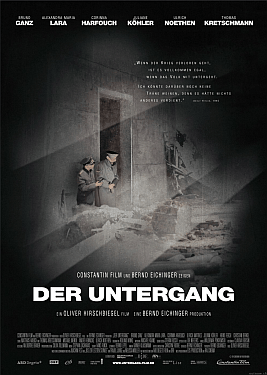
Downfall (AKA that Hitler Meme Movie)

(By The poster art can or could be obtained from the distributor., Fair use, https://en.wikipedia.org/w/index.php?curid=56186129)

Nowadays you almost won’t know about a film whatsoever unless it has memeability. I guarantee you that’s why so many went to check out Obsession. All those Gumby-esque facial expressions Indy Navarrette makes–how could you not want to see it. “Think Mark! Think!” is what sucked me into the first season of Invincible.

Entertainment os so cutthroat today nothing works unless it infects you. Memes are the equivalent of the one-liners from the ’80s.

Downfall pulled it off before video internet memes were really a thing, way back in 2004. In fact, it created a pre-meme that only became a meme some ten years or so later. I don’t recall seeing clips of the Mustache Man freaking out with edited subtitles until like the mid-teens or so. It was literally ahead of its time.

But aside from the meme scene, what about the rest of the film? It’s pretty damn good, actually. Very good. Dark. Heavy. Depressing and reflective. I had no idea what kind of hijinks went on down in the bunker in the last days of the Reich. I assumed nothing upbeat. The story is largely told through the POV of a young woman named Traudi who becomes AH’s personal secretary in 1942, later joining him and the remnants of his Nazi cohorts in the Fuhrerbunker in the final 10 days of his life as the Soviets surround Berlin blasting it to kingdom come.

It’s a chilling if intimate portrait of Hitler. Most war films never depict him beyond a stock footage manner. But in the bunker, we get a glimpse past the theatrical mannerisms and famous screaming. Though he does scream. Quite a bit, in some instances. He’s a man in denial about the imminent collapse of his regime. Blasting generals and officers for failures, lambasting those he feels betrayed him, and directing imaginary regiments onto a battlefield in illogical desperation. Downfall is about a country’s literal downfall, yes, but it’s also about the Fuhrer’s mental collapse.

Hitler’s last days in the bunker are bizarre and eerie and unsettling I half expected Rod Serling to suddenly step out from a corner, cigarette in hand, and deliver some opening narration. “As Hitler is about to find out, his downfall will take place not just in this subterranean fortification deep below Berlin…but in the Twilight Zone.” Cue the music.

Hitler’s fall is a remarkable one. Almost unprecedented, save perhaps for Napoleon or Alexander the Great. But neither of those achieved so much–conquering nearly all of Europe–before losing it all so quickly. What does that plummet from power do to a man’s mental state? Especially one who was already teetering on the edge of sanity? It’s like seeing a supervillain suddenly stripped of his powers and forced to make do as an ordinary human. Hitler’s hand twitches behind his back. He prowls the bunker like a lost dog. He snaps at subordinates. Yet he’s also like a father presiding over a house of children he loves. He calmly dictates his will. Then lashes out when he hears of surrender terms. Quietly accepts an officer revealing he had been disobeying orders for weeks. Tenderly says farewell to his female staff. Turns his head away to avoid seeing his own dog put down with a cyanide pill. Then, like a wobbly machine finally winding down, departs to his room, where he Eva Braun take their own lives.

As I’ve mentioned before, WWII films too often become sensationalized, glamorized, and bombastic. Not so with Downfall. Bruno Ganz is superb as Hitler. The rest of the cast is excellent as well. I know this film received some criticism for “humanizing Hitler.” What, what exactly was it supposed to do? Have the Hitler actor wear a neon sign around his neck that says “EVIL” the whole time? I assume the events depicited were largely based in historical truth, with little embellishments or artistic flourishes added. Evil is never cartoonish anyway. It’s as it always has been–a handful of clean-shaven men conspiring in a room together, often whispering and sipping drinks.

Downfall is up there with some of my favorite war films, like Full Metal Jacket, Das Boot, and the brutally mesmerizing All Quiet on the Western Front.

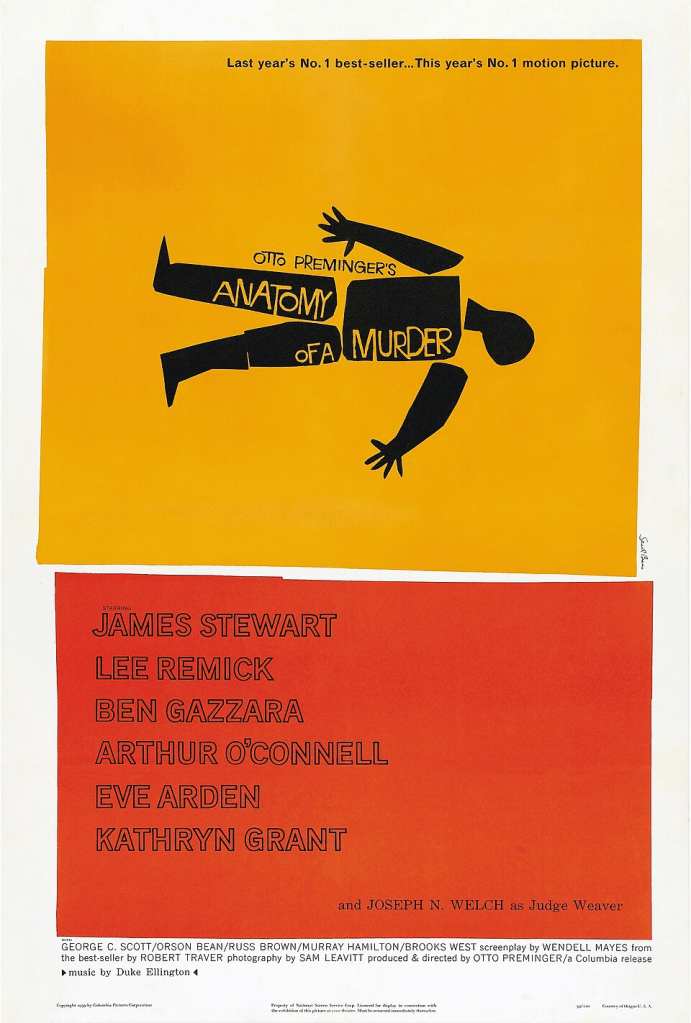
Anatomy of a Murder (and a Genre)

(By Saul Bass – http://ilovegraphicdesign.wordpress.com/2007/05/29/anatomy-of-a-murder/, Public Domain, https://commons.wikimedia.org/w/index.php?curid=25500751)

It’s kind of weird how there are so many legal and courtroom dramas now that it’s hard to appreciate some of the classics that founded the genre and made it what it is today.

There are so many Law and Order spinoffs I can’t even keep track of them anymore. They’re like Covid variants. Just as innocous, too. I got into an SVU kick a long time ago, a show that is somehow still going since 1999, even after one of its main leads, Christopher Meloni, left. That’s a lot of sex crimes for the TV-viewing public to absorb over nearly thirty years.

Then you have the numerous films. Such as Anatomy of a Fall, the 2023 French drama that won the Oscar for Best Original Screenplay, about a wife accused of murdering her husband. Or 1992’s A Few Good Men.

Which brings me to the Jimmy Stewart-starrer Anatomy of a Murder, the 1959 classic about a young Army lieutenant accused of murdering a bar owner who had allegedly raped his wife. The story is based on a bestselling 1958 book, which is based on a real case that took place in 1952 in northern Michigan. It was also written by the actual defense attorney for the case himself, John D. Voelker, who used the pen name Robert Traver. Bet you no one on money Twitter has considered that side hustle. Go to law school, become a lawyer, wait for a socially compelling case with moral ambiguity and complexity, win the case (important), write a tell-all, and then WHAMMO, wait for the Hollywood riches to flow. It’s so simple I can’t believe more people aren’t doing it.

Anatomy is a deeply intriguing and well-crafted film that still feels very modern and relevant. Especially due to the story’s legal outcome–(spoiler alert)–the officer gets off on a temporary insanity due to a psychological condition of “irresistible impulse” that rendered him not criminally responsible for his actions.

Irresistible impulse. That sounds like the kind of excuse the world’s most sophisticated five-year-old would come up with.

Mom: Why’d you push your little sister down the stairs?

Kid (cute little kid voice): Irresistible impulse.

Hey, didn’t we just see something similar in the Lindsay Clancy trial outcome? At issue there was not whether she commited murder or not, but her mental state during the deed. What was Clancy’s excuse for killing her three children? Well, you see, she had a nasty bout of postpartum depression. It was the fault of wonky hormones.

The characters are engaging and complex, too. Especially the officer’s violated wife, Laura Manion, who is unashamedly flirtateous. Typically, you’d expect the female victim to get the pedestal treatment. But no. The film points out she has a reputation around the Army base for being a “slut.” She’s a fascinating psychological portrait, even more so than her jealous significant other. The woman is blasé even about her own husband’s apparent regular domestic abuse. As if she accepts the idea that rape and assault just go with the territory of being a hot flirt.

Is Anatomy of a Murder still worth watching in a world filled to the brim with formularic courtroom dramas? I would put it this way. If you’ve been numbed to death by the automoton-style scripting of endless legal shows, you’ll find yourself refreshed after watching Anatomy. The performances are all top-notch. James Stewart is his likable everyman self. George C. Scott makes an Oscar-nominated appearance. The judge is even played by a real-life lawyer. And you can’t beat a story written by the actual attorney who defended the real-life defendant.

Overall, I really liked this film. I’ve never been so gripped by a trial proceeding. In fact, I found the first act, which is all mainly set-up, to be quite boring by comparison. But once the trial gets underway, I dare you to try to turn it off. You will be struck with…irresistible impulse to keep watching.

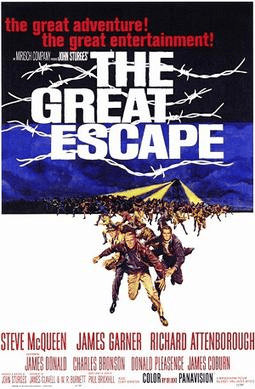
The Great Escape

(By moviegoods.com, Fair use, https://en.wikipedia.org/w/index.php?curid=6629076)

I’ve been thinking on this film for a few days and wondering why it didn’t quite connect with me.

I’m not the world’s biggest fan of WWII films, to be fair. Not because of the time period or the events. But because too often filmmakers use the setting to say something very important about war, life, or whatever, and trip all over themselves doing it. Which I get. We’re talking about a period that shaped the modern world today. It just too often reeks of tryhard. It becomes more of a vanity project for the director than a portrait of a history. Oppenheimer is a good example. So loud and bombastic just to dramatize a handful of guys in a dusty lab drawing on chalkboards. Inglorious Basterds was kind of obnoxious. Saving Private Ryan was decent, overall.

No, I mostly enjoyed The Great Escape. It’s a good film. It could have been great. But for some reason the film felt at odds with itself, and I think the main reason is the inclusion of the Steve McQueen character, Hilts, or “The Cooler King.” Now, I’ve not read the source novel, but apparently Hilts was added for the movie. Likely studios didn’t want to finance the picture unless they could insert an A-List American star like McQueen. But this editorial decision did a disservice to the story, as the Richard Attenborough character, Bartlett, or “Big X,” should have been the primary character. He’s the one driving the plot. He’s the one who concocts the whole tunneling and escape system. He’s wanted by the SS. I wanted to know more about his background and his character. He was like James Bond. Instead, he gets sidelined so we can get glamour shots of McQueen and his antics that get him stuck in the cooler.

Hilts was portrayed rather sterotypically all-American, too. Aloof, cool, daring, and, of course, a huge baseball fan.

This is what I mean when I say too often studios use WWII as a vehicle to show off rather than to tell a good story. A particularly egregious thing to do when it’s based on a true story, such as The Great Escape.

There were some tonal mismatches, too. At times it almost felt like I was watching a sitcom rather than a war drama. I’m a big fan of the TV series M*A*S*H, so I know you can balance hijinks with solemnity. I also love films like Full Metal Jacket, which is rife with dark humor and outrageousness while still sticking to its theme of dehumanization. But then at the end you have a 50-man massacre when the Nazis mow down all of Big X’s guys, including Big himself, after they’ve recaptured them, and then frame them as attempted escapees.

I guess I went into the film expecting a tone more similar to Clint Eastwood’s classic Escape from Alcatraz than something closer to The Andy Griffith Show. Might have just been the audience sensibilities at the time. Escape was released not even 20 years after the war ended. It was still fresh on everyone’s minds, and many viewers were likely veterans themselves.

The tunneling sequences were well done. I’m a huge enjoyer of technical briefing and planning scenes, which are requisite in heist or prison escape films, no matter how “boring” they may be. Such as the one in Rififi when they test out stopping the alarm system.

Overall, The Great Escape was a worthwhile watch. But it’s a good example of how sometimes unnecessarily adding a character can detract from a story, even if it makes good business sense.

Sorry, My Vote Will Cost One Million

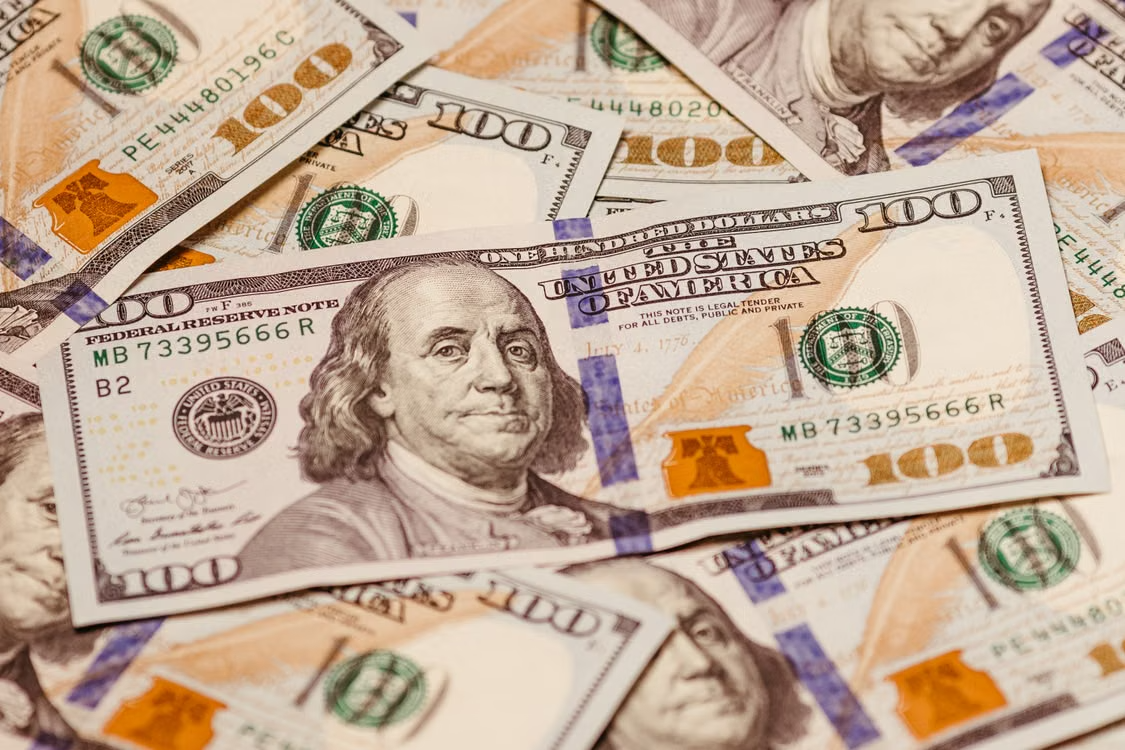
(Photo by Jonathan Borba from Pexels: https://www.pexels.com/photo/one-hundred-dollar-bills-14820416/)

Last night President Donald Trump offered $5,000 to every American adult if Republicans win the midterm elections.

I think this is a fantastic idea. Elected officials should not be wasting time trying to win anyone’s vote based on silly things like policy or ideas. We all know they are going to lie and do their agenda anyway. Instead, both parties should simply bribe their voters.

Well, I prefer to call them payouts. Cash money, baby.

I like to vote as if I am in a Mr. Beast video.

There’s only one problem. Five grand is way, way, too low. In fact, it’s far below my going rate. What can five thou really buy you? A base model Honda Civic perhaps. If it were the early 1980s, that is. But we’re almost into 2027. We are in what most sci-fi movies call “the future.”

These days five big ones will hardly pay for groceries. I went to the store the other day and I saw a T-bone steak going for almost thirty dollars. Was that cow a celebrity? Am I eating the Brad Pitt of cows? Box cereal is approaching ten dollars. That’s a lot of money for a bag of shamrock-shaped sugar.

Then you’ve got things like rent, education. Everything else. Other costs that have ballooned all thanks mainly to heavy government spending. And the increasing costs of this Iran kerfuffle and funding Ukraine. I can’t imagine a Patriot missile is cheap. It’s not like they sell those at Costo.

No, no. I’m afraid I’m going to have to set the rate for my precious vote at ONE MILLION dollars.

See, one million I can work with. One million, after taxes, is still about $600,000, which is just enough to still make me feel good. You can’t really put a price on democracy, of course. But $600,000 gives me a new house, a new car, and enough left over for a white picket fence. The so-called American Dream.

One million may seem steep. But I’ve always highly valued my participation in democracy. Back in third grade, during a fierce competition for class president, I sold my vote for ten Chuck E, Cheese tokens, a Pizza Hut single slice voucher, AND a Butterfinger candy bar. Some called that outrageous. Ten-year-old me called it the price of doing business.

In truth, the government has been bribing people to vote for decades. It’s called welfare. So, this is really nothing new. It’s just more stripped down and to the point. I like that. I respect the hustle.

The way I see it, the government owes me big anyway. I never received any of that sweet Covid stimulus money, as I “made too much.” As if the Covid-19 virus would have skipped right past my nostrils just because it saw my bank account balance. Yeah, right. I also don’t collect any welfare. I’m what you call a “net-positive” citizen. I contribute more than my share. I am a giver, not a taker. So why shouldn’t I get to price my vote at a million? It’s my right. There are people called superdelegates, right? And electors. People with high status who actually do the voting for presidential nominees. Well, you can call me a SUPER voter then.

I look forward to receiving my direct deposit prior to the Election. I take my bribe money up front. In full. And I don’t do payment plans.

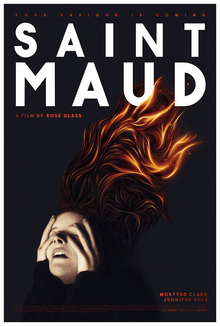
Saint Maud

(By IMP Awards, Fair use, https://en.wikipedia.org/w/index.php?curid=62765453)

This film was at threat of becoming a discarded “air conditioning movie,” but I’m glad I stuck with it. I started watching this over a year ago on Prime, gave up on it around the first act, then finally returned to it last night to finish.

I do that a lot. I just did it to Soylent Green, in fact. Some movies, however “good” they are, just fail to grab me, and I put them off. It might be the result of simply getting older. I used to plop down in front of anything and let my eyes get glazed over. Now I’m like a mid-30s professional cat lady on a date–“I just didn’t feel that spark, that tingle. I need to really feel a connection.”

Right, we’ll just ignore the hundred dates you’ve gone on over the past year that make feeling a spark about as likely as igniting a soaking wet match.

Anyway, what is Saint Maud about? This horror/drama centers on a young nurse named Katie who becomes an increasingly obsessive religious fanatic after losing a patient under her care, and is determined to save the terminal woman she’s currently assigned from damnation. It’s really a psychological portrait of mental illness. A deeply unsettling slow burn one, too. It reminded me a little of Don’t Look Now, the 1973 horror starring Donald Sutherland, which really takes its time before delivering one hell of a final stinger. The Blackcoat’s Daughter is another similar film, which is definitely one worth checking out.

Saint Maud has a pretty good last minute stinger, too. Maybe not as amazing as some claim online. But pretty good. I won’t spoil it here. But if you like waiting 90 minutes just to see if a flick’s final image makes it all worth your time, Saint Maud has got your back.

Aside from the last second bitch smack, this flick does a very good job of depicting loneliness and isolation, which are often the twin demons that lead to mental breakdown. Just ask Jack Torrance. There are some good creepy moments throughout. But you have to be patient for them. Frustrating, yes. But you need a Saint Maud once in a while to counter the roller coaster popcorn horror flicks like The Conjuring.

Saint Maud was worth it in the end, even after taking a one-year long sabbatical from my initial watch.

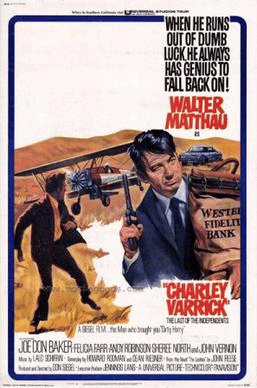
Charley Varrick (1973)

(By http://www.listology.com/content_show.cfm/content_id.21307/Movies, Fair use, https://en.wikipedia.org/w/index.php?curid=2772929)

At least now I know where Tarantino borrowed (or stole) that famous line from in Pulp Fiction.

“I’m gonna call a couple of hard, pipe-hitting niggas to go to work on the homes here with a pair of pliers and a blowtorch.”

Such a cold ass line from L.A. mob boss Marsellus Wallace. But it originally comes from the the 1973 crime thriller Charley Varrick starring Walter Matthau, based on the book The Looters by John H. Reese.

“They’ll strip you naked and go to work on you with a pair of pliers and a blowtorch.”

Like they say, “good artists copy, great artists steal.”

Varrick is a largely forgotten crime flick about a New Mexico crop duster (named Charley Varrick) who stages a daring bank robbery, only to discover he’s stolen mob money. Lots of it. About $750,000, or over $5 million in today’s dollars. Needless to say, this attracts the attention of a mob hitman, who looks like Anton Chigurh’s older white cousin.

The famous line is said by the bank owner, who is fretting about how because his local bank got hit it makes him look like the one who planned an inside job. The mob doesn’t believe in coincidences.

It’s a fun, twisty film with a creative set piece pitting a crop duster plane against a car. It reminded me a lot of No Country for Old Men. You’ve got the stolen mob money. An unstoppable hitman sent to retrieve it. A trailer park. Set in the dusty southwest. And plenty of that dry, cynical wit you expect from the genre. I also see some of the DNA that later settled in Breaking Bad. Come to think of it, Charley Varrick might be the first movie I’ve ever seen set in Albuquerque. Such an overlooked area. Most movies/TV shows pick either Texas or Cali. Almost never in-between.

Charley Varrick also features the prolific John Vernon as the troubled bank manager fretting about mob retaliation. An actor who looks like if the ’70s were a person.

The Feminine Paradox

The Lindsay Clancy mistrial, while disturbing, is not really surprising.

A sweet moment between mother and child, or a monster preparing to snuff a helpless victim? You decide. Photo by Варвара Курочкина from Pexels: https://www.pexels.com/photo/mother-hugging-her-baby-10935456/

There is a thing in science called the Fermi Paradox, named after physicist Enrico Fermi. Basically, it relates to the contradiction that although there is likely a highly statistical probability that alien civilizations are out there (and in abundance), there is a complete lack of evidence for any of them. 

Similarly, there is the Feminine Paradox. The fact that while it is highly certain that female violence occurs regularly, there is somehow a complete unwillingness by society to acknowledge the evidence that proves it exists. Or at least it’s something that society would prefer to treat as myth or legend. Like Bigfoot, or alien abductions. 

Female violence is like the daily horoscope in the newspaper. Given some press, taken seriously by few, but regarded as fantasy B.S. by most.

Male violence, on the other hand, is more like the weather report. Far more concrete and threatening. Something of which to furrow ones brows and be deeply concerned about. Often accompanied with prognostications, predictions, or even a unique name if it’s severe enough, as in the case of hurricanes. 

For sure, male violence is obviously far more prevalant. Comparing it to female violence is a bit like comparing cancer to dog attacks. 

But still, we usually put dogs down that bite people, right? It’s not like we let wild dogs loose to bite again because prostrate cancer is just so much worse. 

I find myself complicit in the strange social behavior of turning a blind eye to female violence. I’ve actually paid little attention to the Lindsay Clancy trial, depsite its grisly details. I don’t find the final result of a mistrial that surprising at all, actually. 

It’s funny. I grew up with a mother who was physically and verbally abusive. She would fly into these sudden rages over the slightest of provocations or misbehaviors. Inadequately raking leaves in the yard. Spilled milk. You name it. She preferred hitting me in the shoulder, though kicking me also became a specialty. Yet whenever I’d mention it to friends I’d either be ignored or it was laughed off as common. “Oh, yeah, my mom does that to me too sometimes.” 

Even funnier, every PSA I watched in school about child abuse always featured a man as the perpetrator. As a kid, I would sit there and think, well, that’s a little one-sided.

My mother went to twelve years of Catholic school. The nuns there were abusive to her, and liked hitting with a ruler to correct misbehaviors. So, she suffered herself at the hands of socially acceptable female violence. It’s understandable she grew up primed to continue the cycle onto the next generation. I don’t hate the lady. I try to understand her. I love her, in a sense, despite her abuse. Strangely, I have more contempt toward my step-dad, who never laid a hand on me, for being a bum, than my mother, who did. Such is the different and unfair standards by which we judge men vs. women. 

Currently, former Wheel of Fortune announcer Jim Thornton is getting excoriated online for being caught in a pedophile chat room. This after being fired by Sony. Meanwhile, Lindsay Clancy has a you-go-girl fan club, despite having killed her three little children. 

Here’s a thought experiment. If Thornton had previously changed his gender from male to female, then subsequently murdered three babies, then blamed feminizing hormonal therapy for her homicidal outburst, would she be deserving of exoneration? More importantly, would she still be announcing prize results on a daily word puzzle game show?

What is postpartum depression? Basically, hormonal shifts that affect mood and behaviors. Teenagers undergo vast hormonal shifts, too. Should they be held to account for any misdeeds? Some men have an excess of the hormone testosterone that compels them to violence. In fact, testosterone is often linked to violence and criminality. If a mother suffering from bad hormones can’t be blamed for slaying her offspring, can wife beaters be absolved because of too much testosterone in the blood? 

Just think of all the implications if one can’t be blamed due to hormones. What a real can of worms.