
(Source: https://www.pexels.com/photo/a-person-using-a-typewriter-9572345/)
Something I’ve always wondered is why do some successful writers stop publishing new material for lengthy periods of time? Or go very long gaps between books? Why do some seem to give up putting out fresh stuff entirely, like Scott Smith seemingly has? Even after major success and screen adaptations.
Or take Harper Lee. She went an astonishing 55 years between To Kill a Mockingbird (1960) and Go Set A Watchman (2015), which is basically just a sequel to Mockingbird.
I know that these missing-in-action writers are still writing, of course. Writing is an addiction, even when it feels like it’s going nowhere. Even when it feels painful and frustrating to get even one word down on the digital page. Even when all you’re writing is just growing mold in an MS Word folder somewhere. I couldn’t imagine ever going one day not writing, even if it’s just a fevered entry in the personal journal I keep by my bed.
Now, I can understand writers who quit when they can’t get published, or when what they publish doesn’t land with readers. It’s demoralizing to work months or years on something only to hear crickets when you finally let it loose into the world. I totally get when hacks tap out when they can’t trick anyone into buying their B.S. Or lately these wasteful globs of DNA using AI to spit out worthless “novels” just trying to make a quick buck following a get-rich-quick course some scammy asshole on X sold them. I’m not talking about them. To hell with them.
But then you have talented wordsmiths with a fanbase. Writers who have concocted engaging best-selling yarns. And who have that most mythical of things–a rapt, paying audience. Why do they stop writing? Pressure to match the greatness of a big hit? It can’t be due to a simple lack of ideas. Writer’s block? Not buying that.
George R.R. Martin

(By Gage Skidmore from Surprise, AZ, United States of America – George R. R. Martin, CC BY-SA 4.0, https://commons.wikimedia.org/w/index.php?curid=193207931)
It would be easy to start this list with Public Non-Publishing Enemy Number One–George R.R. Martin– who keeps insisting Winds of Winter is on its way. However, I don’t really care about the fantasy genre, much less the whole Game of Thrones series. Besides, the man has put out enough dense material over the years to justify keeping readers waiting. His work has achieved a certain rarified level of literary success that few writers obtain–becoming culturally significant. Same as J.K. Rowling or Stephen King. This is not about book sales, necessarily. So no, that POS Fifty Shades of Grey doesn’t count, even if it did sell a bajillion copies. This is about meaningful impact to the craft of writing. So, I get him not wanting to just pump out a new book until it’s ready. He has a lofty reputation to maintain. But if one were going to compose such a list, he’d be at the top, for sure.
Gillian Flynn

(By aphrodite-in-nyc from new york city – This file was derived from: Gone Girl Premiere at the 52nd New York Film Festival P1070644 (15367612631).jpg, CC BY 2.0, https://commons.wikimedia.org/w/index.php?curid=35956165)
For me, every year that passes by without a new Gillian Flynn novel is another year I’m left saddened and disappointed. It’s been almost 15 freaking years since Gone Girl, man. She wrote a short story called The Grownup in 2015. Which was decent, though truncated. It felt like the opening to a novel, but then just kind of ended abruptly, leaving me wanting more. She worked on a series called Utopia back in 2020, and seems to have a few other things in the works. But no novels since her mega hit Gone Girl, which of course became the runaway hit movie. It’s weird because Flynn writes in a sub-genre that I am not ordinarily attracted to, but I find her writing very evocative and seductive.
Scott Smith
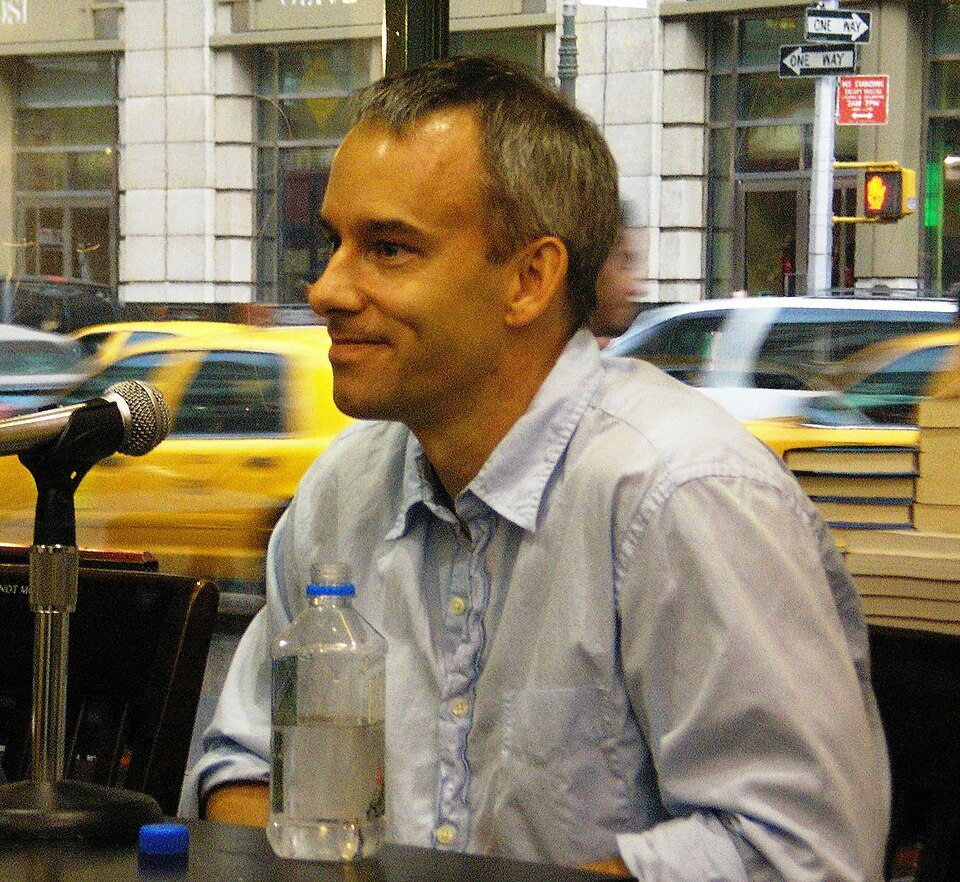
(By The original uploader was David Shankbone at English Wikipedia. – Transferred from en.wikipedia to Commons., CC BY 2.5, https://commons.wikimedia.org/w/index.php?curid=3131746)
This guy has gone so long since his last novel that Stephen King even called him out in his book On Writing. I loved A Simple Plan, Smith’s 1993 bestseller that became a hit film starring Billy Bob Thornton and directed by Sam Raimi. It’s actually one of my favorite thriller novels, and why I’m a big fan of “suburban thrillers” that have some kind of shades-of-gray moral theme. After that it was thirteen years until his next novel The Ruins, which was also made into a movie. But nothing since. How do you just shut off the creative machinery like that? For some writers I suppose it truly is like bleeding onto the page. But it’s a shame to see a talented thriller writer sidelined for seemingly no reason like this.
Thomas Harris
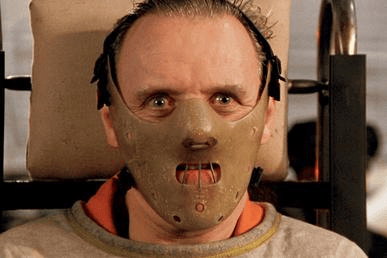
(By MGM Pictures – https://studybreaks.com/culture/hannibal-lecter-modern-etiquette/, Fair use, https://en.wikipedia.org/w/index.php?curid=56761155)
Okay, Mr. Harris (not pictured above) hasn’t exactly been totally quiet. His last book, Cari Mora, dropped in 2019. But that was 13 years after his previous book, Hannibal Rising, which came out in 2006. Like Scott Smith, Harris is also one of my favorite thriller writers. If you haven’t checked out his 1975 debut novel Black Sunday, about terrorists who try to blow up a football stadium during the Super Bowl, you really should. It’s excellent. Harris is, of course, best known for creating Hannibal Lecter, and for his massive hit The Silence of the Lambs. But Black Sunday shows he’s more than capable of creating a gripping tale outside of the cannibal psychiatrist.
Steven L. Peck
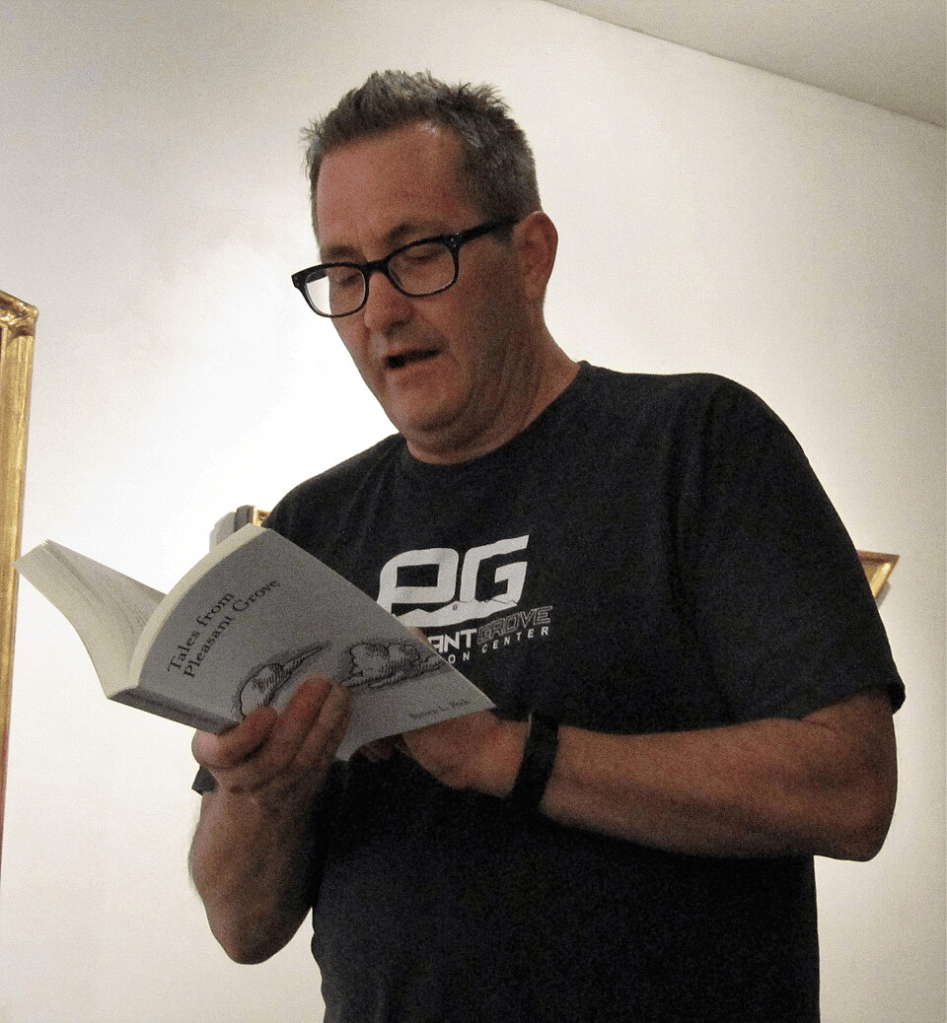
(By Ben P L from Provo, USA – Steven Peck, CC BY-SA 2.0, https://commons.wikimedia.org/w/index.php?curid=74019028)
To be fair, this author isn’t only a fiction writer. He’s an evolutionary biologist who writes mainly essays and academic articles. He’s put out a collection of poems and some short stories. He’s only written two novels, including my new favorite–A Short Stay in Hell (2009), an absolutely absorbing existential horror novel about a man who dies and wakes up in a massive library where he must find the book about his life in order to escape. It’s brutal, short, unforgettable, and based on Jorge Luis Borges’ 1941 short story “The Library of Babel.” It’s also been nearly 16 years since his last novel, which is a tortuous long time to still be waiting for another book from a great author. I guess, just like the main character in Hell, we’ll have to be kept waiting a long time.
All the above authors are currently living, and could certainly grace us with more spellbinding tales on a more regular basis if they so desired. But special mention goes to one of my favorite authors of all time–Ira Levin, who went a freakshly long time between The Boys From Brazil (1976) to his last two books, Sliver in 1991, and Son of Rosemary in 1997, before passing away in 2007. That’s almost thirty years with only two books to show for it. It’s been awhile since I’ve read Sliver, and I recall it being okay. Son of Rosemary was a very disappointing follow-up to the 1967 Rosemary’s Baby, however.
It’s sad to think that even a master writer can lose their fastball after enough stagnation. That’s why you’ve got to keep at the craft as much as you can. Who knows how many other great thrillers we missed out on because Mr. Levin decided to step away from the typewriter. What a shame.
For sure, writing a good book is no easy task, even if you’re a pro. Writing can be a tortuous and labyrinthine psychological journey. Sometimes it really does take a lifetime to get it right.

