‘Jagged Edge’: A Rewatch Almost 40 Years in the Making

(Fair use, https://en.wikipedia.org/w/index.php?curid=8198266)

When I was five or six, I told my mom I wanted to watch a “scary movie.” At the time, I lived in a small town in Colorado, and right downtown there was a little video store we used to frequent every week to rent movies. This was the video store we’d rented classics like Alien, Aliens, Superman: The Movie, and many others.

I loved that video store. It’s a coffee shop now.

I saw a lot of films at that tender age that I probably shouldn’t have. But I’m glad I did. Aliens is still my number two favorite all time, just behind Jason and the Argonauts.

Anyway, for some reason, I requested to see a scary film, and for some other reason, my mom picked out Jagged Edge. Why that film and not one of the more popular releases at the time? Why not a Halloween, Friday the 13th, or A Nightmare on Elm Street? I’m not really sure. However, my mom has mentioned liking other films that star Jeff Bridges, and my mom does kinda resemble Glenn Close. So, looking back, I think I can see why she might have been drawn to the 1985 thriller. Plus, I suspect she didn’t want to expose me to a bonafide “horror film” in order to protect me from seeing anything too graphic or scary. But at that point I’d already seen the Alien rip out of John Hurt’s chest and watched Arnold blow away a whole police station after doing surgery on his eyeball. Watching Freddy Krueger eviscerate a couple of teenagers wouldn’t have really done anything traumatic to me at that point.

Like many films that imprint on us when we see them as kids, over the years, I have found myself haunted by bits of it that lodged themselves into my subconscious. Especially the creepy opening scene. So, for a long time I’ve wanted to rewatch it. But since I don’t recall ever liking the film, I kept putting it off until finally last night I gave in.

Jagged Edge is directed by the same guy who did Return of the Jedi and is written by ’80s spec script hotshot Joe Eszterhas. It tells the story of Jack Forrester (Bridges), who is accused of murdering his wealthy newspaper owner wife, and is defended by ace attorney Teddy Barnes (Close). As the trial progresses, the lawyer falls under the seductive spell of her charming client, a brief but torrid love affair begins, culminating in some twisty revelations that reveal the truth of whether Jack committed the murder.

Jagged Edge is sort of the Gone Girl of its era, and it inspired a lot of copy cats afterward. Which is surprising, as it’s quite tame by today’s standards, almost feeling more like a Lifetime TV movie than a feature that starred two A-Listers at the time.

What it’s mainly known for, of course, is the killer opening scene. A fantastic Michael Myers-esque POV of a masked killer brutally invading a posh seaside mansion, slaughtering a Hispanic maid, before turning his attention to Page Forrester, whom he ties to the bed and butchers. This is what I remember most seeing as a kid.

As for the rest of the film? It’s okay. It really sags as the trial gets underway. In Anatomy of a Murder, which was written by an actual attorney, there are excellent and realistic trial scenes. But it’s very obvious the writer of Jagged Edge had little understanding of the courtroom. There are, of course, the requisite “I object” moments, and the surprise witnesses, but on the whole, the trial stuff felt rather cliché and cartoony. Your typical Law and Order trials are done with better and more engaging verisimilitude. But remember, this was the ’80s and you could get away with half-baked legal sequences in a feature so long as they just looked right. No so much now with so much content and competition out there.

However, the writing succeeds better when it comes to the personal relationship side of things. Close’s Teddy makes for a sympathetic divorced high-powered attorney. Though not a particularly respectable one. What kind of middle-aged mother with two young kids living at home invites a man over accused of horrifically slaying his wife and maid and then makes out with him? It was just one of many questionable moments in the script. I can understand a lonely single mom falling under the spell of a handsome rich guy, but I just didn’t buy that maternal instincts wouldn’t kick in and override the lust in Teddy’s case. If anything, Teddy should have been a little younger. Close was 38 at the time. But the character feels more like she should have been around thirty, with no kids, and single. Close is a fine actress, and she sells the role mostly. But it’s an uphill climb.

Bridges is mostly good as the swarmy suspect who stands to gain millions as the husband of the deceased heiress. Though he is somewhat one-note and underutilized.

The main issue with Jagged Edge is structure. See, there was never really a doubt that Bridge’s character, Jack, did the awful deed. Maybe back in’85 it was okay to drag out the trial over most of the movie. But as I sat rewatching this, I found myself bored out of my mind because it was obvious that he was guilty but he was still going to get off. What they should have done was moved the exoneration to the mid-point. You could still plant the seeds of the love affair between attorney and client to come, but you suppress it until he’s declared not guilty. Then you can move into the romance. This would satisfy the unbelievability of a mom of two falling for Mr. Murder, if he’s believed to be innocent. It would also set up the third act a lot better. You could even have Teddy move in with him. Really seal the deal until the big revelation. Plus you would cut down on some of the courtroom stuff, which is the film’s biggest weakness. As a writer, you want to avoid scenes and sequences that expose your weaknesses, not pad them out needlessly. The Seinfeld finale had better courtroom scenes than this film.

By the way, Jagged Edge has the second best revelation scene involving a mechanical typewriter after The Shining.

But that structural fix aside, I have to say, the final twenty or so minutes of Jagged Edge are pretty good. Enough to salvage the movie, in fact. I was riveted, and once Teddy finds the piece of evidence that confirms Jack is the killer, it really took off like a rocket.

The final confrontation is the only other scene from this film I remember watching as a kid. I’m sure after the explosive opening, I tuned out and went outside before coming back in for the conclusion. I almost did the same thing as an adult. There was also a bit of a Mandela Effect. I swear when I first saw the ending, the masked killer ties Teddy’s feet to the bedpost before she shoots him. But after rewatching it, he only makes a noose with the rope, then lunges at her before she blows him away with the revolver. Strange how we misremember things.

Speaking of the gun, that should have been introduced at some point earlier in the film to satisfy the Chekhov’s Gun trope. But I don’t think it was. Which is fine, I guess. I can believe a single mom would be packing heat hidden somewhere in her bedroom just in case.

Jagged Edge is an okay thriller that’s worth a watch. But is it a scary movie, as I requested seeing almost four decades ago? Yes. At least the opening and ending parts are. They are very scary, actually. Most of the middle part sags. There are some clever red herrings and surprises during the trial. But I found I was way ahead of the film for most of it, and not because I saw it before. I didn’t remember any of the trial stuff. So it became a matter of waiting impatiently for the ending to finally come.

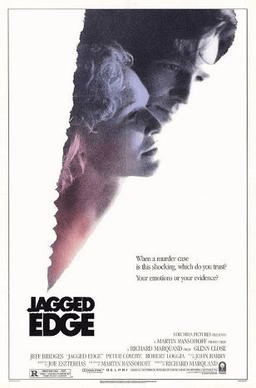
The music score is also quite good. Underrated, I’d say. Especially the one used for the murder scene. The movie poster is striking and memorable, also.

Six Dark, Disturbing Things I Learned Watching the Dahmer Series on Netflix

Source: Netflix

Being a serial killer is way easier than I thought.

Last night I decided to check out Netflix’s new series Monster: The Jeffrey Dahmer Story, and I’m completely outraged.

I’ve been lied to my whole life. Up until now, I’ve always thought being a serial killer was a tough gig. That you had to be some kind of mastermind in order to get away with murdering people. That it’s hard work, and involves obscene levels of manipulation, trickery, and craft to pull off.

As it turns out, you can be a total dithering idiot and get away with butchering people in your own neighborhood for a decade, without fear of getting caught.

This is a real eye-opener for me, as someone coming from the school of Silence of the Lambs. In that movie, Buffalo Bill is shown as a careful, calculating predator who prudently chooses his victims (young, naive women). In one scene he even uses a fake cast on his arm to garner sympathy. What a clever fellow.

Then you have Dr. Hannibal “The Cannibal” Lecter, a genius psychiatrist, who concocts perhaps the most brilliant prison break scheme in history.

You’ve got “John Doe” in Seven, an impassioned quasi-religious zealot, who engineers multiple murders across a city over several years, all while running a Frankenstein lab in his own apartment. Another super cerebral killer.

And of course you’ve got the fictional Jigsaw killer in the Saw franchise. A dude who designs elaborate deadly traps meant to teach people the meaning of life, or something. Also clearly a Mensa member.

Even made-up killers like Michael Myers, Jason Voorhees, and Freddy Kruger — they’re all potrayed as mental giants, always sneakily evading capture, and cornering prey, sometimes right out in the open.

Damn, I thought, watching all those guys. Good luck to any average Joe who aspires to make their own skin suit or eat fresh human liver. They’ll have their work cut out for them.

It’s the media’s fault for sensationalizing the career of serial killer, of course. They did the same thing for cops, computer hackers, and the whole concept of “true love.”

In reality, being a serial killer is much more down to earth. You don’t have to even be that smart. You just need a little gumption, and most importantly, to believe in yourself.

Monster proved that to me in only two episodes last night. Here are six dark, distrubing things I learned:

1.) You Don’t Need a House to be a Killer

Early in Silence of the Lambs, Clarice Starling makes the rather bold (though true) assumption that Buffalo Bill had to own a house because he’d need space to “skin his humps.” Yeah, maybe if you’re some elitist serial killer who can afford a house, Clarice. Jeffrey Dahmer murdered most of his victims in a shitty apartment in the ghetto. He didn’t let his lower socio-economic status get in the way of his dream of building a throne of human skulls. This is good news for Millennials (and Gen-Zers, too, I suppose) who can’t afford to buy a home, but who are still thinking of getting into the murder business. Especially in these times of rising interest rates.

2.) You Don’t Need “Game” to Attract Victims

Incels, rejoice!

Man, if there was ever anyone who obviously looked and acted like a serial killer, it was Jeffrey Dahmer. And yet, he was still able to get numerous young men and boys to come to his apartment alone, under the guise of “taking pictures” for money, or for romantic dalliances. In one scene he even gets an underage boy to follow him home with the promise of free cheap booze. That’s like one tiny step above painting “Free Candy” on the side of a creepy van and parking down by the elementary school.

Buffalo Bill was such a try-hard by comparison, with the cast trick and everything. He probably could have doubled his kill count if he’d just walked up to women and tried selling them Tupperware or magazine subscriptions.

3.) You Can Be a Slob All You Want

Imagine this. You’ve just freshly murdered someone. There’s blood on your mattress. A dead body on your bedroom floor. A distinct odor of decaying human flesh wafting throughout your apartment. And you’ve just put your victim’s decaptitated head in the fridge. You’d obviously want to clean that mess up as fast as possible so the neighbors don’t potentially complain about any foul odors in your apartment. Especially when you’ve got a vent that connects to the apartment next door. Right?

Actually, you’d be dead wrong. Don’t worry about that stench. Or the mess. Just make sure you have a story about how your relatives sent you meat, but it spoiled, and assure any nosy neighbors that you’ll take care of the smell A.S.A.P.

It’s even okay if cops come over to check out your apartment. Just ensure they can’t see the dead body from the doorway to your bedroom. Just tuck that body in close to the bed, right out of eye shot.

(That actually happens in the Netflix series, by the way.)

4.) Naked Underage Victim Escape Your Clutches? Don’t Sweat, Don’t Fret

Just play it cool, baby. Tell the cops it’s just a lover’s spat. He was drinking. He got a little rough, and he ran off. He does that all the time. You know how these darn kids are these days, amiright?

You can even throw in some pictures you took of your victim (err, lover) as proof of your relationship. You may have to invite the cops into your apartment, but that’s okay. They’ll buy the “spoiled meat” story just like the neighbors.

See, here’s the deal. The more horrific and grotesque your crimes, the less likely people are to believe that it’s happening right under their noses. People, even cops, would rather live in denial than accept that someone as evil and twisted as Dahmer could possibly exist, much less do all the things he did. It seems too farfetched and impossible. It’s like saying Bigfoot is real. Use that power of deniability to your advantage. Be Bigfoot in a world of Bigfoot Deniers.

5.) It’s Okay To Be An Alcoholic

Think you need to be some lean, clean, sober machine before embarking on a career as the neighborhood psycho? Nope. Dahmer, like any good Wisconsinite, was a heavy drinker, having started sneaking beers in class back in high school. So many fictional killers have spread the propaganda that you must live like a dry monk while exercising like an Olympic champion. Think of John Doe from Seven, or Max Cady from Cape Fear. Those guys were like ripped missionaries ready to spread the Word (and by Word, I mean horrific murders).

But the reality is far less glamorous and physically demanding. What matters isn’t your body so much, it’s your mind. And how determined you are to make a murderous difference in this world. Don’t let that sagging beer gut or those twig arms of yours hold you back from the hack and slash career you deserve. You do you, and get out there and give it all you got, champ.

6.) Racism Will Protect You

In the series, Dahmer’s next door neighboor, a nice black woman, is constantly ignored by police, even as she reports him for possibly kidnapping an underage boy. She even reports the horrible smells from Dahmer’s apartment to the landlord, but to no avail. And what do the police do? Basically tell her to shut the f*ck up and mind her own business. You’d think this was during the 1950s or something. But, no. Most of Dahmer’s murders happened in the good ol’ 80’s, when A Flock of Seagulls was rocking the hit charts, and Marty McFly was going Back to the Future. And also still a time when most police were loathe to give your typical black citizen a fair shake on anything.

Good thing we’ve improved so much since then. That hardly ever happens now, right?

And if you were a moderately handsome blue-eyed blonde-haired dude, you might as well have had ten get out of jail free cards stuffed in your backpocket. One cop even politely and concernedly asks Dahmer at one point what’s a guy like him doing in such a rough neighbohood. To which Dahmer responds, “It’s easier killing here. Oops, I mean, it’s cheap to live here.” After which he and the cop high five and chug a beer.

Okay, just kidding on that last point, but the cop hardly even gives Dahmer a look after his neighbor accuses him of literal pedophilia and kidnapping. Literally all the cops do is tell that nice black lady to shut the f*ck up. Insanity.

To be fair, racism could have potentially worked in favor of a serial killer who happened to be black. Given how poorly those ghetto neighborhoods were (and still are) policed, a black butcher could have had himself a heck of a career stacking bodies back in Dahmer’s day. So long as none of his victims were white, I suppose.

In all seriousness, it’s rather disturbing and upsetting to know that Dahmer flew under the radar for so long because police basically ignored or downplayed all the suspicious complaints made about him. Even more disturbing is that because nearly all of Dahmer’s victims were minorities and/or gay, their disappearances went unnoticed, or were largely deprioritized by the authorities.

The fact is, an evil monster like Dahmer was able to thrive for as long as he did because he killed in a glaring blindspot of society. A blindspot that gave him cover to kill people who were not considered “important” enough to care about. And in addition to Dahmer’s existence, that blindspot is itself just as evil and monstrous.

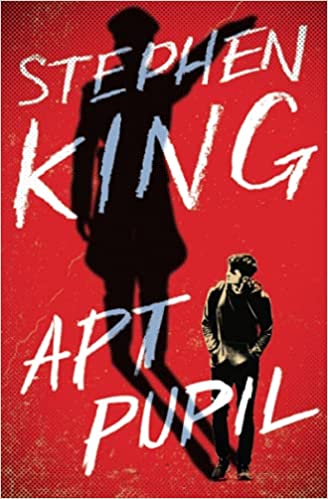
Book Review – Apt Pupil

Apt Pupil is a novella by Stephen King that comes from the short story collection Different Seasons.

It was published in 1982, and tells the story of a young Southern California teenager named Todd Bowden who discovers that his elderly neighbor, a supposed German immigrant, is actually a wanted Nazi war criminal named Kurt Dussander, who was personally responsible for committing horrible atrocities in the Holocaust.    

However, rather than reporting Dussander’s whereabouts to the authorities, Todd instead blackmails the Nazi into becoming sort of like his own personal historian. Todd is a bit of a strange kid. He’s obsessed with WWII history, in particular the Holocaust, and instead if being repulsed by Dussander’s past actions, the kid is instead enthralled. Even inspired, to a degree. 

However, the blackmail goes both ways, as the Nazi Dussander turns the tables on the kid later. See, the longer the kid has known Dussander, the more complicit he has become in keeping him from being brought to justice. Furthermore, as an “all-American” kid, with potential and college prospects, Todd risks having his future and reputation destroyed forever due to his association with an older Nazi. 

With their hands on each other’s throats in a sense, Dussander and Todd are forced into an uncomfortable alliance of secrecy over a period of four years. Ultimately, Dussander’s real identity is found out through a coincidence, and Todd, now age 17, is forced to reconcile with not only how he protected a war criminal, but his own very twisted dark side.

It’s nice to every once in a while be able to read an old Stephen King story. Because, when you ignore all the films, especially the newer ones that have been made of his works, and how slick and clean they all look, you can really appreciate just how good of a writer Classic King really was. 

King is at his best when he’s exploring the darkness of the human heart. He may be categorized as a horror writer, but really, his best work looks into human nature itself. But he’s also a great plotter, always ratcheting up the tension like an ever-turning corkscrew.

For instance, there’s a clever sequence when Todd’s grades begin to slip at school where the boy forces Dusaander to pretend to be his grandfather for a meeting with the guidance counselor. I’ll always champion the use of dramatic irony or an opportunity for a character to go undercover. You see this technique used to great effect in Tarantino’s Inglorious Basterds, where the Basterds have to constantly bluff their way through different situations, to mixed (and bloody) results.

Apt Pupil is unusual. A story about a young kid associating with a Nazi war criminal on its own would probably be enough. But King throws in the wild card that both Todd and Dussander start murdering homeless vagrants and bums around town. For me, it was sort of like smashing two concepts into one. And I was never entirely sure exactly what precipitated both of them to start killing. I never got the sense of Dussander being a serial killer. For sure, he was a brutal Nazi war criminal. But his crimes were state-directed, not necessarily ones he set out to do in order to satisfy his own desire for bloodshed. 

For Todd, his turn toward killing felt like it came out of left field. I was expecting something more along the lines of Dussander influencing the boy into killing, mirroring how the Nazi war machine, and Hitler’s propganda, tranformed Germany into a genocidal state. King, however, doesn’t go for subleties here. So essentially, what we have here is the story of two psychopaths meeting each other, and more or less provoking one another’s propensity for murder and violence. All while ironically occuring in an idyllic Southern California suburb.   

Apt Pupil is a worthwhile King novella to check out if you haven’t already. A few interesting facts: King started writing Apt Pupil immediately after The Shining. And the novella is placed right before another King classic, The Body, which of course became the film Stand By Me.